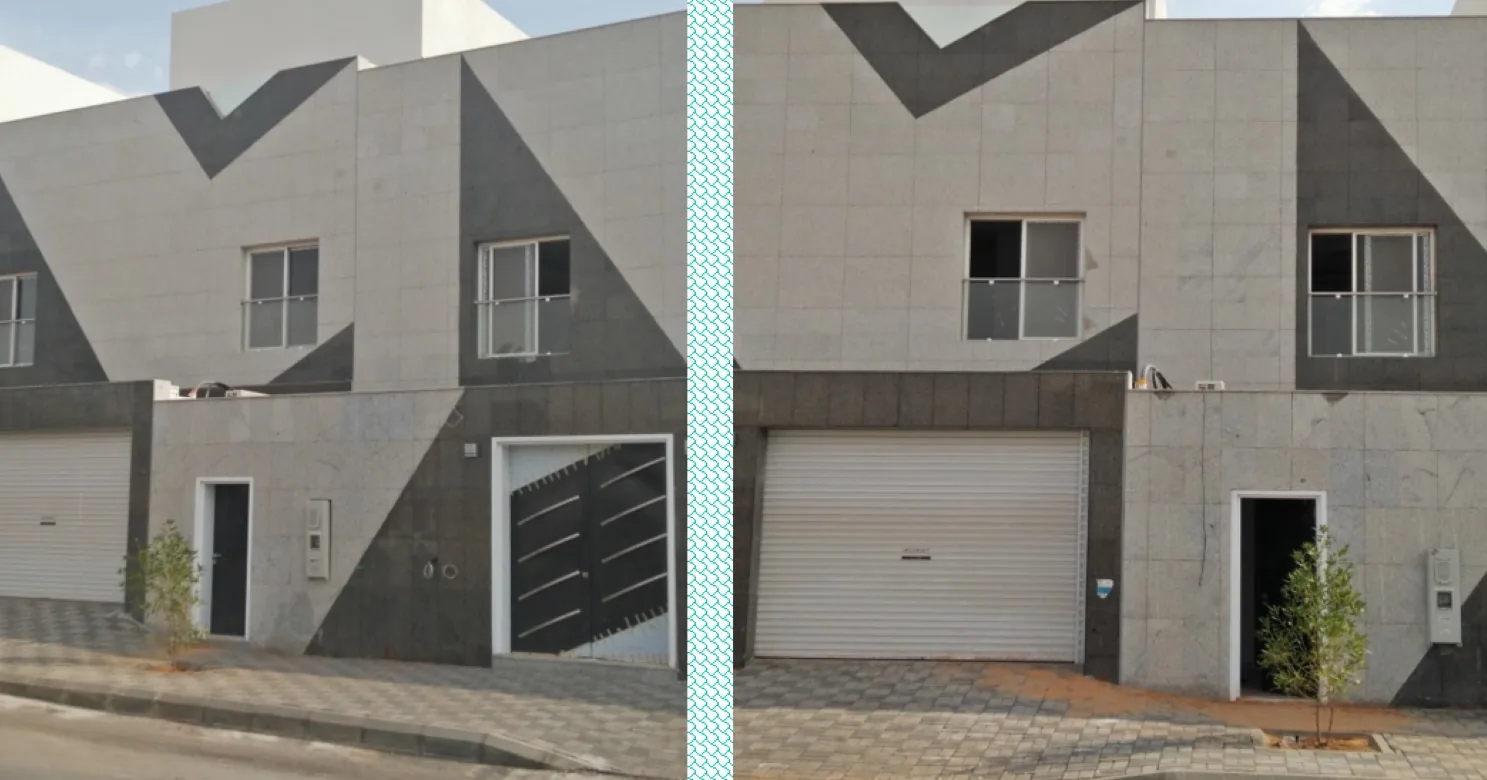
External & Facade Works
Cladding, facades and landscape works that give a building its lasting first impression.
Request a QuoteA facade is the one part of a building every passer-by judges without ever stepping inside, and it is also the surface most exposed to Saudi Arabia's climate — direct sun, dust and, on the coast, salt air. Our external and facade capability covers granite and marble cladding, wash terrazzo (Qasr Rukham) work, roof waterproofing, hardscaping, swimming pools and fountain works — the decorative and protective layer that has to look right on day one and still perform after years of weather exposure.
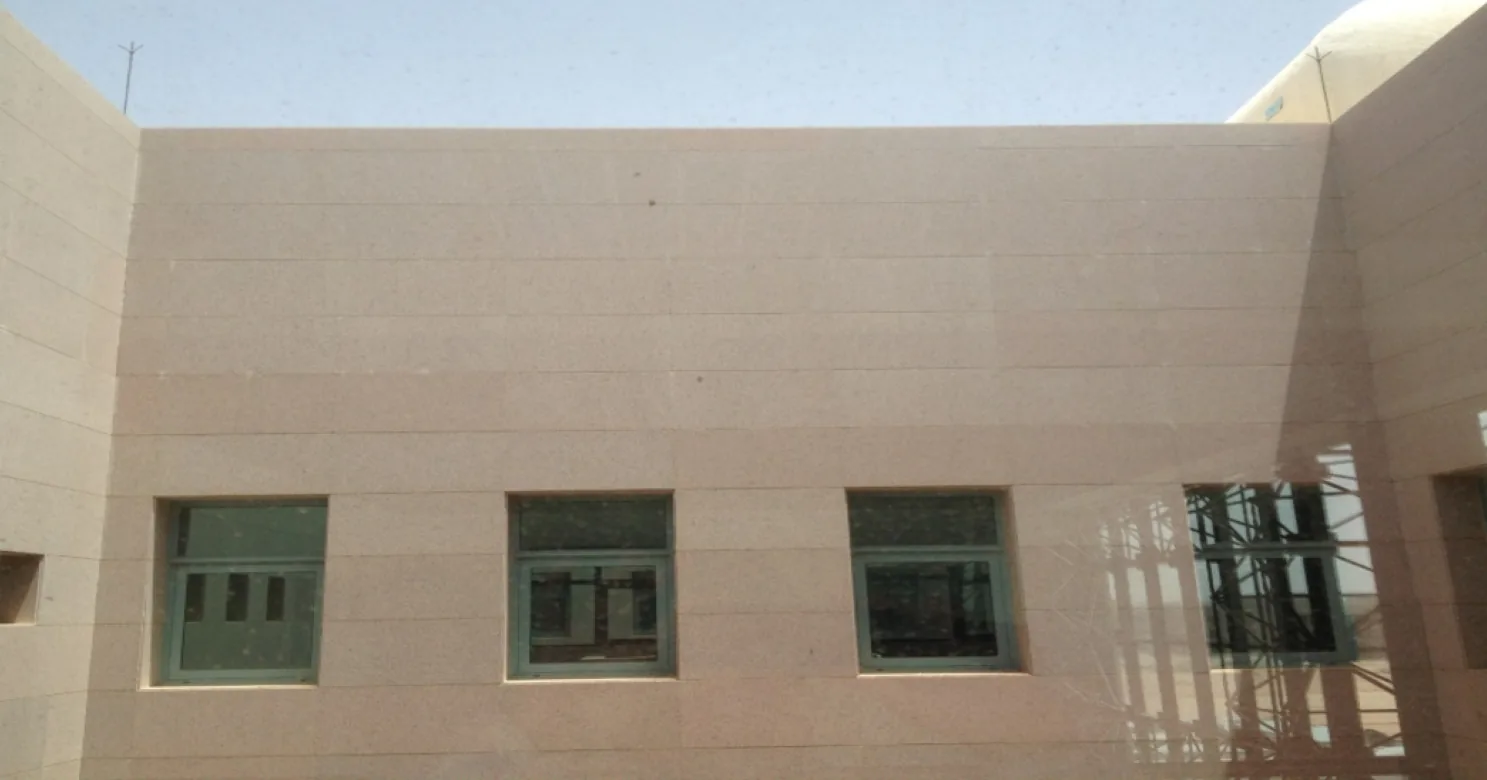
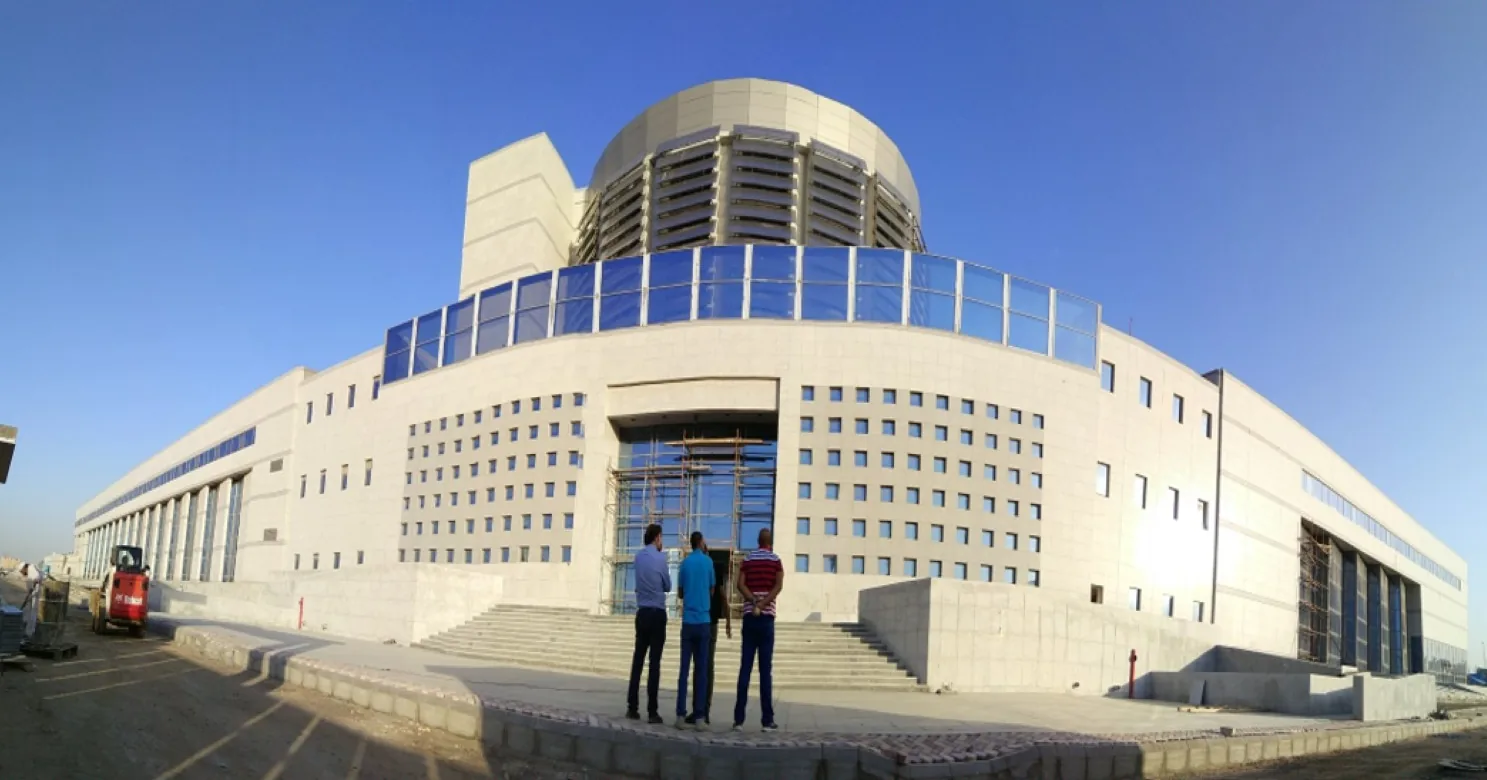
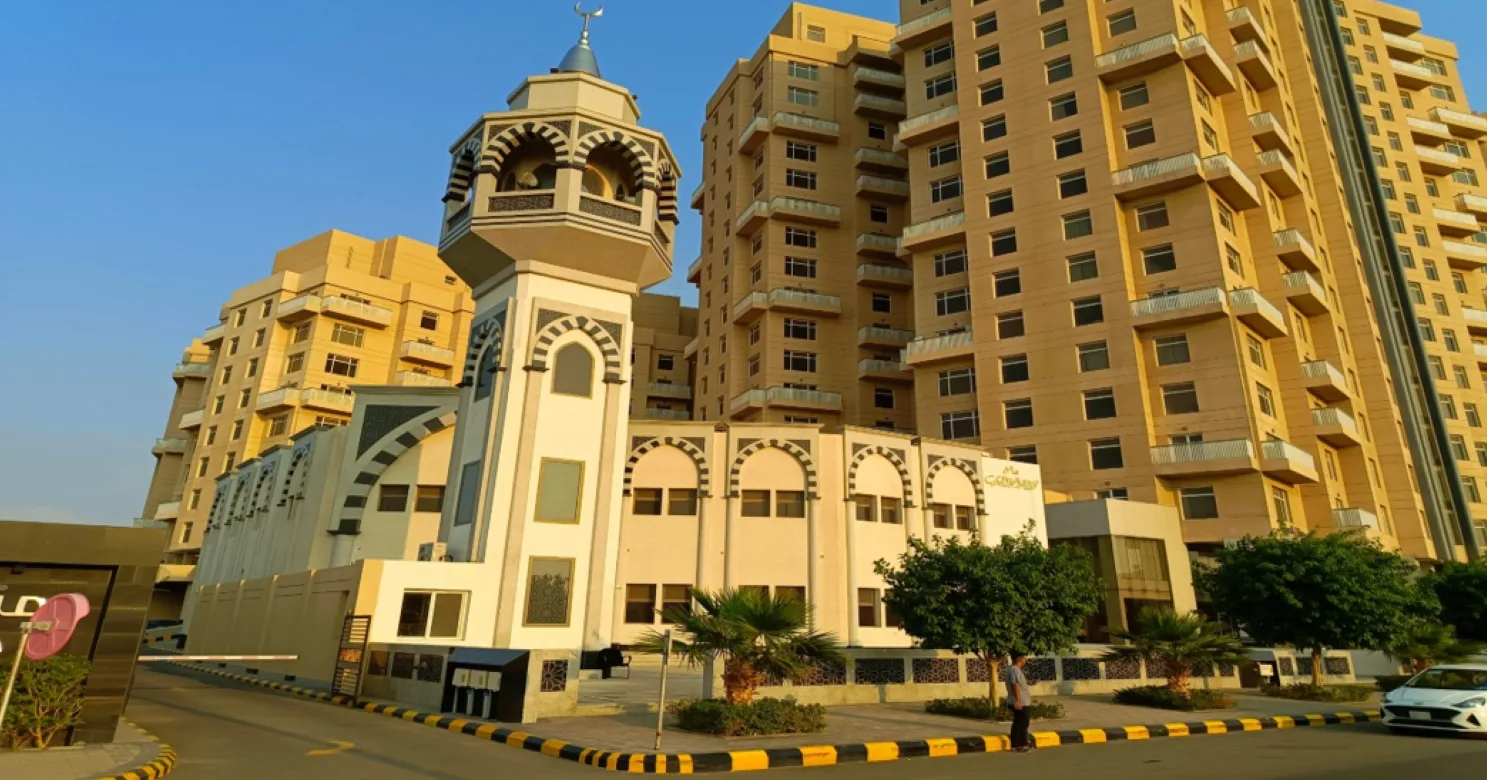
The external granite decoration and cladding on Safwa Tower's residential complex and its mosque minaret in Jeddah, and the mechanical granite cladding system on the Institute of Public Administration, are the two projects that best represent this capability at scale — both required the cladding to be mechanically fixed rather than simply adhered, a detail that matters for long-term weather performance on an exposed facade.
How we deliver this
- 01
Site survey & substrate assessment
Existing structure, elevations and drawings are checked against what each element actually needs to fix or bear on — a roof, a cladding run, a pool shell or a paved area — before anything is priced.
- 02
Material, fixing & finish selection
Cladding stone, fixing system, membrane type or paving unit is selected for the specific application and submitted for approval before site work starts.
- 03
Groundwork & structural preparation
Sub-base compaction, correct falls, reinforced shells and fixing points are prepared first — the groundwork nobody sees once the finish goes on, and the layer that determines whether it lasts.
- 04
Installation to sequence
Panels are fixed, membranes are laid, terrazzo is washed to its cure and paving is bedded and jointed — each element installed to the sequence and tolerances its own trade requires.
- 05
Coordination with structural & MEP
Roof treatment, pool filtration, fountain plant and hardscape drainage are coordinated with the structural and MEP scopes on the same building, so the exterior is handed over as one designed package.
- 06
Testing, inspection & handover
Membranes are flood-tested, pool and fountain basins are checked for leaks, and cladding fixings are inspected before anything is covered or filled — the same support-engineering discipline applied to every wet-critical or structurally-fixed element.
Sequencing the envelope: roof, facade, then the ground
External works are sequenced from the top of the building down, and from the heaviest, dirtiest work to the most delicate. The roof is treated and tested first, so its edges and upstands are settled before cladding and paving are built against them. Cladding and terrazzo follow, using access that is planned once and shared. Hardscaping goes last, because every earlier trade drives, drops and washes over the ground. Pool shells and fountain basins are built and tested before the paving around them, since their falls and edges set the paving levels.
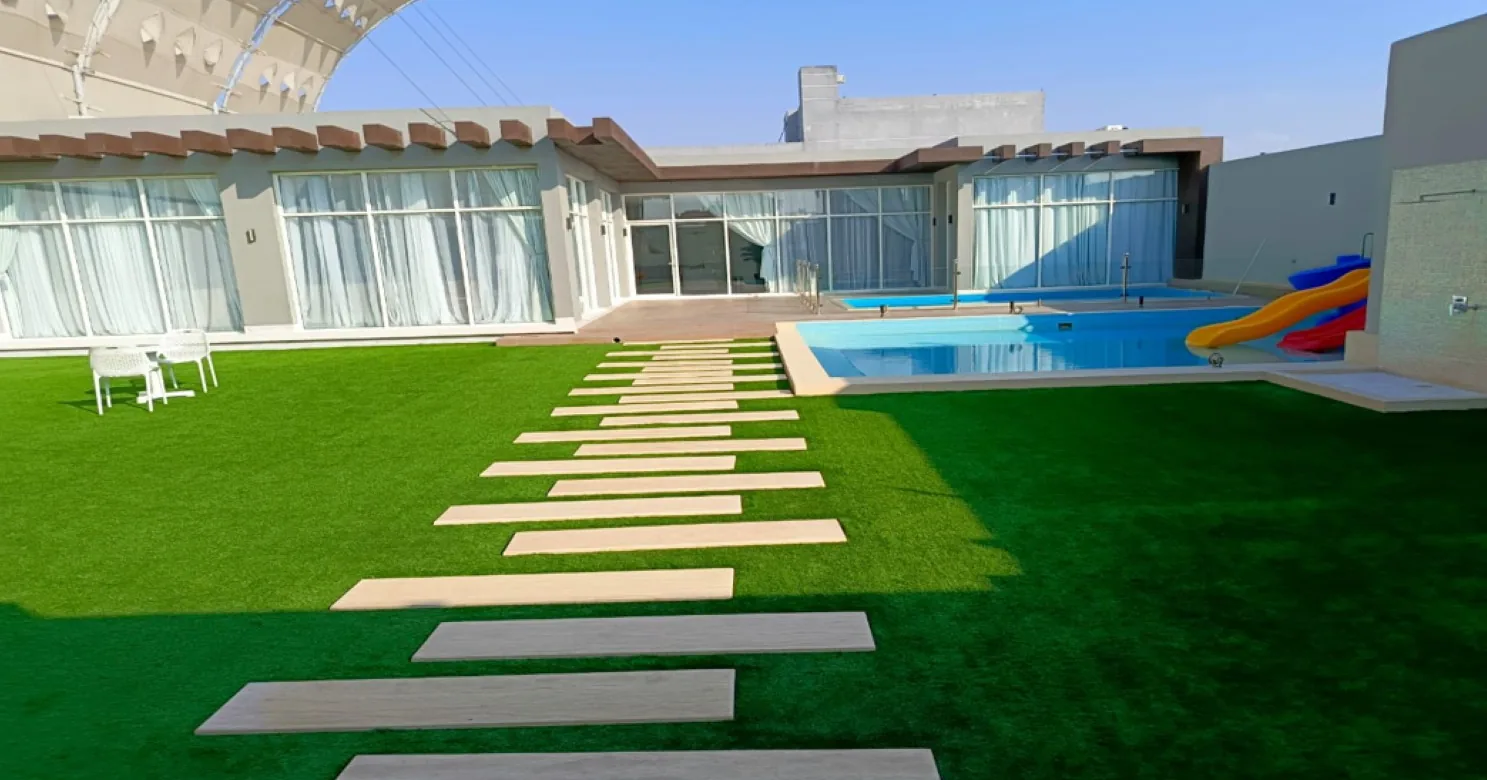
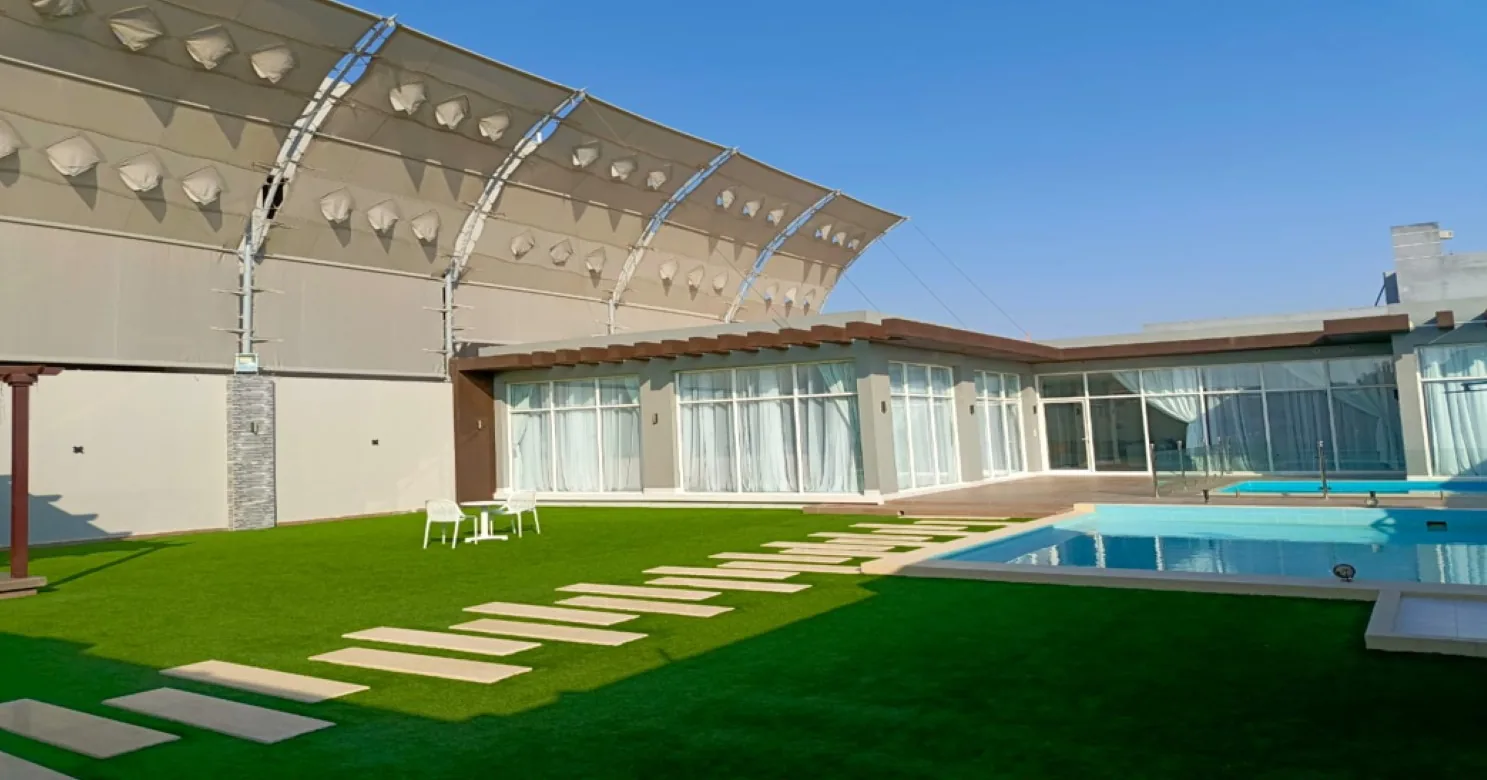
Facades usually fail where elements meet, so agree those junctions early: where the roof membrane finishes against the parapet and what covers it, how cladding sits above the roof edge, how a wall base meets paving, and which way the deck falls around a pool or fountain. Movement joints in the structure should continue through the cladding rather than be bridged by it. Institute of Public Administration and Safwa Tower both involved mechanically fixed granite on exposed elevations, and Private Rest House delivered its terraces, shade canopy and pool as one exterior programme.
The six external elements and where they meet
| Element | What it protects or provides | Key interface |
|---|---|---|
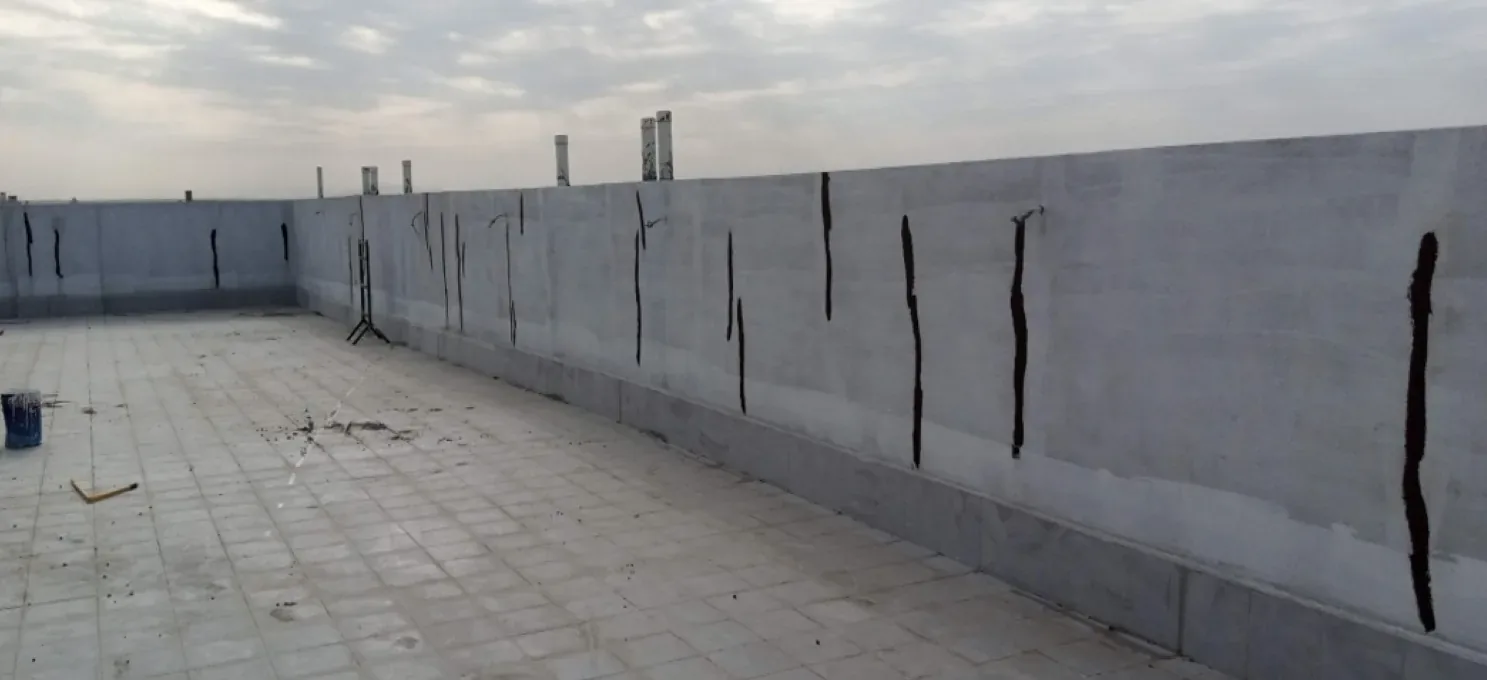
| Roof treatment and waterproofing | Insulation, falls and a waterproof layer over the roof slab | Parapets, drains and roof-mounted plant; tested before the protection layer |
| Granite and marble cladding | A durable stone skin fixed back to the structure | Needs a surveyed frame and agreed fixing points; movement joints follow the structure's |
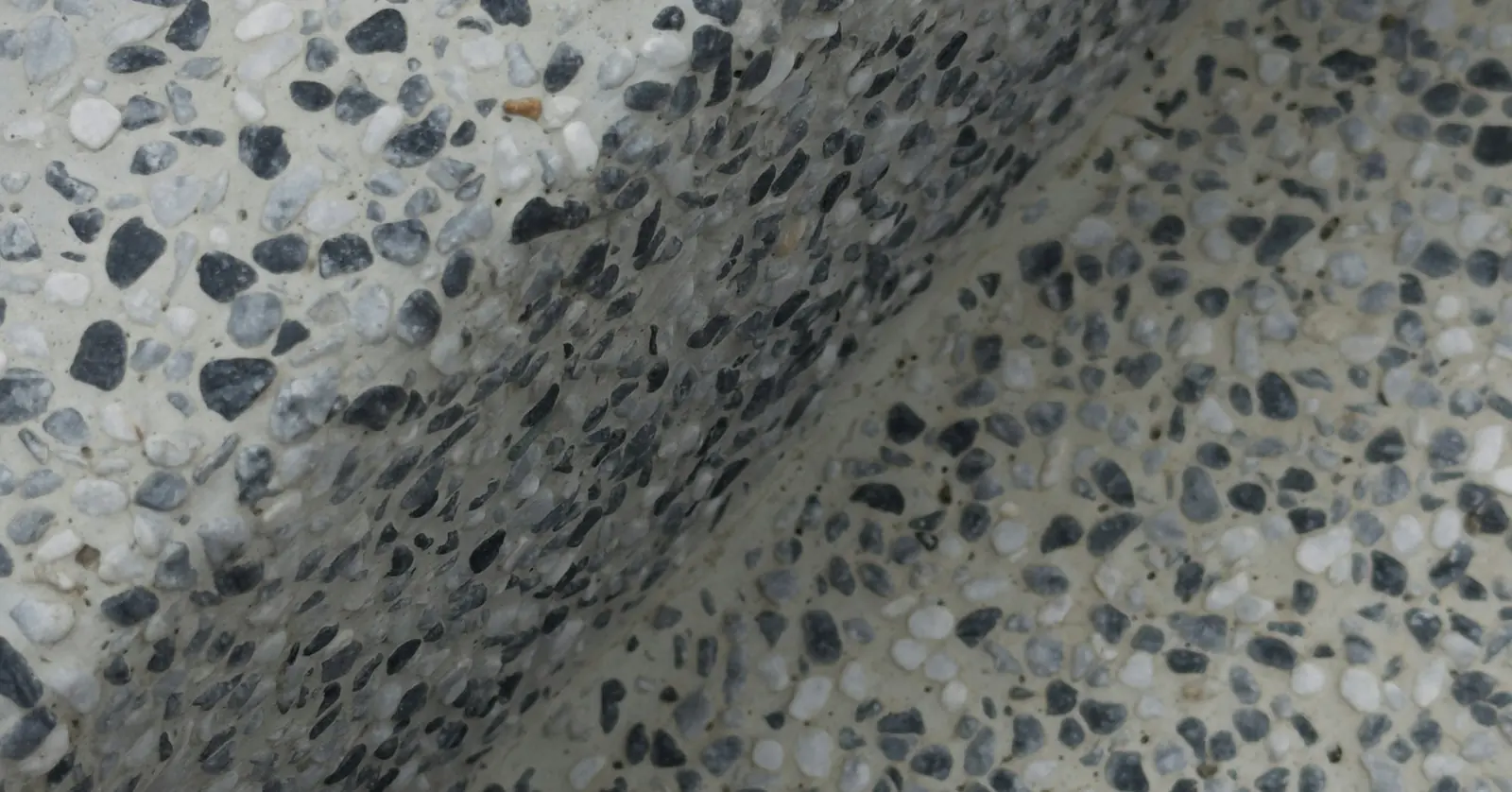
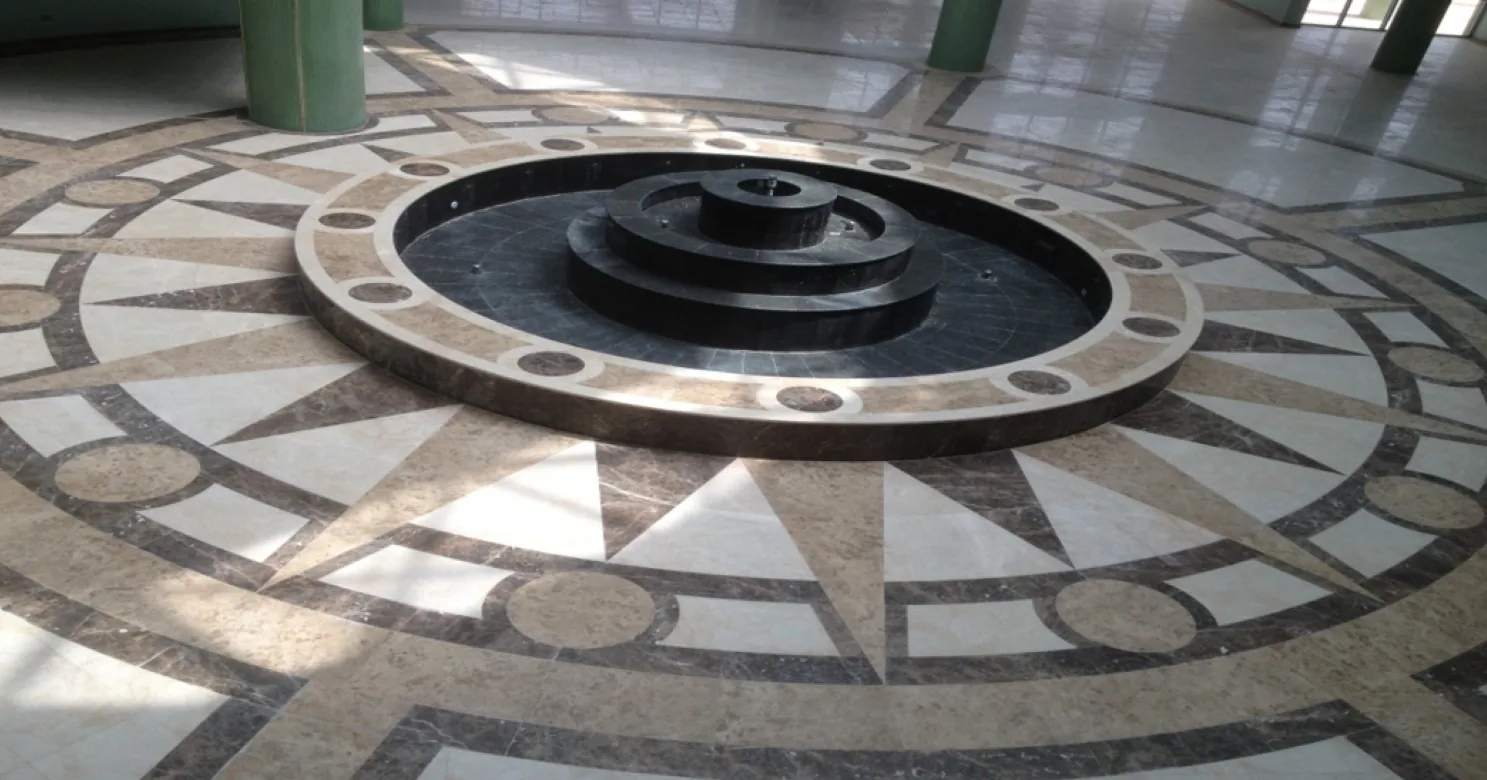
| Wash terrazzo (Qasr Rukham) | Washed stone-aggregate finish for bases, columns and facade bands | Batched and washed in consistent runs; meets granite at transitions and paving at the base |
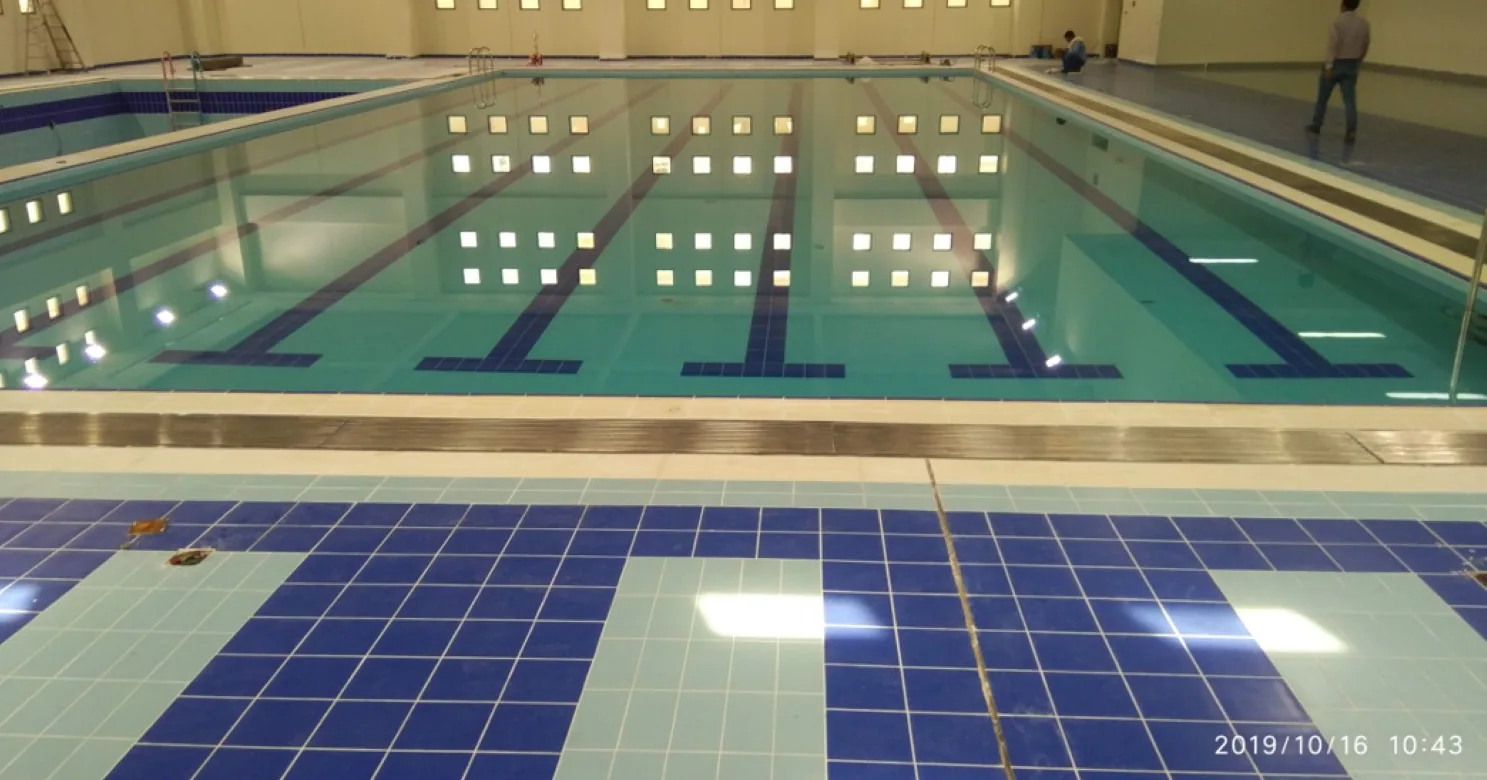
| Swimming pools | A watertight shell with tiled finish and deck | Falls, overflow and drains; filtration plant sits in MEP works; tested before tiling |
| Hardscaping | Paving, walkways, steps, boundary walls and planters | Sub-base, falls, drainage and irrigation sleeves before paving; finishes last |
| Fountain works | A small watertight basin as an entrance or courtyard feature | Recirculation plumbing from MEP; set into paving; leak-tested |
Scope points that decide who owns the edges
An external package passes through structure, roofing, stone, MEP and landscape hands. State these points in the scope or BOQ:
- Who supplies and positions the cast-in plates, channels and sleeves that cladding, canopies and railings fix to, and that they are in before the concrete is poured.
- Who surveys the as-built structure before cladding is set out, and who carries the risk if it differs from the drawing.
- Access: scaffolding or platforms, who provides them, for how long, and who makes good the fixing holes.
- Roof edges and parapets: who forms the upstand, who terminates the membrane, who fixes the flashing or cap.
- Roof, deck and basin drainage: outlets and overflows, and who connects them to the building's drainage.
- Pool and fountain plant: pumps, filters, power and controls sit in MEP works, so name the interface and who tests it.
- Stone and terrazzo: the approved sample, the accepted range of colour and veining, and the delivery batch it applies to.
Salt, dust and ground: how the exterior changes by city
The exterior takes the climate directly, so this is where a specification copied from another city fails first.
- Jeddah: salt air and humidity speed up corrosion of metal fixings and can carry salts through cementitious and stone materials, leaving white staining. Specify corrosion-resistant fixings, sealed and well-drained joints, and details that let water escape rather than trap it. Sudden heavy rain finds every low point on roofs and decks.
- Riyadh and Al Kharj: wide day-night temperature swings move cladding, terrazzo and paving every day, so joint spacing and sealants matter more than on the coast. Dust settles on wet finishes and in fresh joints, so protection and cleaning belong in the programme.
- Dammam: Gulf-coast humidity and salt as in Jeddah, plus coastal sabkha ground, which is salt-crusted with low bearing capacity and a shallow water table. That affects pool excavation, how an emptied pool or basin is handled, and the sub-base under paving, so start from a site investigation.
- Al Ahsa: inland, drier and more extreme than the Gulf coast, so specify closer to Riyadh than to Dammam.
What a consultant will check before each layer is covered
External work hides itself layer by layer, so the checks come just before things disappear:
- Roof: falls and drain levels confirmed and membrane tested, before the protection screed or paving goes over it.
- Cladding: fixing positions set out from the surveyed structure, anchors checked and a sample panel approved, before the first course.
- Terrazzo: sample panel and joint layout approved, batch consistent, wash timed to the cure.
- Pool and fountain: basin tested for leaks and waterproofing inspected as the specification requires, before tiling and before backfilling or paving.
- Hardscape: sub-base compacted, falls checked, sleeves and drainage in, before bedding.
- Handover: joints, sealant and cladding fixings inspected, drains cleared, records complete.
One envelope contractor or several?
Keeping roof, cladding and terrazzo on the same elevation under one coordinator removes the most common gap, the junction between them. Pools and fountains cross into MEP for plant and into structure for shells, so name who owns each interface even when one contractor holds the whole package. A specialist element with its own fabrication or approval time, such as fabricated stone, may be tendered separately if the interface is written into both scopes. Terrazzo vs Granite Cladding: Which Is Right for Your Facade? compares the two main facade finishes.
What's included
- Roof treatment — foam concrete & waterproofing
- Internal & external granite & marble cladding
- Wash terrazzo (Qasr Rukham) facades
- Hardscaping
- Swimming pools
- Fountain works
What's handled by another capability
- Interior finishing — plaster, flooring, ceilings and partitions — see Architectural Finishing
- Structural concrete and steel work — see Structural Works
- Pool and fountain filtration, pumps and electrical systems — see MEP Works
Materials & systems
- Foam concrete roof insulation & cementitious/bituminous waterproofing membranes
- Mechanical cladding fixings — cramps & anchors for granite and marble panels
- Granite & marble cladding panels, external & internal
- Wash terrazzo (Qasr Rukham) cement-and-stone-aggregate finish
- Reinforced concrete pool shells & tanking membranes
- Pool-rated ceramic, porcelain & mosaic tiling
- Paving units, stone and edge-restraint systems
- Irrigation sleeving & drainage fittings
Projects using this capability
 Government
 Commercial
 Government
 Residential
 Residential
 Residential
Where we deliver this
Head officeJeddah
Makkah Region
Ashlaar's head office, and the largest share of our project record.
7 projects delivered
Riyadh
Riyadh Region
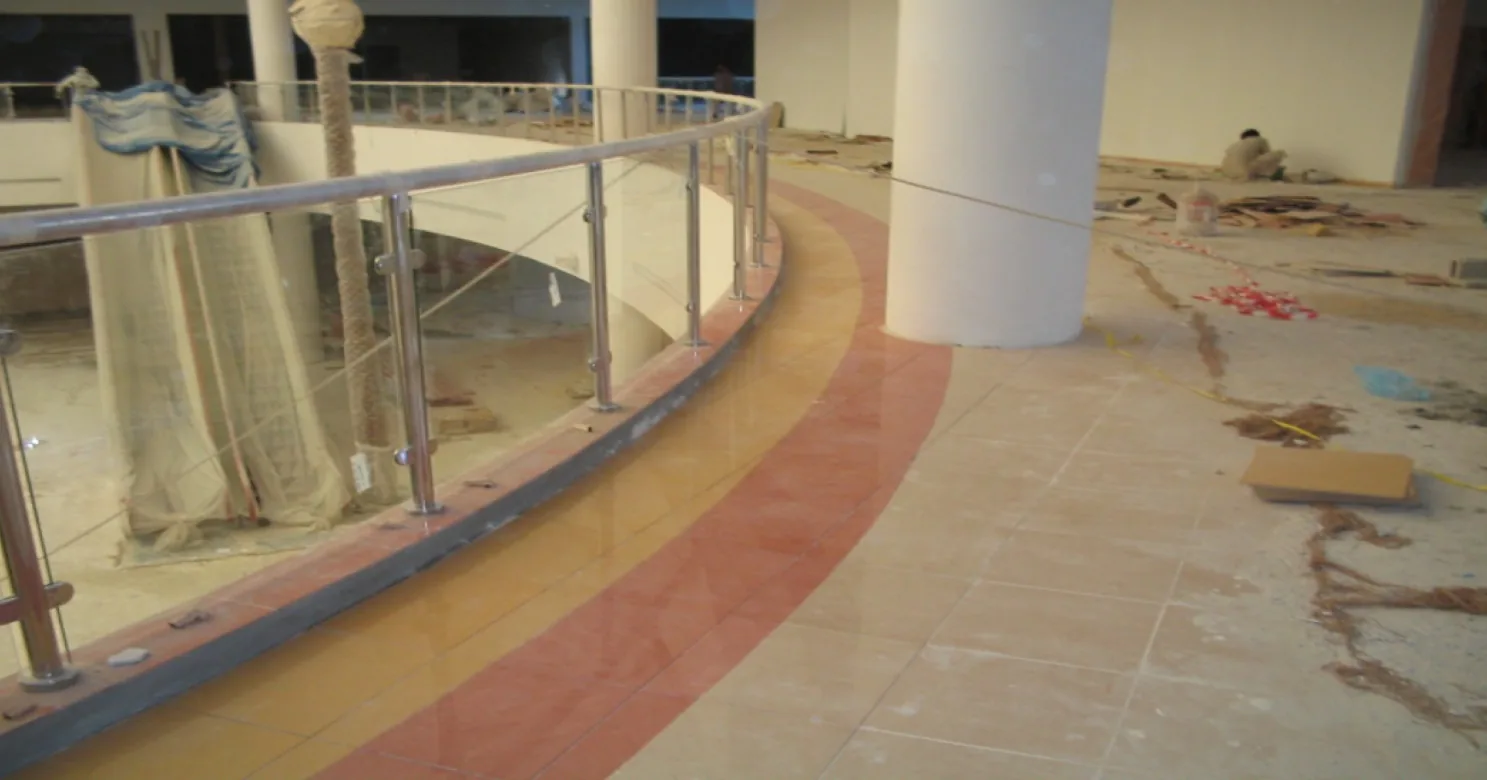
Our largest project base outside Jeddah.
6 projects delivered
Dammam
Eastern Province
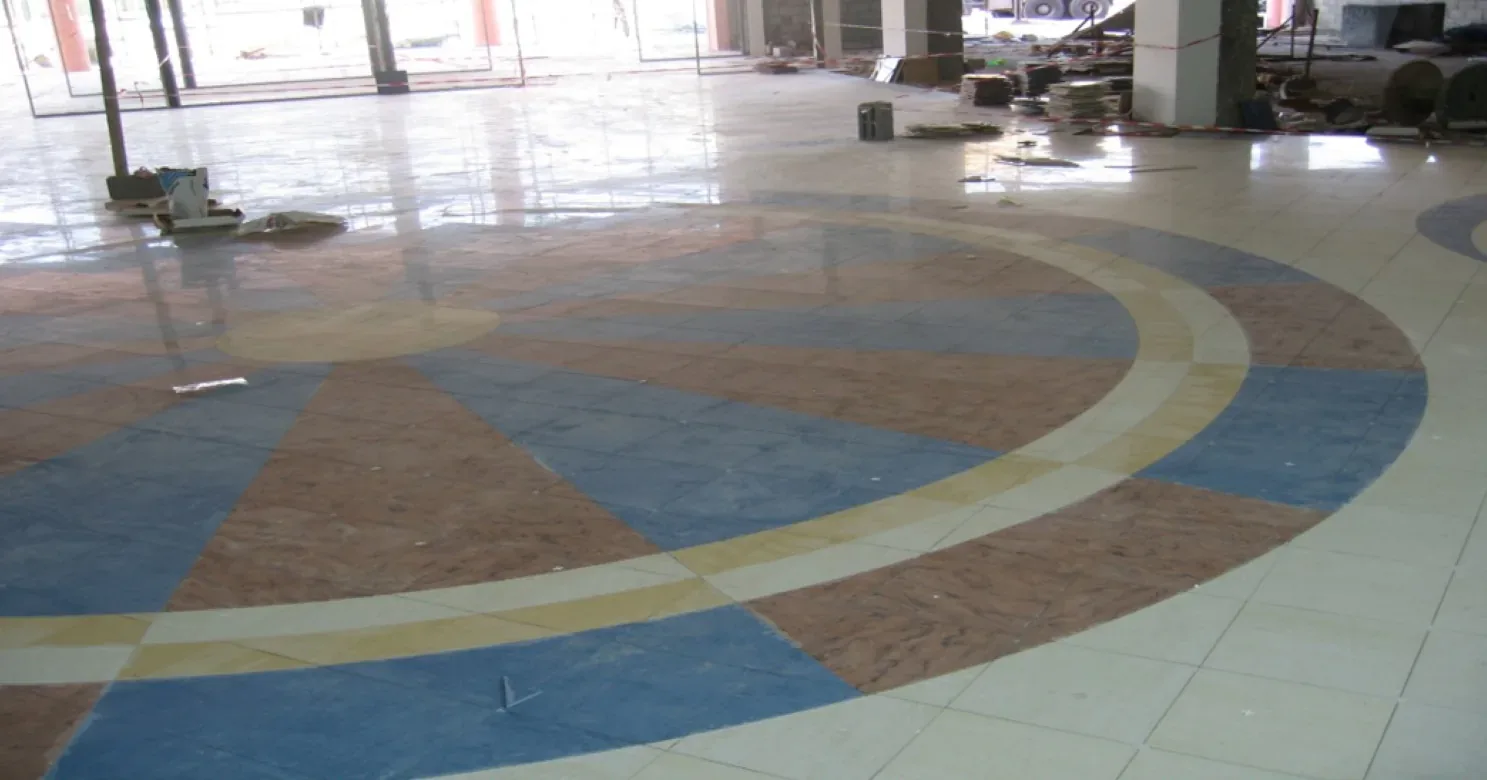
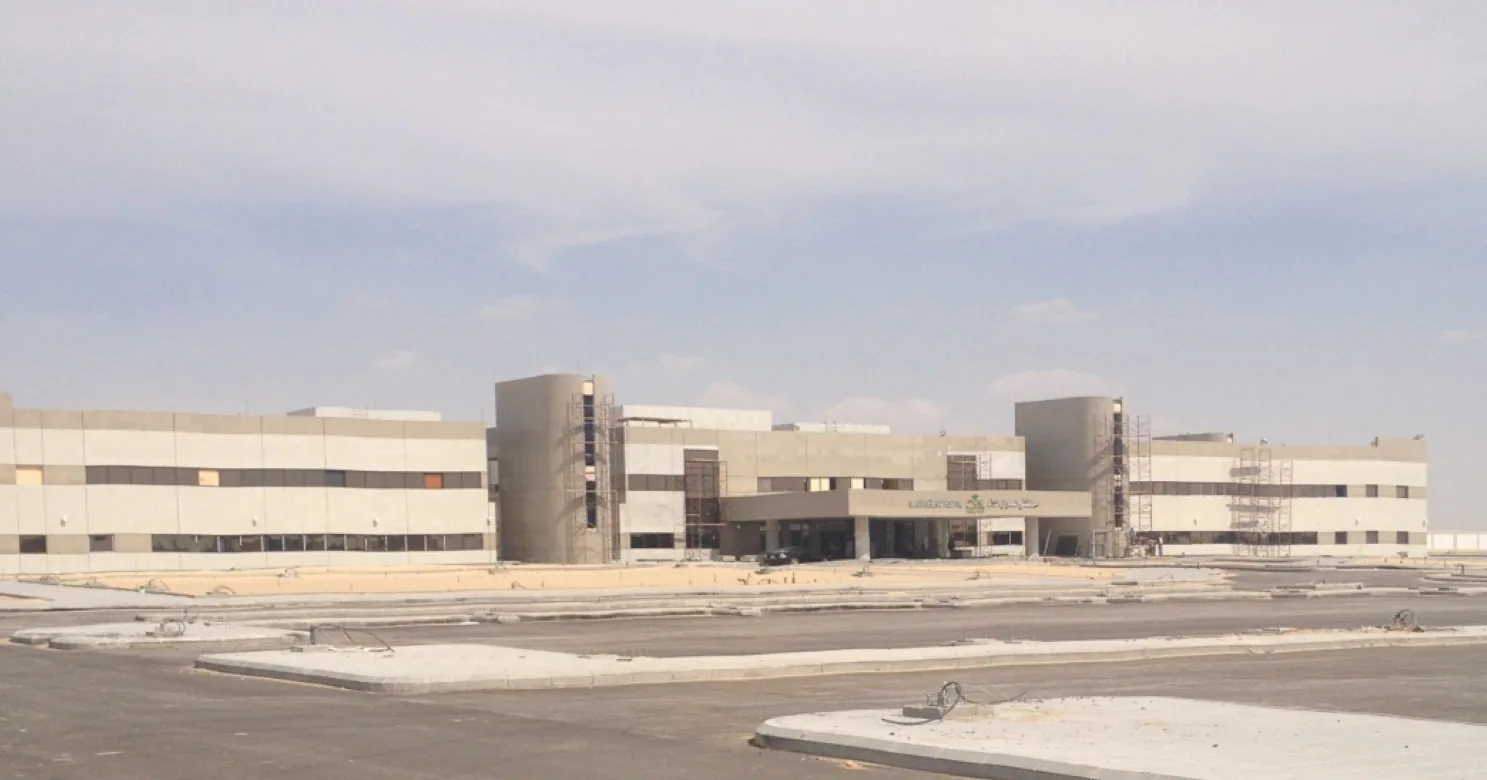
Interior finishing and flooring for a retail development.
1 project delivered
Al Ahsa
Eastern Province
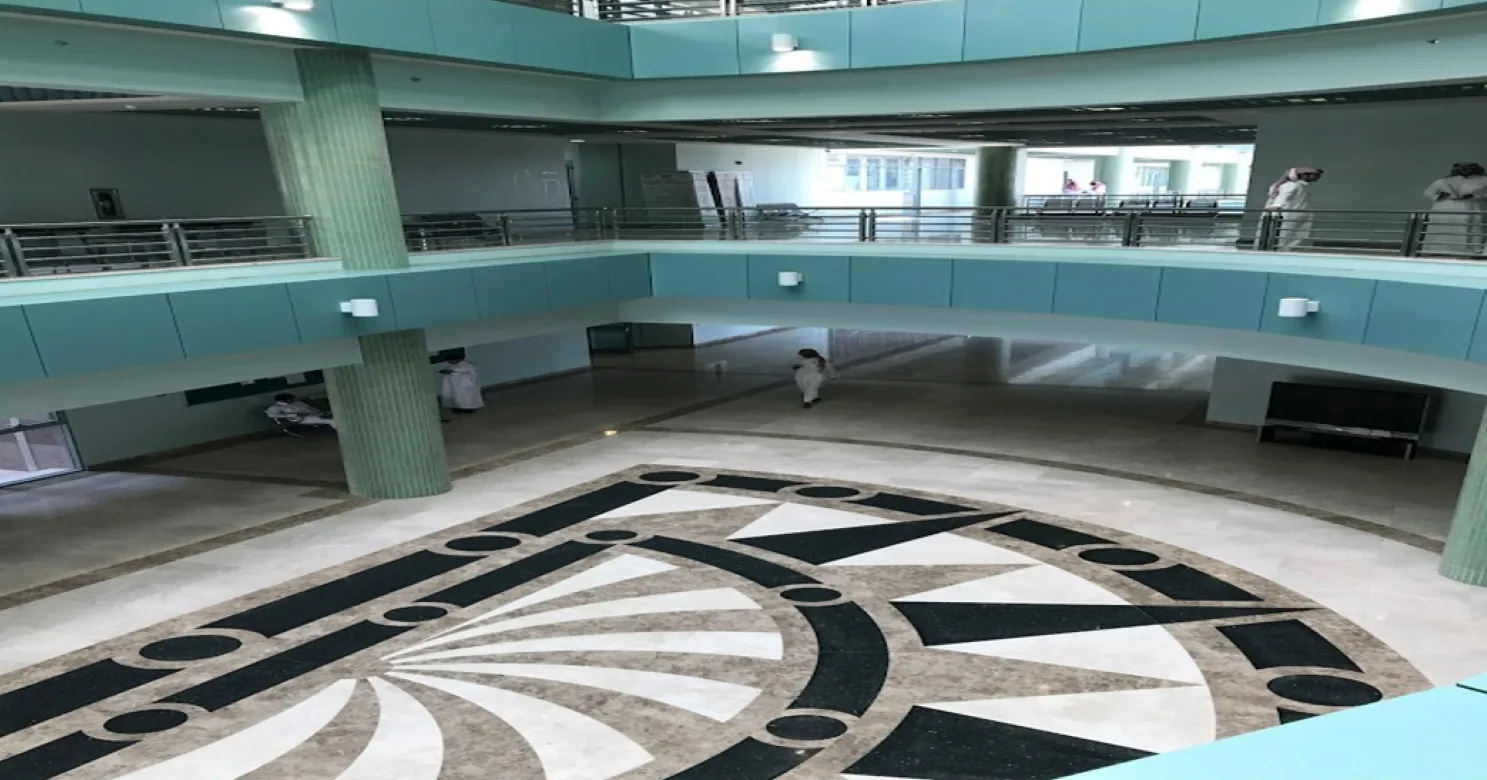
Architectural finishing for a healthcare facility.
1 project delivered
Al Kharj
Riyadh Region
The Kingdom's dairy capital — and our largest Riyadh Region project outside the capital itself.
1 project delivered
Huraymila
Riyadh Region
A college campus finishing scope, part of our wider Riyadh Region higher-education work.
1 project delivered
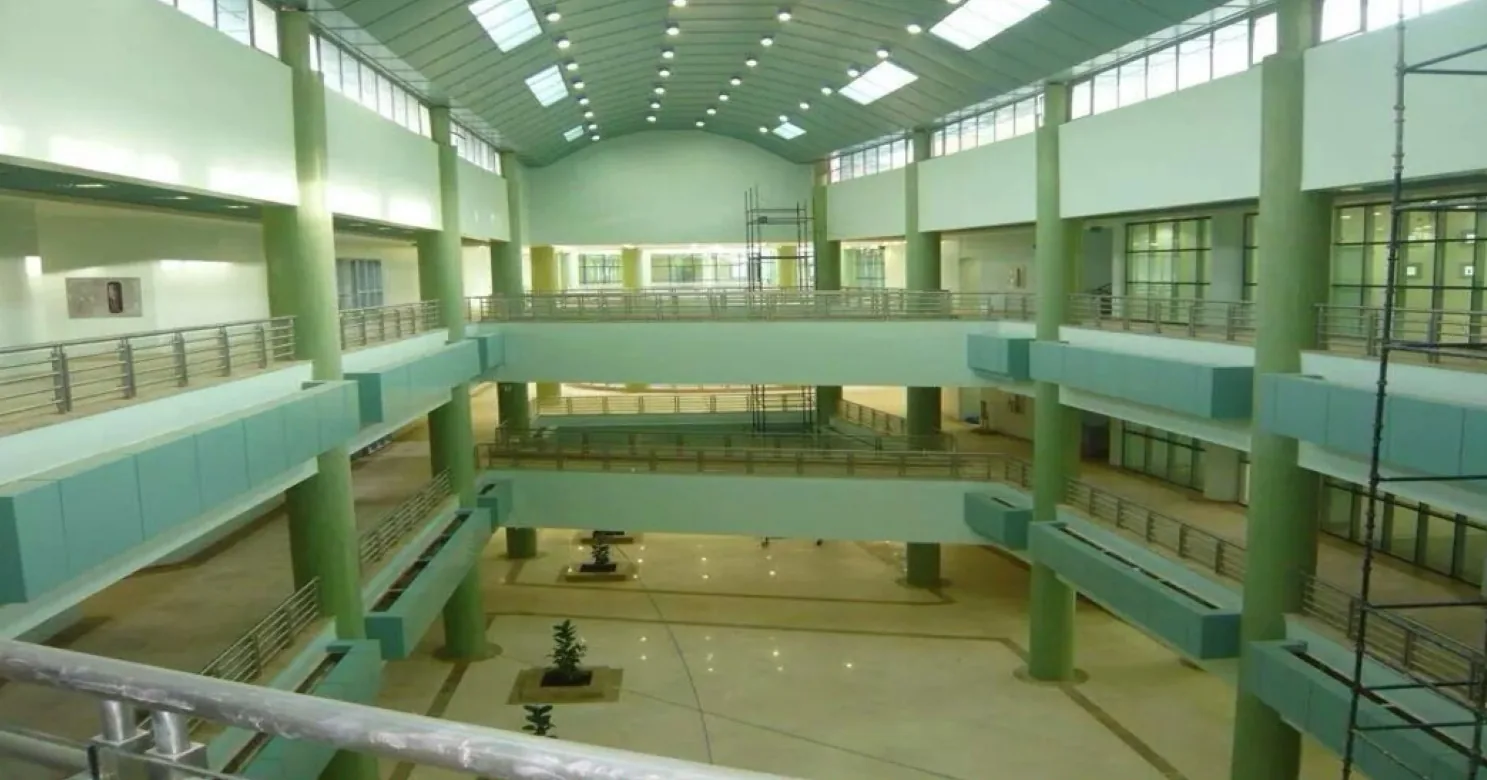
Muzahmia
Riyadh Region
A university campus finishing scope, on the Riyadh–Mecca Highway corridor west of the capital.
1 project delivered
What affects the cost
Every quote is scoped to the actual project, not a rate card — the real drivers are the size of the area being finished, the material grade specified, how many trades are sequenced around the work, and site access and logistics. Your technical team will give you a clear, itemised estimate after a scope review, not a bare figure with no basis.
Why main contractors keep calling us back
One contract, five trades
Finishing, facade, MEP, structure and supervision sit under one accountable team, so the gaps between trades stop being your problem to manage.
Built to government specification
Twenty-five years on ministry, university and hospital work means our QA records, submittals and HSE files arrive in the form the consultant expects.
Engineers on site, not on paper
A dedicated support-engineering team runs scheduling, technical queries, quality and safety daily on every active project.
A schedule you can report upward
We sequence the finishing works against the main contractor's critical path and report progress against it every week.
Related reading
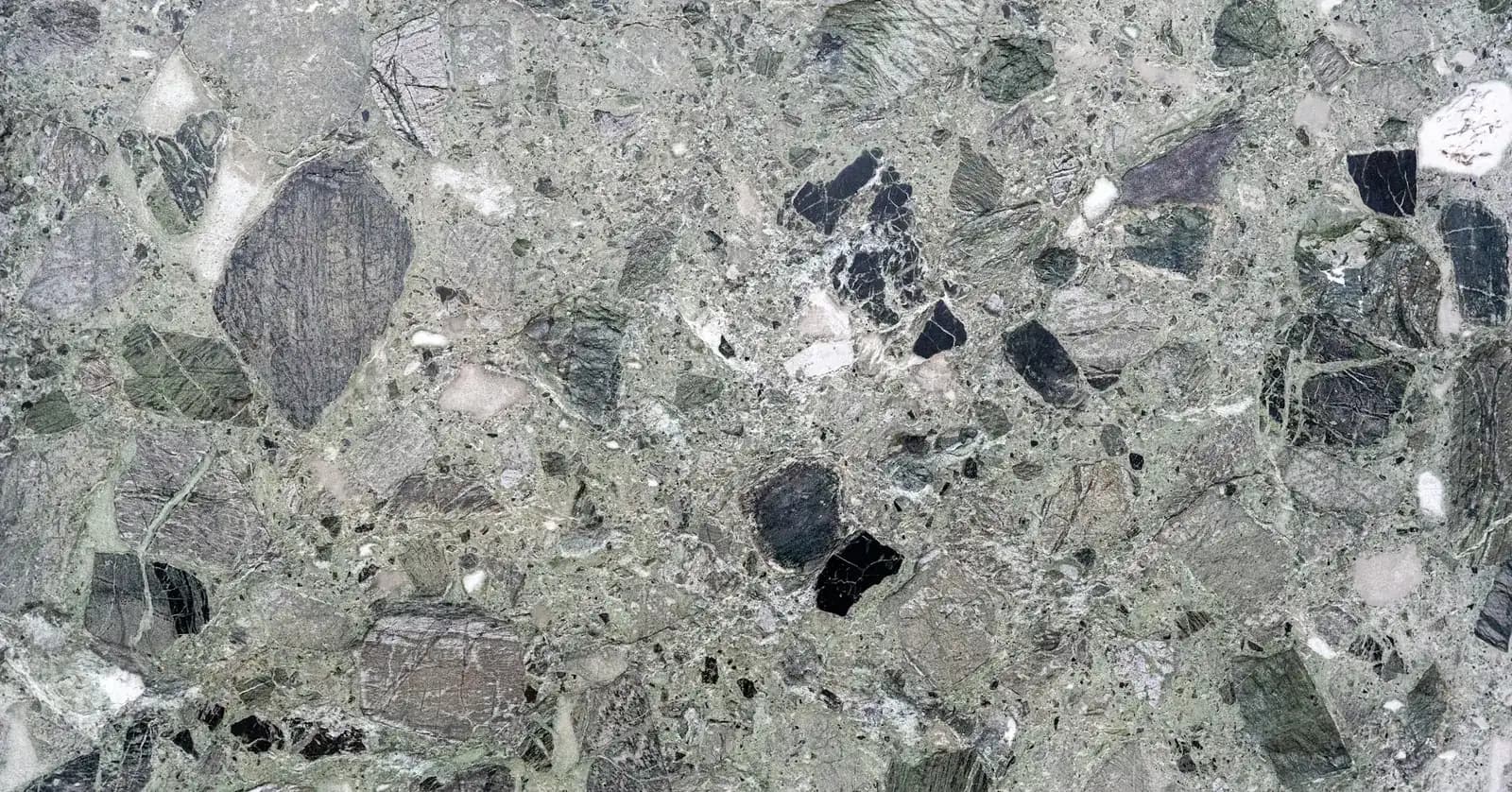
Terrazzo vs Granite Cladding: Which Is Right for Your Facade?
Granite cladding and wash terrazzo compared honestly — cost, durability, design flexibility and maintenance — so you can match the material to the facade.
Read more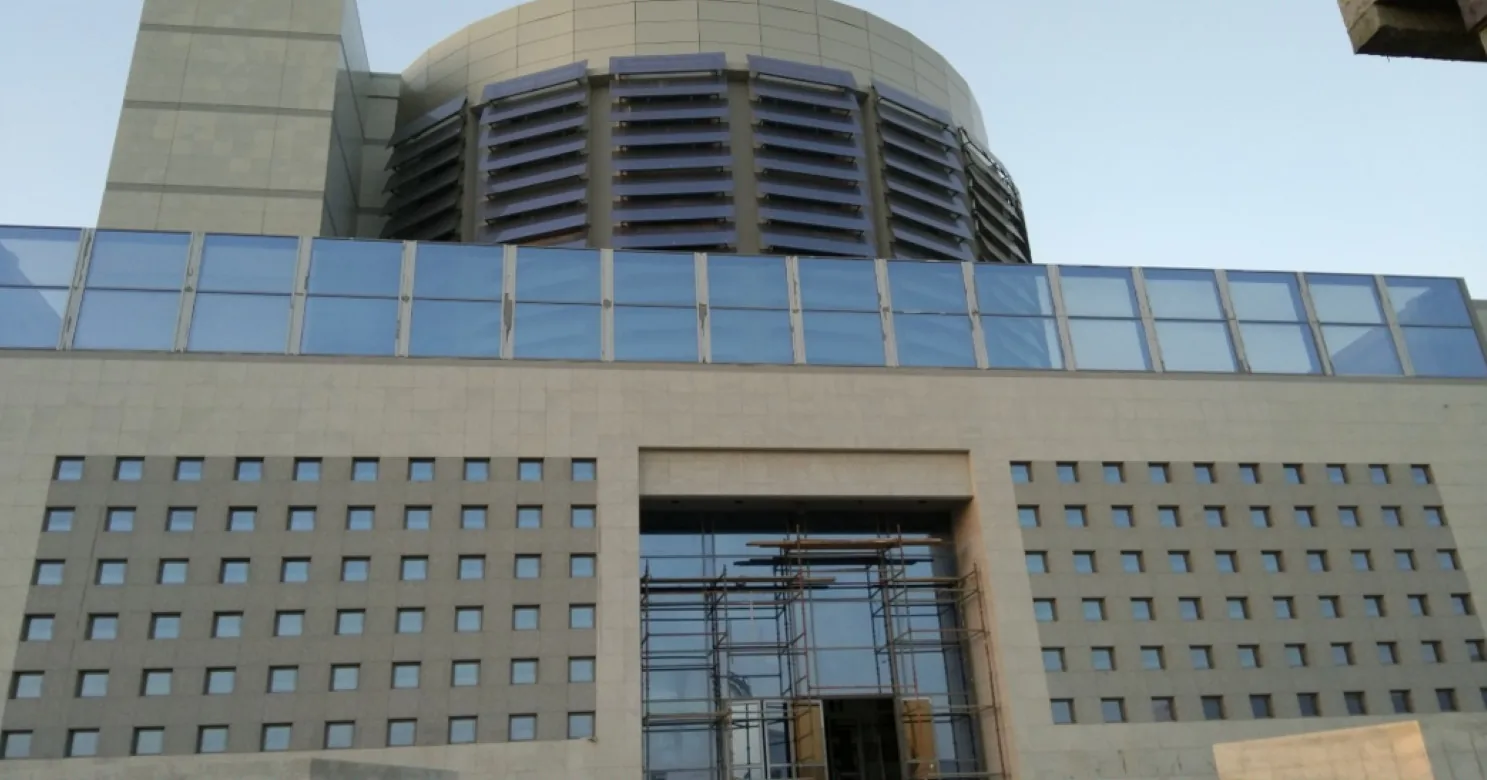
Finishing a Government Institution: The Institute of Public Administration Project
How Ashlaar delivered architectural finishing and an external granite cladding system for the Institute of Public Administration, a flagship Jeddah project.
Read more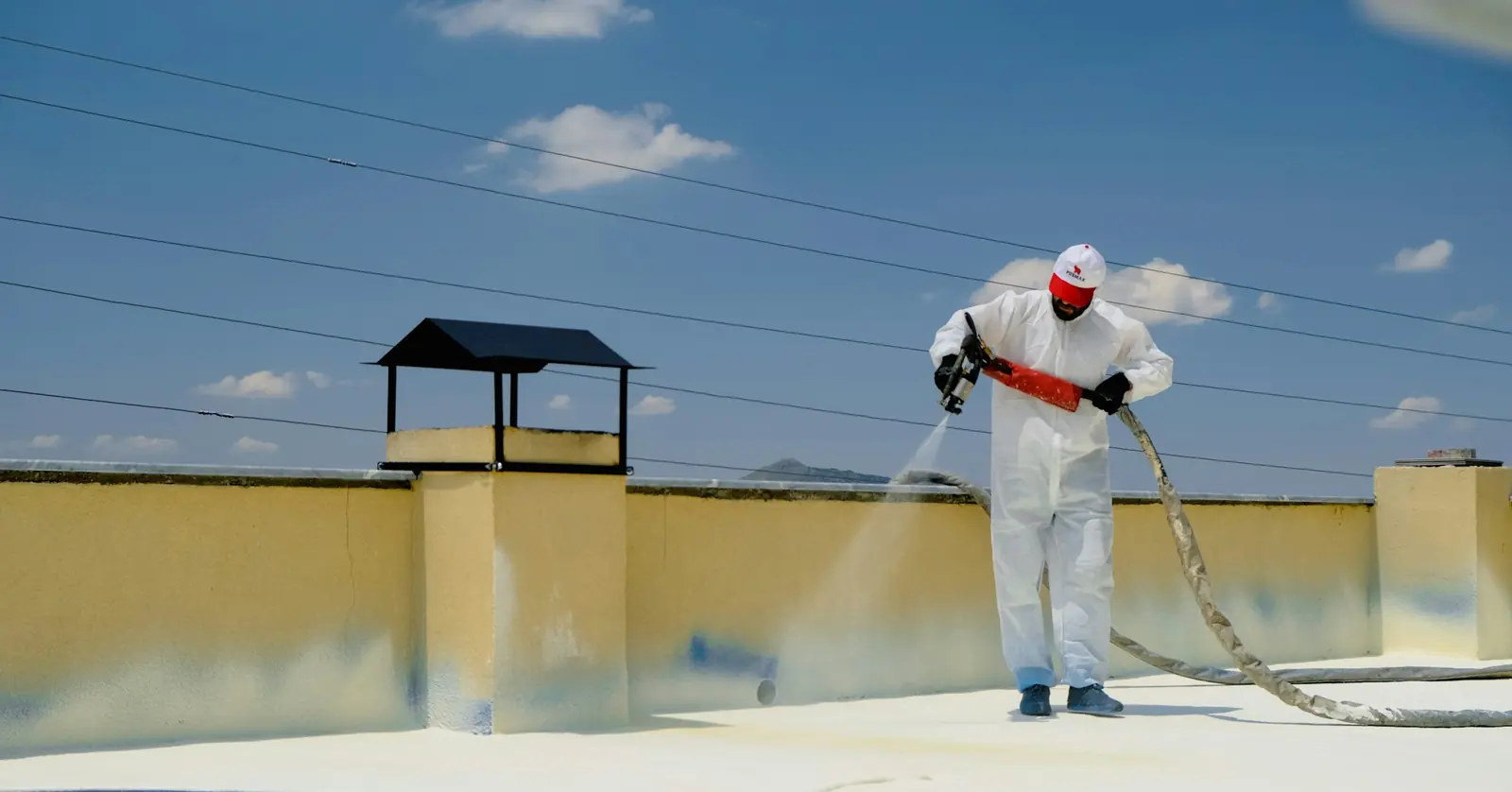
Types of Waterproofing Systems for Wet Areas
A practical comparison of cementitious, liquid-membrane, sheet and crystalline waterproofing systems, and where each genuinely belongs on a project.
Read moreFrequently asked
Do external and facade works run as one coordinated scope, or as separate contracts?
One coordinated scope — cladding, terrazzo, roof treatment, hardscaping, pools and fountains are sequenced together on a single project, with the same support-engineering inspection process across all of them, rather than treated as unrelated trades.
Can you take on a single element — like granite cladding — without the rest of the external works scope?
Yes — each of these six areas can be engaged on its own; most of our project record shows several of them delivered together on the same building, but each has its own scope and pricing.
How do you sequence external works so pool, hardscape and cladding trades don't conflict with each other?
Where a project includes more than one of these elements, they're planned and sequenced together from the start — hardscaping around a pool or fountain, cladding coordinated with roof treatment on the same elevation — rather than run as separate trades working around each other.
Do external works get the same inspection standard as interior finishing?
Yes — our support-engineering team inspects each wet-critical or structurally-fixed element (roof membranes, pool shells, cladding fixings) before it's covered or signed off, the same discipline applied across every Ashlaar scope.
Which sub-services fall under External & Facade Works?
Six, from roof waterproofing and granite/marble cladding to wash terrazzo, hardscaping, swimming pools and fountain works — see the full list below.
What order should external works be built in?
Generally from the top down: roof treatment first, then cladding and terrazzo, then hardscaping last, with pool shells and fountain basins tested before the paving around them. The order for a specific building depends on access, the structure and the programme, so agree it in writing before the first trade starts.
How does salt air change a facade specification in Jeddah?
Salt and humidity speed up corrosion of metal fixings and can carry salts through cementitious and stone materials, causing white staining. The specification should call for corrosion-resistant fixings, sealed and well-drained joints and details that let water escape, and the consultant should approve the fixing system before stone is ordered. See [[loc:jeddah]].
Why survey the structure before ordering cladding?
Cladding is fixed back to the structure, and real concrete or block rarely matches the drawing exactly. A survey of the as-built frame lets the fixing system and joint layout absorb the difference, instead of cutting or packing panels on site. Ordering stone before that survey is one of the common causes of rework.
What should the scope say about roof edges and parapets?
Name who forms the upstand, who terminates the membrane against it, who fixes the flashing or cap, and who is responsible if water passes the junction. It is where roof waterproofing, structure and cladding meet, and where a detail nobody owns most often leaks.
Planning a project? Let's talk finishing.
Tell us about your scope and timeline — our technical team will respond with a clear, considered proposal.