Types of Waterproofing Systems for Wet Areas
Ashlaar Technical Team · September 21, 2026
Waterproofing failure is one of the most common, and most expensive, defects to fix after a building is handed over, precisely because it's invisible until it fails. A waterproofing membrane sits behind tile, under screed, under a roof finish or a pool deck — nobody sees it again once the finishing trades close over it, which means nobody discovers a problem with it until water shows up somewhere it shouldn't, usually well after the contractor who installed it has moved on to another site and the original crew has scattered across other projects. That makes it worth understanding what the real system options actually are before assuming "waterproofing" is a single generic product a contractor either applies or doesn't. It isn't. Different systems suit different substrates, different areas of a building and different failure risks, and the right choice is a genuine technical decision made area by area, not a single checkbox ticked once for the whole project. A roof, a bathroom, a basement and a swimming pool are exposed to entirely different combinations of standing water, movement, temperature swings and chemical exposure, and treating them as one undifferentiated "waterproofing" line item is exactly how a genuinely capable contractor ends up specifying the wrong system for the wrong place.
Cementitious waterproofing
A cement-based coating or slurry, typically applied in two coats by brush or trowel, that bonds well to concrete and blockwork substrates without needing a separate primer layer in most cases. Its biggest practical advantage is that it tolerates being tiled directly over it, which is exactly why it's the common, cost-effective choice for standard bathroom and wet-area tanking under tile across residential and commercial projects alike. Its limitation is that it's relatively rigid rather than flexible, so it's less forgiving over hairline cracking or structural movement than a membrane system — a real consideration in areas where some movement is expected, such as near a construction joint or on an upper floor of a taller building, but rarely a problem in a straightforward bathroom application on a stable ground-floor or mid-rise slab. Because it's inexpensive and familiar to almost every tiling crew, it's also the system most likely to be applied carelessly by a crew treating it as a formality on the way to the part of the job that shows — which is exactly why the inspection step matters more for this system than the material choice itself.
Liquid-applied membrane (polyurethane or acrylic)
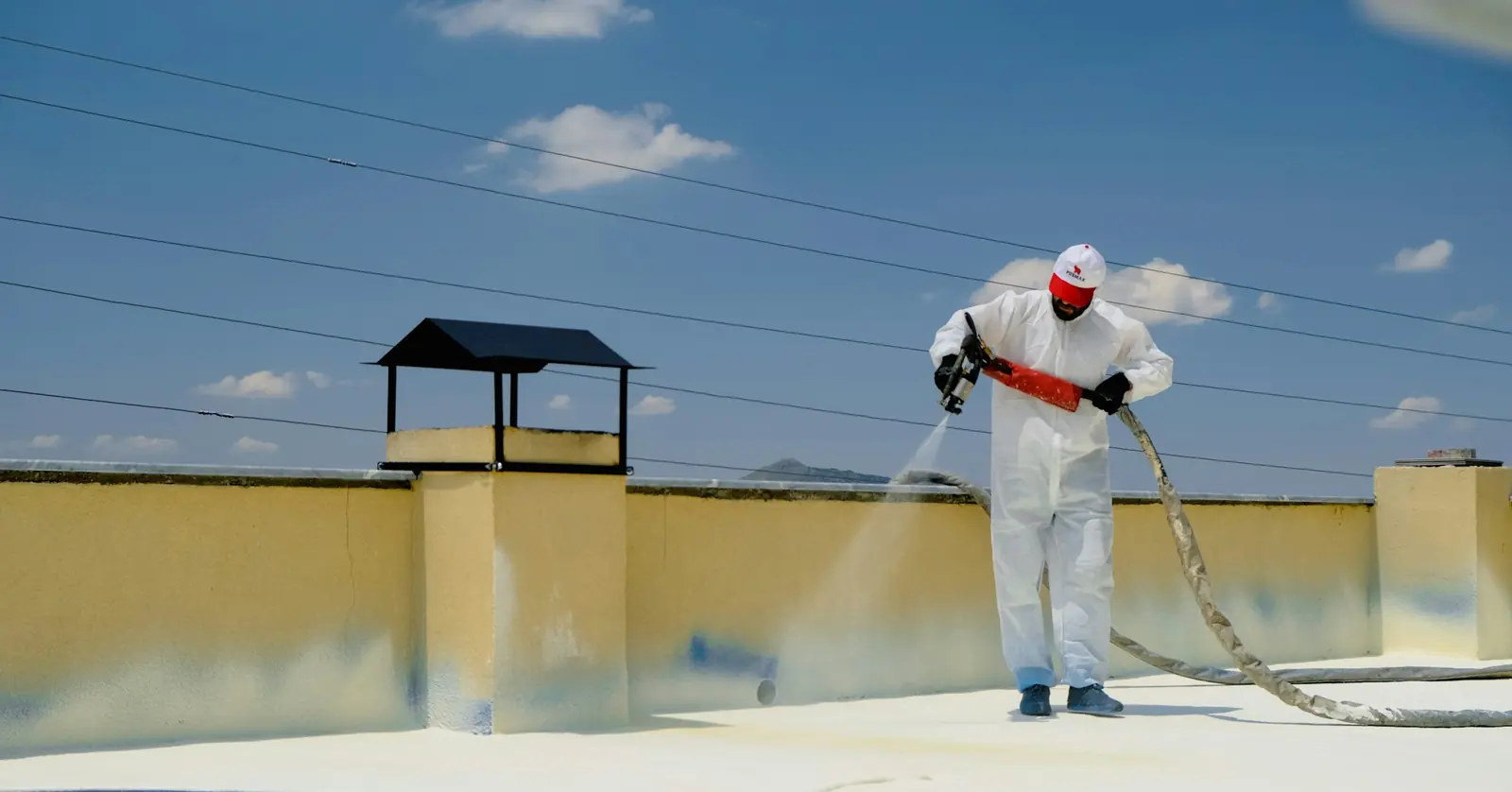
A roller- or spray-applied liquid that cures into a seamless, flexible membrane, well suited to roofs, podium decks, balconies and any area with irregular geometry or awkward details — pipe penetrations, upstands, corners, changes in level — where a sheet membrane would need an impractical number of joints and seams to follow the same geometry. Its flexibility lets it bridge minor cracking that a rigid cementitious system couldn't tolerate, which is exactly why it's a common choice for roof waterproofing across a wide range of building types. It needs correct surface preparation and proper cure time between coats to perform as intended, and for exposed roof applications under Saudi Arabia's sun, a UV-stable formulation genuinely matters — a membrane not designed for sustained UV exposure will chalk, crack and degrade faster than one that is, regardless of how well it was applied on day one.
Sheet or torch-on bituminous membrane
Factory-made membrane rolls, often modified-bitumen, torched or self-adhered onto the substrate in overlapping runs. This is a historically well-proven system for roofs and podium or planter waterproofing, with a strong long-term track record when installed correctly by a crew that actually understands the material, going back decades across the region. Its main vulnerability isn't the material itself but the installation: joints have to be properly lapped and sealed, and a poorly lapped joint is a classic, well-documented failure point in this type of system — often the single detail that separates a roof that stays dry for twenty years from one that starts leaking within two. It's typically then protected by a screed, insulation or ballast layer above it rather than left exposed to weather and foot traffic directly, which also shields it from the UV degradation that would otherwise shorten its service life considerably.
Crystalline or integral waterproofing
An admixture blended into concrete at the batching stage, or applied as a surface slurry after the fact, that reacts with moisture to form crystals blocking the capillary paths through the concrete itself. This is particularly well suited to below-grade structures — basements, water tanks, lift pits, retaining walls holding back groundwater — where the goal is to make the concrete mass itself resist water penetration, rather than relying on an applied surface layer that could be damaged, punctured or bypassed by later trades working nearby without realizing what they're cutting through. It's a genuinely different approach from the surface-applied systems above, working from within the material rather than as a coating on top of it, and it's generally less relevant to standard bathroom or wet-area tiling scope, where a cementitious or membrane system is the more typical and more cost-effective choice. Because it's built into the concrete rather than applied as a separate step, it also removes one entire point of potential failure from the programme — there's no membrane to puncture and no coating to hold up construction traffic while it cures, which is part of why it's specified so consistently on below-grade work despite carrying its own cost premium.
The wet-area detailing that matters more than the product choice
Most real waterproofing failures trace back to a detailing or sequencing miss rather than the wrong product being selected in the first place. Upstands at wall-floor junctions need to be the correct height, not just present in some form. Coverage under the shower area needs to be full and continuous, not patchy or thinned out at the edges to save material. Floor drains and pipe penetrations — genuinely the highest-risk points in any wet-area membrane, because they're where the continuous surface has to be interrupted — need specific, careful treatment with purpose-made collars or flashing rather than a generic pass with the same coating used everywhere else. And critically, the area needs to be inspected, and ideally flood-tested by holding water on it for a set period, before tiling covers it and effectively hides it for the life of the building. A contractor's willingness to hold that inspection point, rather than rushing straight to tiling to protect programme and hit a handover date, is a better predictor of a dry bathroom in five years than the specific product brand printed on the tin.
Roofs and podiums in the Saudi climate specifically
Extreme summer surface temperatures, intense UV exposure, and, in coastal cities like Jeddah, salt-laden air all accelerate wear on exposed waterproofing systems faster than they would in a milder climate the product might originally have been tested and rated for. Protection layers — insulation, screed, pavers or ballast over the membrane — matter as much as the base membrane choice itself, because they're what actually shields the waterproofing from direct sun and thermal cycling day after day, year after year, rather than leaving it to face the elements alone. A system and product genuinely proven in a temperate climate can under-perform here if it's specified without accounting for this, which is exactly why UV-stable formulations and a proper protection build-up are worth confirming explicitly with whoever is specifying the system, rather than assuming it as standard practice everyone follows anyway.
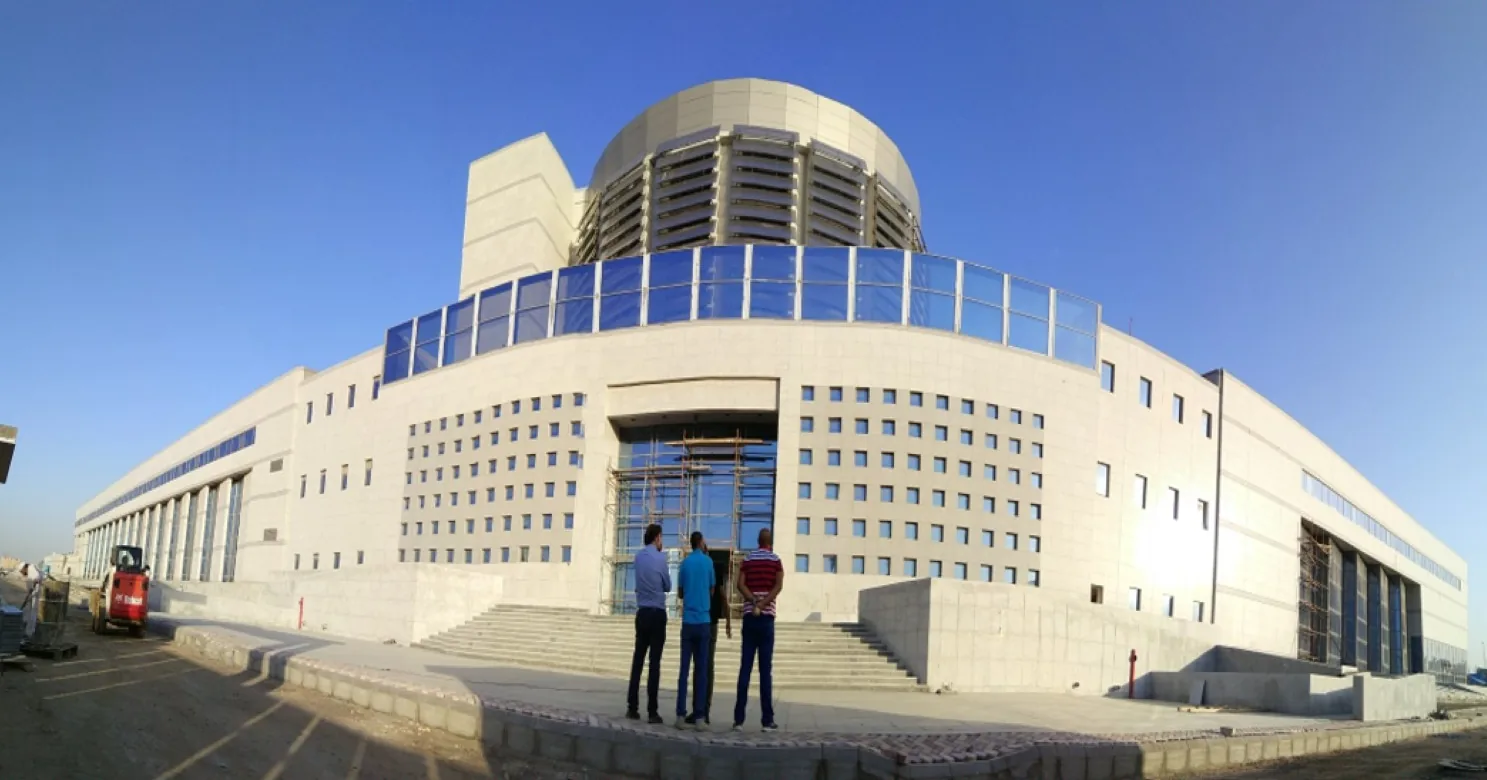
Wet-area waterproofing and roof treatment with foam concrete and waterproofing both sit inside Ashlaar's real architectural finishing and external works scope, delivered by the same team responsible for what goes over them — the tiling, the roof finish, the pool deck, like the completed indoor pool waterproofed and finished as part of the Institute of Public Administration in Jeddah, where the finished, tiled result is what a visitor sees but the waterproofing underneath it is what actually determines whether that result still looks the same in ten years. Keeping the waterproofing and the visible finish under one team's responsibility also closes off a common excuse in this industry, where a tiling contractor and a waterproofing contractor each blame the other once a leak appears, because neither one installed both layers and neither can be held fully accountable for the result on its own. The practical advice to close on: ask what specific system is proposed for each specific area of your project, because a roof, a bathroom and a basement are three different technical problems with three different right answers, not one generic "is it waterproofed" question with one generic answer that papers over all of them, and ask, too, who will actually inspect and sign off on it before it disappears from view for good.
Related capabilities
Related projects
 Government
Planning a project? Let's talk finishing.
Tell us about your scope and timeline — our technical team will respond with a clear, considered proposal.