Marble & Flooring Contractor in Jeddah
Marble flooring contractor in Jeddah: marble, ceramic, porcelain and MDF flooring laid level, jointed and finished to last under daily traffic.
Request a QuoteFlooring is the finish a building's occupants touch every single day, and it's also one of the most expensive to redo once it's down — you're not just replacing tile, you're often cutting into a room that's already fitted out around it. A floor laid without checking the substrate for level, without the right joint pattern and movement allowance, or with the wrong adhesive for the material, shows it within months: lippage at the joints, hollow-sounding tiles, cracking at the edges. We treat the substrate and the layout as the part of this scope that decides whether the finish lasts.
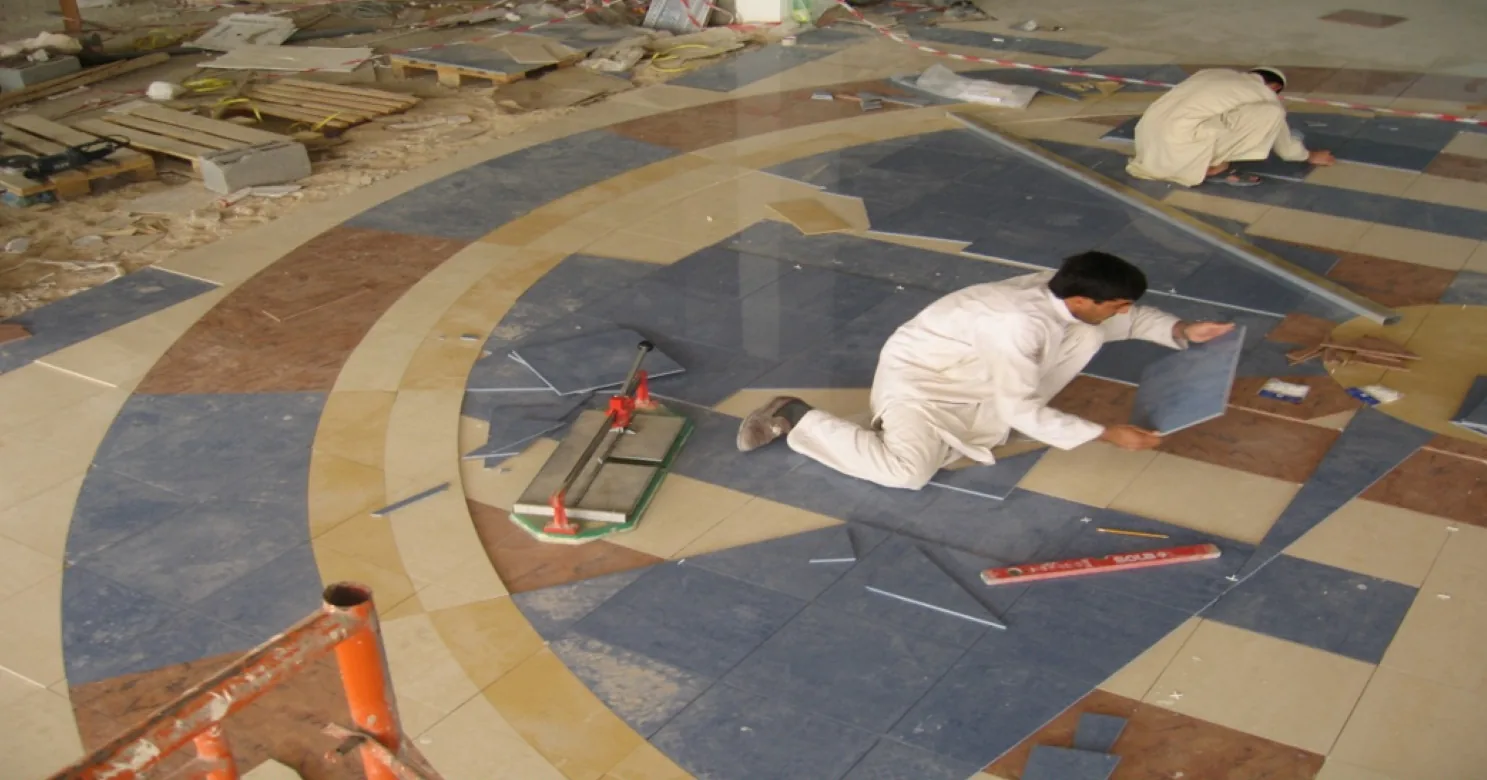
Our flooring scope covers marble, ceramic, porcelain and MDF, specified per space based on traffic, moisture exposure and the pattern or finish the design calls for. Work follows the same sequence on every project: substrate checked for level and moisture, and screeded where it isn't; setting-out and joint pattern agreed and dry-laid where the pattern is complex — medallions, borders, inlay work — before anything is fixed permanently; material fixed with the adhesive system suited to that substrate and material; and joints filled, edges finished and the surface protected until handover. Movement joints are built into the layout at the design stage, not added as an afterthought.
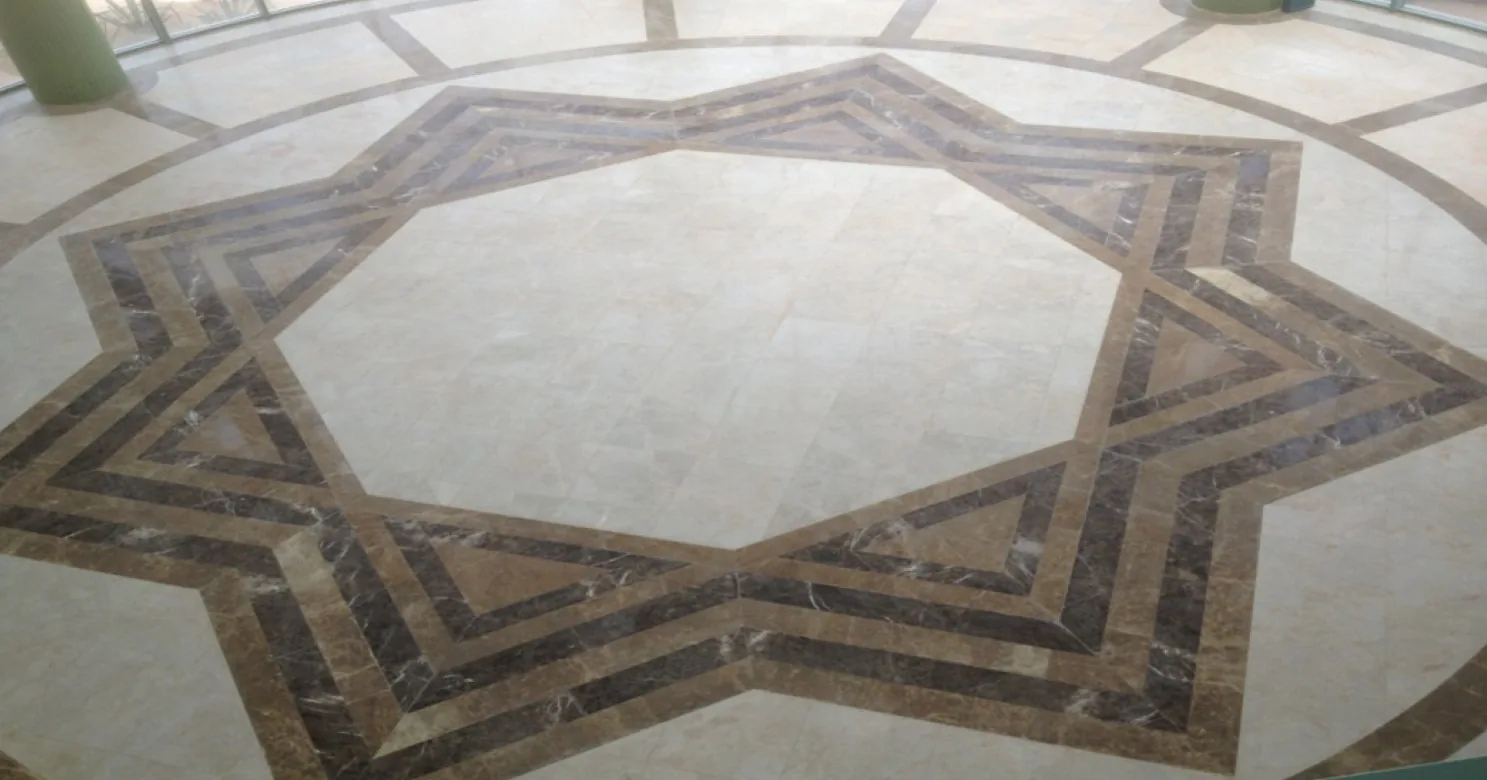
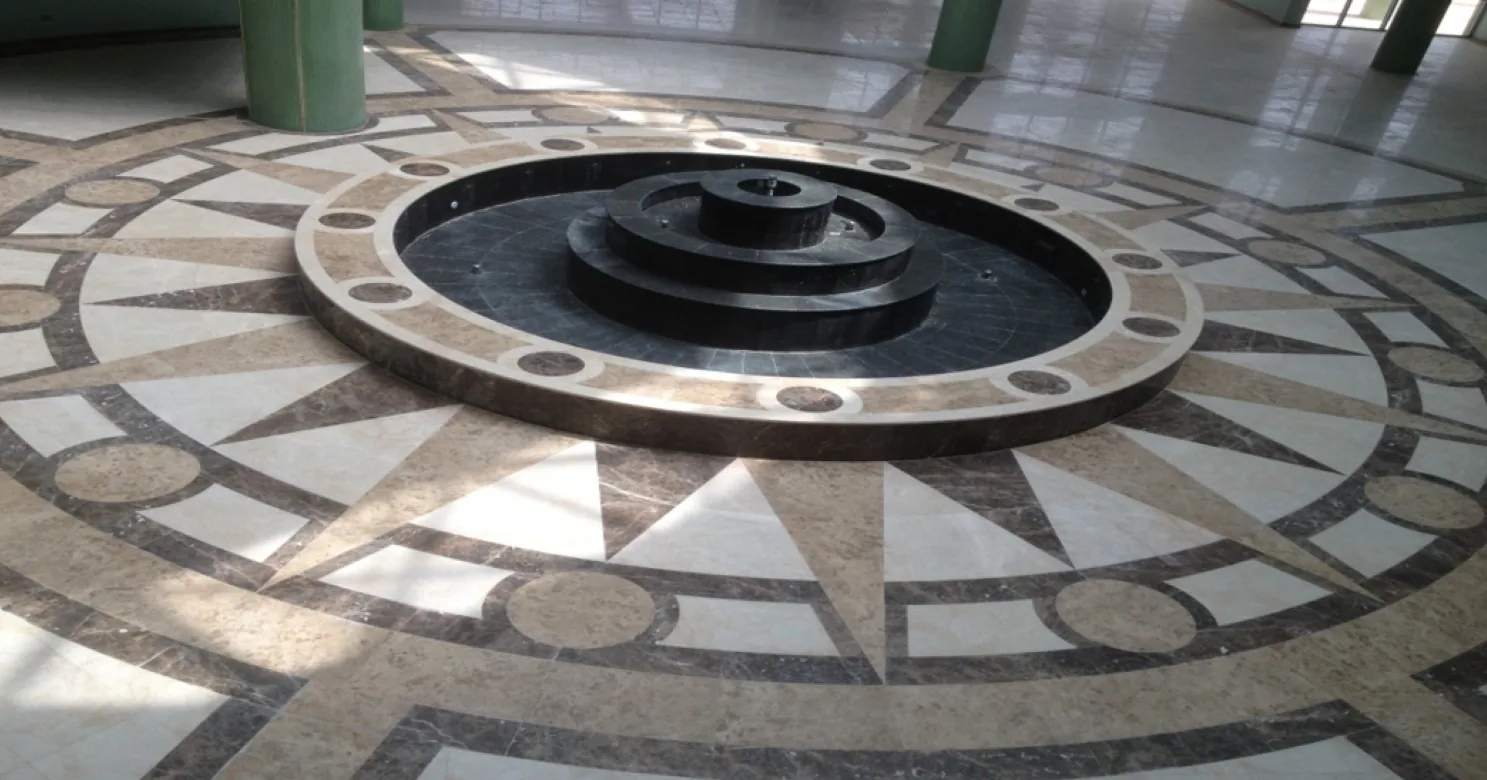
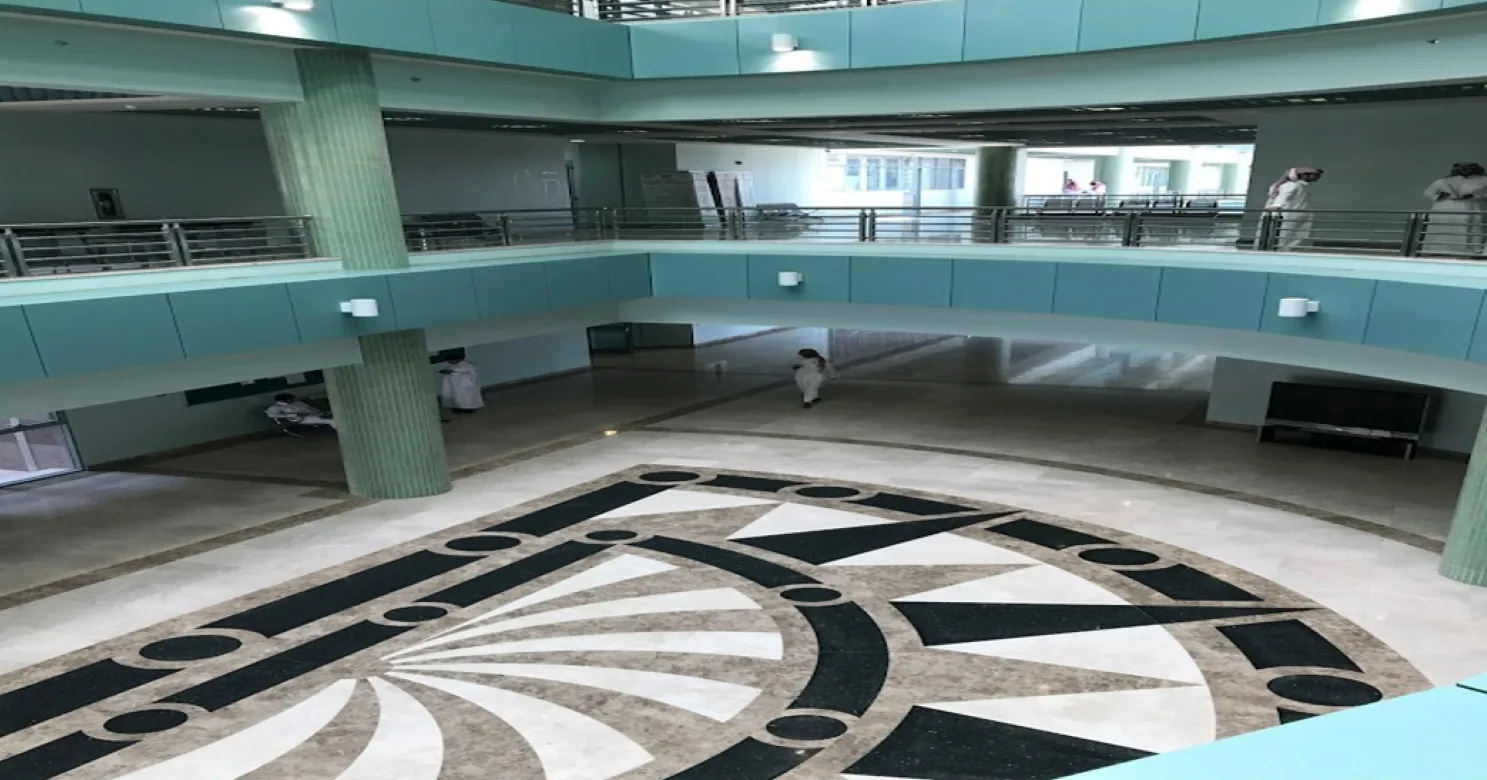
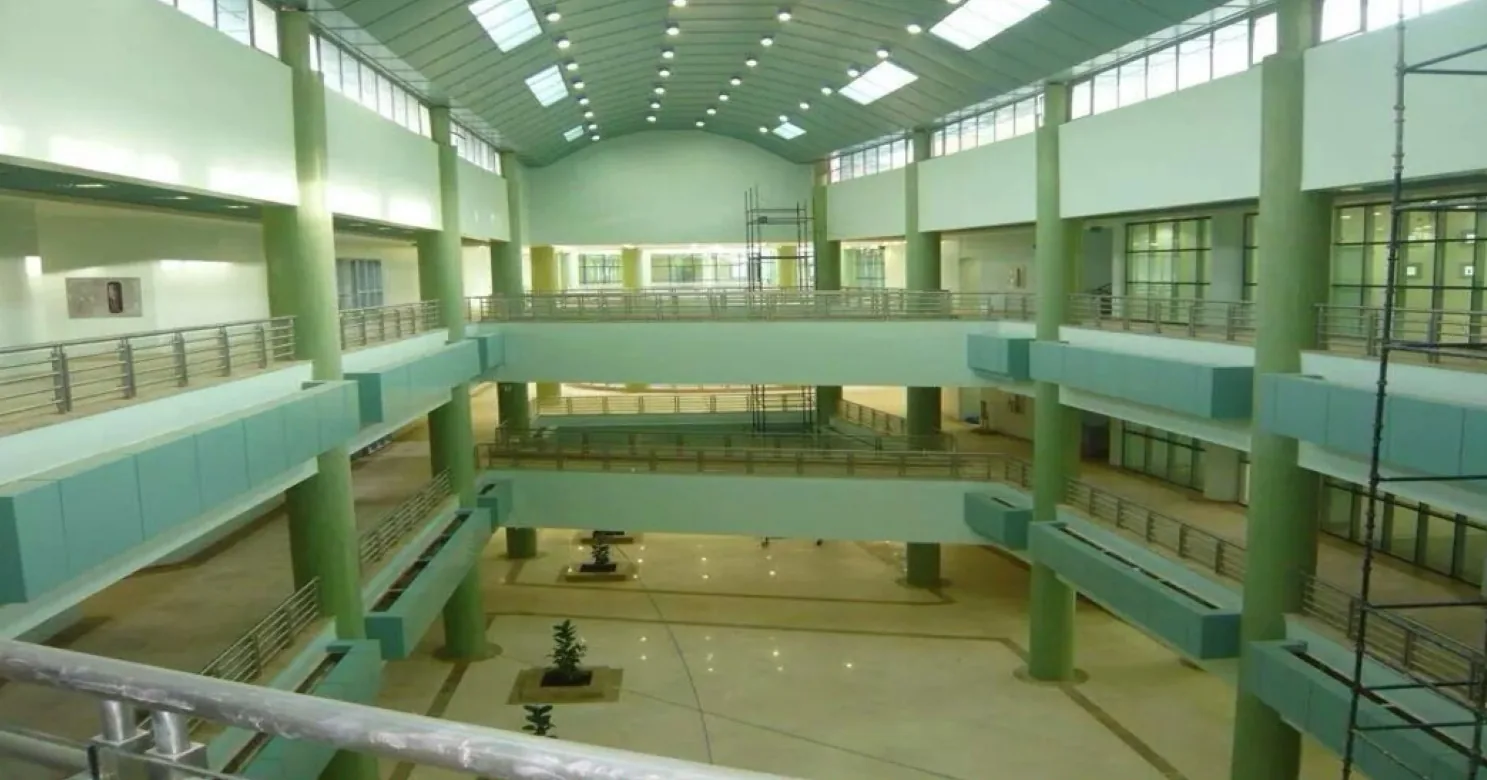
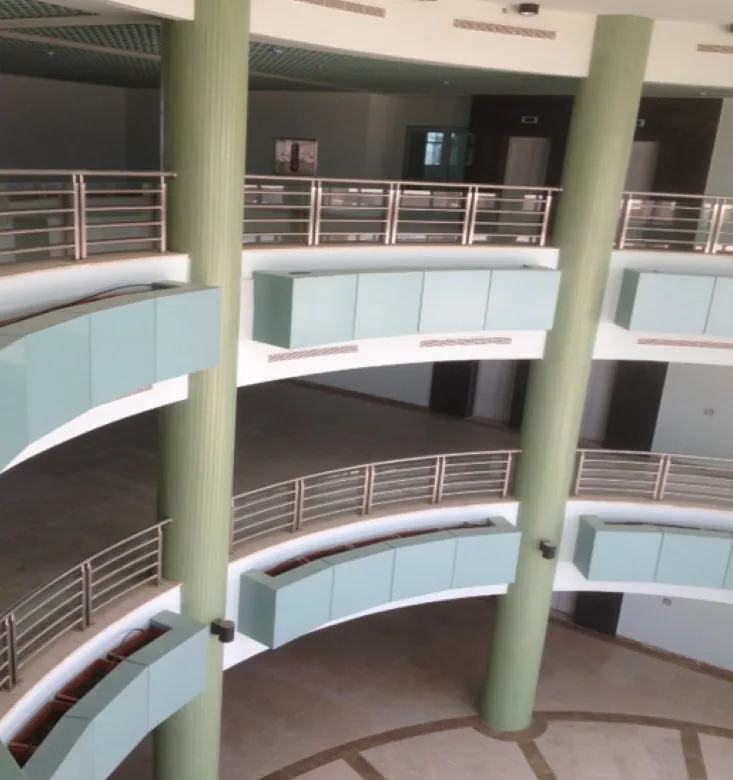
This is scope we've carried across government, commercial and residential work since 2000 — including the large-scale flooring across Prince Sultan University of Engineering in Al Kharj, where decorative marble floor patterns were set out and laid to a precision that a complex geometric design doesn't forgive if the setting-out is even slightly off.
Flooring is sequenced after wet-area waterproofing is tested and screeding is cured, and coordinated with skirting, door thresholds and the trades finishing the walls around it — so the floor goes down last in a room, not in the middle of other work still moving through it.
What's in scope
- Marble, ceramic, porcelain and MDF flooring installation
- Decorative pattern, medallion and inlay setting-out
- Movement-joint design and installation within the floor
How we deliver this
- 01
Substrate check
The substrate is checked for level and moisture, and screeded where it isn't — the step most flooring failures trace back to when it's skipped.
- 02
Setting-out & dry lay
Joint pattern is agreed and complex layouts — medallions, borders, inlay work — are dry-laid before anything is fixed permanently.
- 03
Fixing
Material is fixed with the adhesive system matched to that substrate and material.
- 04
Movement joints
Movement joints are positioned as part of the layout at the design stage, sized to the material and floor area.
- 05
Jointing & edge finish
Joints are filled and edges finished to a clean, level line before the surface is protected.
- 06
Protection until handover
The finished floor is protected from other trades still working nearby until the project reaches handover.
Choosing the flooring material for each space
The right floor is decided room by room, not once for the whole building. Three questions do most of the work: what traffic and cleaning the space will get, how much moisture and sun it sees, and how much the structure beneath it will move. The table is a starting point only; the consultant's specification and the manufacturer's data sheet have the final word. For a fuller cost and maintenance comparison, read Marble vs Porcelain Flooring: Cost, Durability & Maintenance.
| Material | Suits | Watch for |
|---|---|---|
| Marble | Lobbies, feature floors and reception areas where the stone is part of the design | Porous and sensitive to acids, so it needs sealing and pH-neutral cleaning. A polished finish can be slippery when wet, and pale stone can show mottling from moisture in the bed. |
| Porcelain | High-traffic circulation, retail floors and large plain areas | Dense and low in porosity, but large formats need a very flat base and full adhesive coverage, or any unevenness shows as lippage. |
| Ceramic | Interior floors under lighter traffic, and most wall finishes | Less dense and more absorbent than porcelain. Confirm the tile is rated for floor use: wall-grade tile wears and chips underfoot. |
| MDF-core flooring | Dry interior rooms such as offices and bedrooms | Swells if it gets wet, so keep it out of wet areas and off damp slabs. It needs a perimeter expansion gap and an underlay. |
Saudi conditions that shape the installation
- Heat and dry air shorten the working time of cement-based adhesive. If a skin forms before the tile is bedded, the tile bonds only partly and later sounds hollow. Small working areas and an occasional lift-check of a freshly laid tile keep this under control.
- Floors beside full-height glazing or at external doors swing most between hot and cool, so movement and perimeter joints matter most there. That applies to the large day-to-night swings in Riyadh as much as to summer heat in Jeddah.
- In coastal areas, salts in the base or bedding materials can migrate to the surface and leave white deposits on stone and grout. Specify clean materials and let the base dry before laying.
- Dust and grit carried in by other trades scratch polished stone and can dull polished porcelain, so the finished floor needs protecting until handover.
Setting-out, and what a good floor looks like
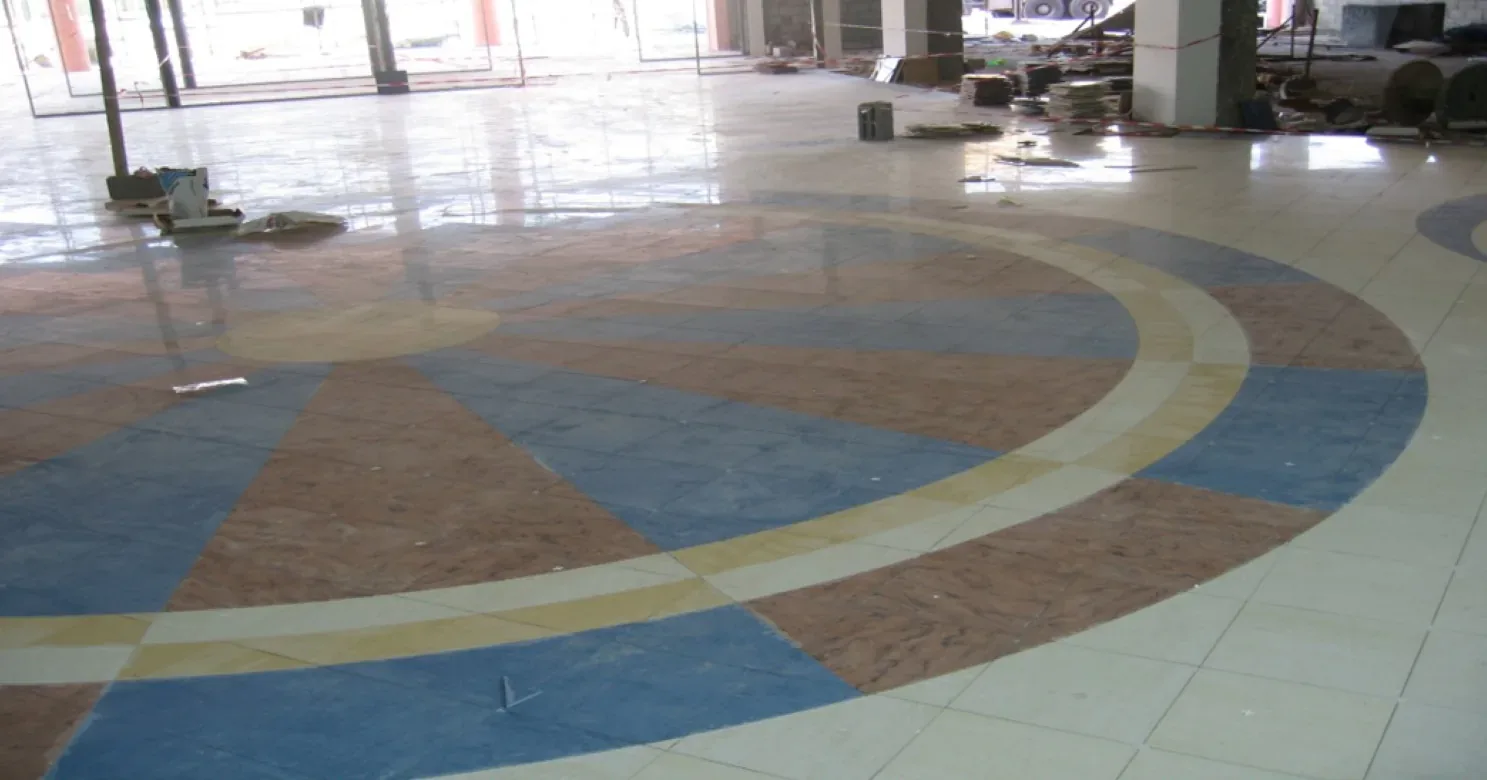
Setting-out decides how a floor reads. It starts from the main sightline and the door lines rather than from a corner, so cuts fall at the edges where they are least visible and thin slivers against walls are avoided. Joint lines should carry through thresholds and between adjoining rooms. Pattern floors are dry-laid first because a medallion or border cannot be corrected once it is bedded; the cut-porcelain medallion at Marina Mall in Riyadh and the decorative marble patterns at Prince Sultan University of Engineering are work with no margin for setting-out error. A good floor is flat under a straightedge, has even joints, does not rock or sound hollow underfoot, and meets doors and skirting cleanly.
Common defects and what usually causes them
- Lippage between tiles: an uneven base, no levelling system, or warped tiles laid without checking.
- Hollow-sounding tiles: partial adhesive contact, adhesive that skinned over, or large formats not fully backed with adhesive.
- Cracking: missing movement joints, structural cracks reflecting through, or a heavy point load on an unsupported tile.
- Stained or dull stone: moisture or salts rising from below, an unsealed surface, or the wrong cleaning chemical.
- Grout that dusts or discolours: the wrong grout for the joint width, washing off too early, or harsh cleaners.
Handover checks and what to put in the BOQ
- Straightedge across the floor and across joints, with lippage inside the tolerance the specification sets.
- A tap test in each area for hollow tiles.
- Joints even and aligned, grout full and clean, movement joints free of grout and sealed with flexible sealant.
- Thresholds, skirting and door clearances checked against the finished floor level.
- Slip resistance of the chosen finish confirmed for how the space is used.
- Spare tiles from the same batch handed over for future repairs.
In the BOQ, price substrate preparation, the adhesive system, the movement-joint layout and floor protection as separate lines from the material itself, so quotes can be compared like for like.
What's handled by another capability
- Floor screeding beneath the finish — see Screeding & Expansion-Joint Treatment
- Wet-area waterproofing beneath the floor — see Waterproofing
- Epoxy flooring for parking and plant areas — see Vanity & Epoxy Flooring Works
Materials & systems
- Natural marble & stone flooring
- Ceramic & porcelain tile
- MDF flooring
- Substrate-matched adhesive & jointing systems
Where we deliver this
 Head office
Jeddah
Makkah Region
Ashlaar's head office, and the largest share of our project record.
7 projects delivered
Riyadh
Riyadh Region
Our largest project base outside Jeddah.
6 projects delivered
Dammam
Eastern Province
Interior finishing and flooring for a retail development.
1 project delivered

Al Ahsa
Eastern Province
Architectural finishing for a healthcare facility.
1 project delivered
Al Kharj
Riyadh Region
The Kingdom's dairy capital — and our largest Riyadh Region project outside the capital itself.
1 project delivered
Huraymila
Riyadh Region
A college campus finishing scope, part of our wider Riyadh Region higher-education work.
1 project delivered
Muzahmia
Riyadh Region
A university campus finishing scope, on the Riyadh–Mecca Highway corridor west of the capital.
1 project delivered
Projects that evidence this trade
CommercialCommercialGovernmentGovernmentGovernmentRelated reading
Marble vs Porcelain Flooring: Cost, Durability & Maintenance
Marble and porcelain flooring compared on real cost, durability and maintenance — with a genuine look at where each one is actually worth choosing.
Read more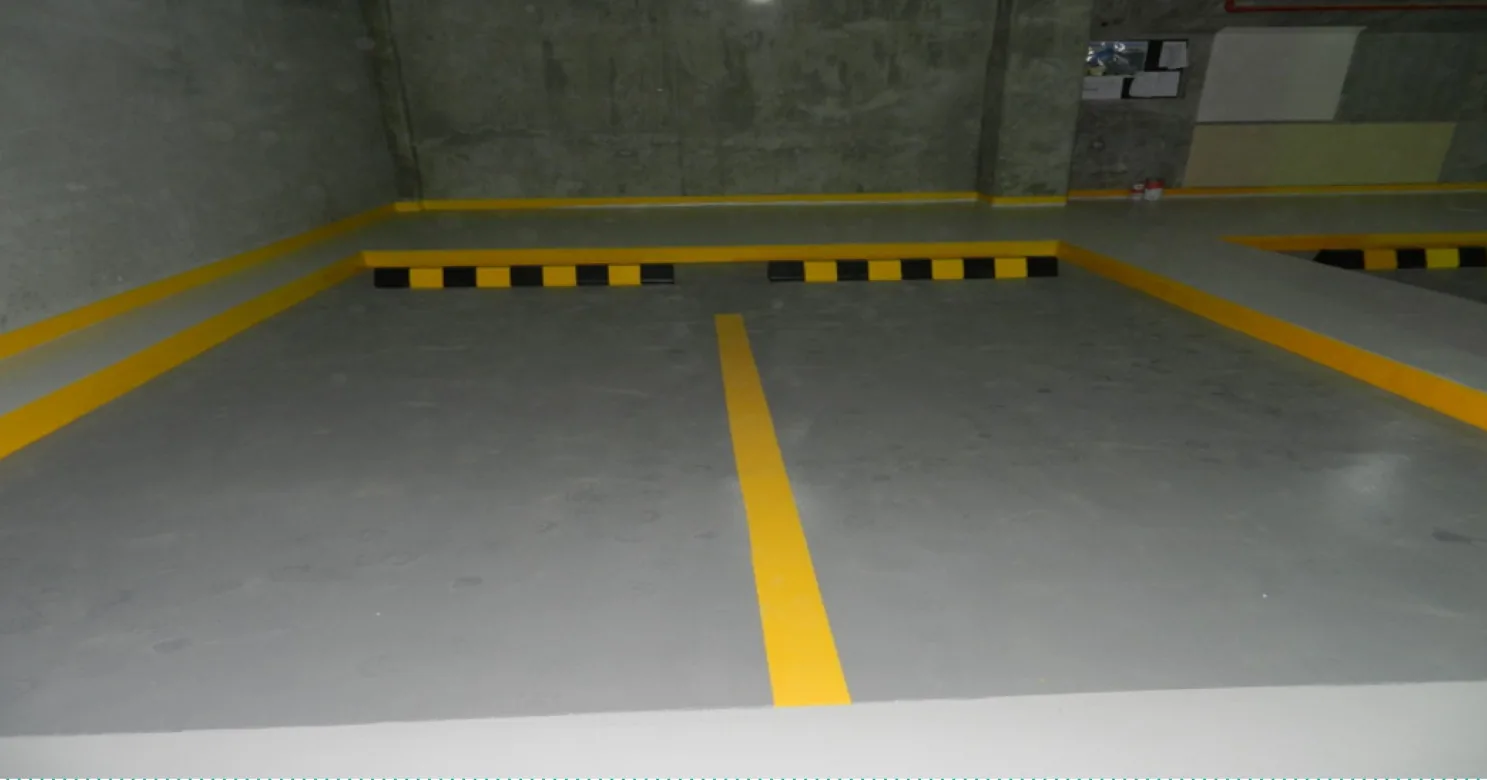
Epoxy Flooring vs Tile: Commercial Flooring Comparison
Epoxy and tile flooring compared for commercial spaces — parking, warehouses, retail and kitchens — on cost, durability, maintenance and repair.
Read moreInside the Marina Mall Riyadh Project: A Finishing Case Study
Inside the Marina Mall Riyadh project: how Ashlaar delivered a cut porcelain medallion floor and interior finishing for a flagship retail development.
Read moreFrequently asked
What flooring materials do you work with?
Marble, ceramic, porcelain and MDF, specified per space based on traffic, moisture exposure and the finish the design calls for.
Can you lay decorative patterns like medallions or borders?
Yes — complex layouts are dry-laid and checked against the room before anything is fixed permanently, which is standard practice for pattern or inlay work.
How do you handle movement joints in large floor areas?
They're built into the setting-out at the design stage, positioned and sized to the material and the area, rather than added in after the floor is laid.
How do you prevent lippage between adjoining tiles?
By checking the substrate for level before laying and using levelling spacers during fixing — most lippage traces back to an uneven substrate that wasn't corrected first.
Is the adhesive the same for marble, ceramic and porcelain?
No — the adhesive system is matched to the material and substrate; a large-format porcelain tile and a natural stone slab don't perform the same way with the same fixing product.
Can you match new flooring to an existing area during a partial renovation?
Yes — material, joint pattern and level are set out against the existing floor so the new area reads as a continuation, not a visible patch.
Is polished marble a safe choice for a busy entrance?
A polished finish can be slippery when wet, so entrances and areas where water is carried in on shoes are usually specified with a honed or textured finish, or a polished floor is paired with entrance matting. Slip-resistance requirements come from the consultant and the regulations that apply to the building, and should be confirmed before the finish is ordered.
Why do some floor tiles sound hollow when tapped?
Usually the adhesive is not making full contact with the back of the tile: the bed was uneven, the adhesive had skinned over before the tile was placed, or a large-format tile was not fully backed with adhesive. Whether a small hollow patch is acceptable depends on the specification; hollow edges and corners, which lift first, are not. Affected tiles are lifted and re-laid.
Can new tile be laid over an existing floor?
Sometimes, if the existing floor is sound, well bonded, level and clean: it is tapped first and any loose tiles are removed. Laying over it raises the floor level, which affects door clearances, thresholds and junctions with other floors, and it hides any fault in the old bed. Where the old floor is hollow, damp or cracked, stripping it back is the safer route. A site inspection settles which applies.
More from Architectural Finishing
Planning a project? Let's talk finishing.
Tell us about your scope and timeline — our technical team will respond with a clear, considered proposal.