Epoxy Flooring vs Tile: Commercial Flooring Comparison
Ashlaar Technical Team · September 21, 2026
Commercial flooring decisions often get made on appearance first and lifecycle cost second, when for a lot of spaces it should genuinely be the other way round, because the floor that looks best in a showroom sample is rarely the floor that survives five years of the actual traffic a working building throws at it. A parking structure, a warehouse, a retail floor and a restaurant kitchen have almost nothing in common in terms of what they actually need a floor to do, which is exactly why epoxy and tile are both legitimate, widely used choices — not competitors trying to win the same job, but two systems suited to genuinely different jobs with different demands. The useful question isn't "which is better," it's "which one actually matches how this specific space gets used, day in and day out, once the opening photos have been taken and the traffic starts." Getting it wrong doesn't usually show up on day one — it shows up eighteen months later as a cracking coating in a parking bay or a grout line that's turned permanently grey in a kitchen, at which point replacing it means closing the space down for the second time.
What epoxy flooring actually is, and where it shines
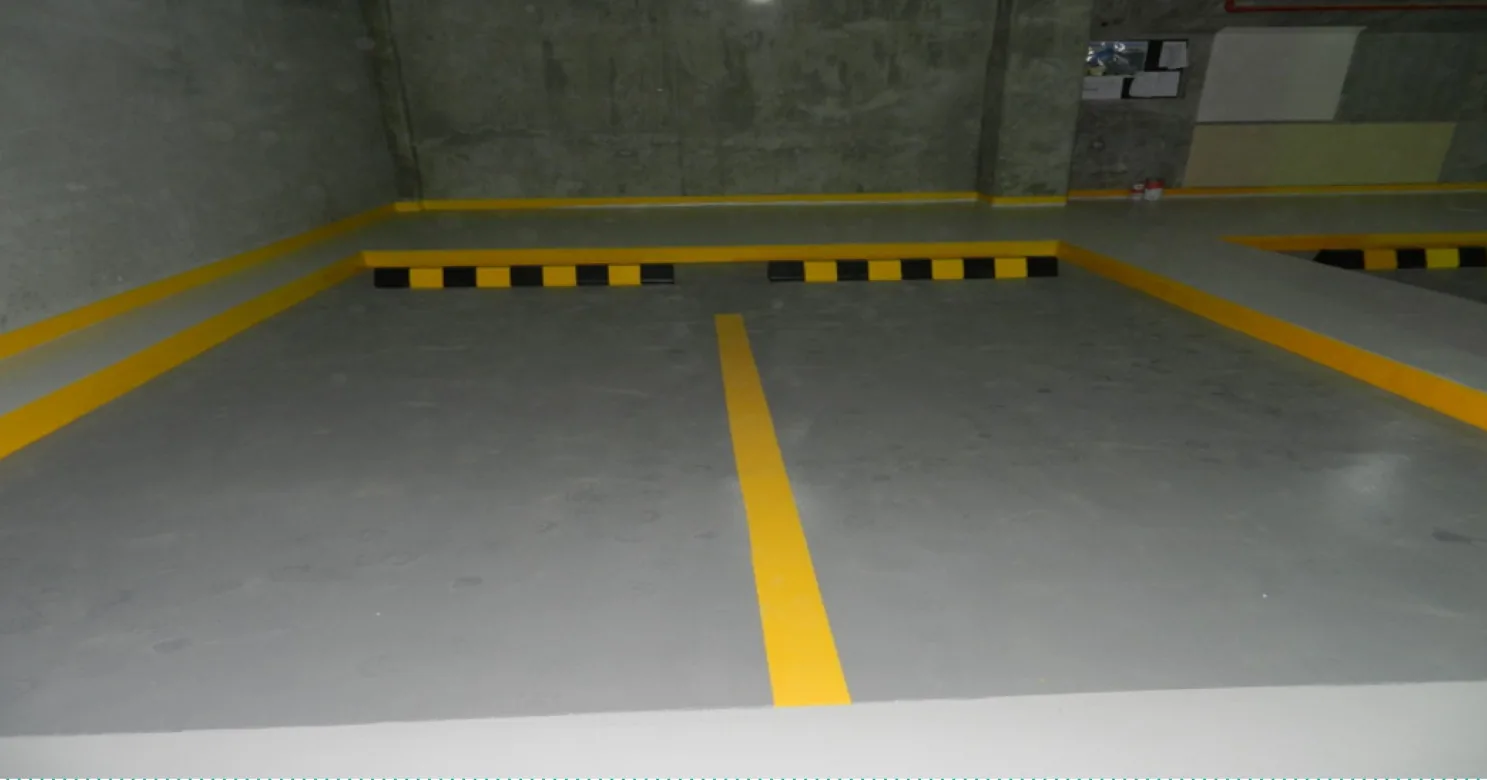
Epoxy is a resin-based coating system applied over prepared concrete, typically built up in multiple coats — a primer, a body coat, and a topcoat, sometimes with decorative flake or aggregate broadcast into it for texture and grip, and line-marking applied on top where needed, as in a parking structure's bay lines and hazard striping. It's seamless, with no grout lines to harbour dirt, oil or cleaning chemicals, offers genuinely strong chemical and abrasion resistance against the kind of daily wear a vehicle or a forklift puts down, and can be applied relatively quickly over a large area compared to a unit-by-unit finish that has to be set and grouted piece by piece. That combination makes it a well-suited choice for parking structures, warehouses, workshops and industrial kitchens, where the floor spends its life under wheels, spills and heavy equipment rather than bare feet. Its main requirement is a correctly prepared and genuinely dry substrate — moisture vapour coming up from below a slab that wasn't properly assessed and tested first is a real, well-known cause of epoxy failure, showing up as bubbling or delamination months after installation, which is why substrate preparation matters as much as the coating itself, if not more.
What tile flooring actually is, and where it shines
Tile — ceramic, porcelain or natural stone — is set unit by unit in adhesive and grout, and it offers an enormous range of finishes, patterns, textures and price points to match almost any design intent, from a warm residential feel to a sleek commercial lobby. Its clearest practical advantage over epoxy is repairability: a single damaged or cracked tile can be replaced on its own without touching the rest of the floor, provided a few spare tiles from the original batch were kept, whereas an epoxy floor generally needs a patch or a recoat of the affected zone, which can be visible against the surrounding surface even with a careful colour match. Tile is generally the expected finish for public-facing retail floors, lobbies, dining areas and most residential and commercial interiors, where appearance and the ability to fix one damaged spot without redoing a whole room matter more than chemical resistance to vehicle traffic or industrial spills that these spaces will simply never see.
The genuine tradeoffs
On cost, epoxy is often more economical at large industrial or parking scale, where its fast, seamless application over a big area works in its favour, while tile's cost varies hugely depending on material grade, from economical ceramic to premium natural stone, giving it a wider range to match different budgets. On maintenance, epoxy is easy to clean and degrease with no grout lines to worry about, which matters a great deal in a kitchen or workshop where spills are routine, while tile grout needs ongoing cleaning and periodic resealing to stay looking and performing as intended and to resist staining over time. On repairability, tile clearly wins — swap the one damaged unit and move on — while a damaged epoxy floor typically needs a visible patch or a full recoat of the zone, and colour-matching an aged epoxy floor months or years later is genuinely difficult. On durability under different kinds of load, epoxy handles heavy vehicle traffic, chemical spills and industrial abuse better than tile ever will, while good-quality tile handles everyday foot traffic and general commercial use well, and offers better slip-resistance options for public wet areas when specified with the right surface finish and texture. On installation downtime, epoxy generally needs a longer, more carefully managed cure window before the space can go back into full use, while tile can often be brought back into service area by area as each section is set and grouted, which matters on a live commercial site where taking an entire floor out of service for several days isn't always realistic.
When you'd actually pick each
Epoxy is genuinely the better fit for parking decks and structures, warehouses, plant rooms, industrial kitchens and workshop floors, where chemical resistance, a seamless surface and fast coverage over a large area matter most, and where nobody is judging the space on how warm or inviting the floor feels underfoot. Tile is the better fit for retail floors, lobbies, dining areas, and residential and most public-facing commercial interiors, where appearance, individual repairability and a wide material palette — including natural stone — matter more than resistance to vehicles or industrial chemicals these spaces were never going to encounter in the first place. Some buildings genuinely need both under one roof — a mixed-use development might floor its basement parking in epoxy and its ground-floor retail podium in tile, and there's nothing inconsistent about that; it's simply matching each floor to the job it actually has to do rather than forcing one material to do a job it was never suited for.
The practical filter is simply what the space is actually used for, and by what kind of traffic — vehicles and chemicals, or people on foot in ordinary shoes. It's worth asking any contractor to point to a comparable real space they've floored with each system, epoxy and tile alike, before deciding, rather than choosing on appearance in a showroom sample that has nothing in common with a working parking structure or a busy retail floor under real, sustained daily use. A contractor who's genuinely delivered both will usually have a clear, specific answer for which one they'd recommend for your space and why, rather than a single default they reach for regardless of the brief, and will be able to describe honestly where each system has let them down in the past, which is often more informative than hearing only where it's succeeded.
Related capabilities
Related projects
 Government
Planning a project? Let's talk finishing.
Tell us about your scope and timeline — our technical team will respond with a clear, considered proposal.