Hardscaping & Landscaping Contractor in Saudi Arabia
Hardscaping and landscaping contractor in Saudi Arabia: paving, walkways, steps and boundary walls coordinated with planting and drainage.
Request a QuoteHardscaping is the part of a project that actually gets walked on, driven over and weathered every single day — paving, walkways, steps, boundary walls and planters — and it's judged the moment someone arrives on site, before they've seen anything else about the building. Done poorly, it's also one of the fastest things to fail visibly: pavers heave and crack when the sub-base wasn't compacted properly, water pools where falls weren't set correctly, and joints open up within a season. We treat hardscaping as groundwork first and a finish second — most of what determines whether it lasts is invisible once the paving goes down.
Our hardscaping scope covers paved walkways, courtyards, steps, boundary walls and planters, sequenced the same way on every project: sub-base preparation and proper compaction, falls set and checked before any bedding goes down, then paving or stone units bedded and jointed to the specification, with edge restraints to stop movement at the margins. Irrigation sleeving and drainage points go in before the hardscape is laid, not cut into it afterward, and turf or planting areas are coordinated with the hard-surface layout rather than added as an afterthought once the paving is finished. Boundary walls and steps are built to the same structural and finishing standard as the building they surround.
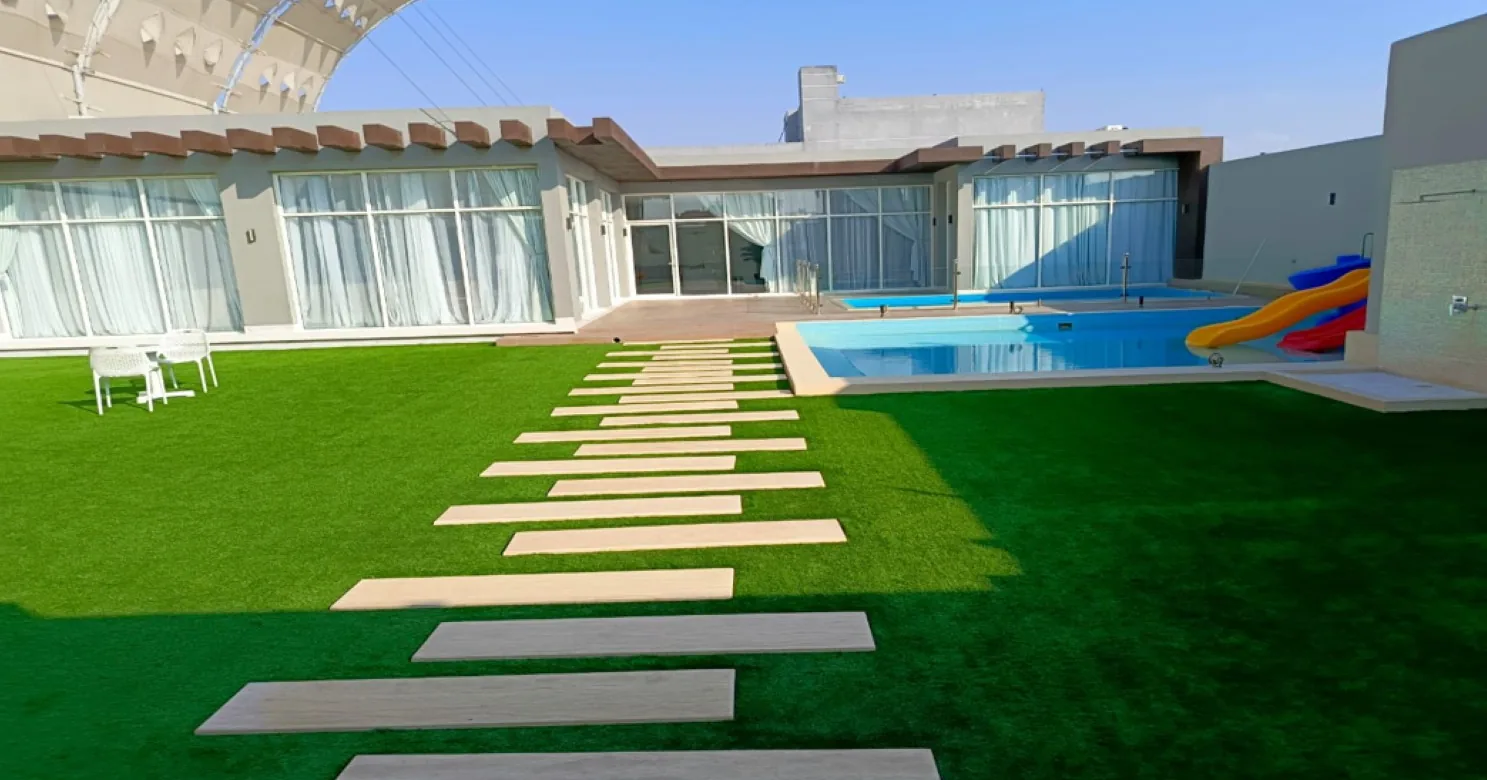
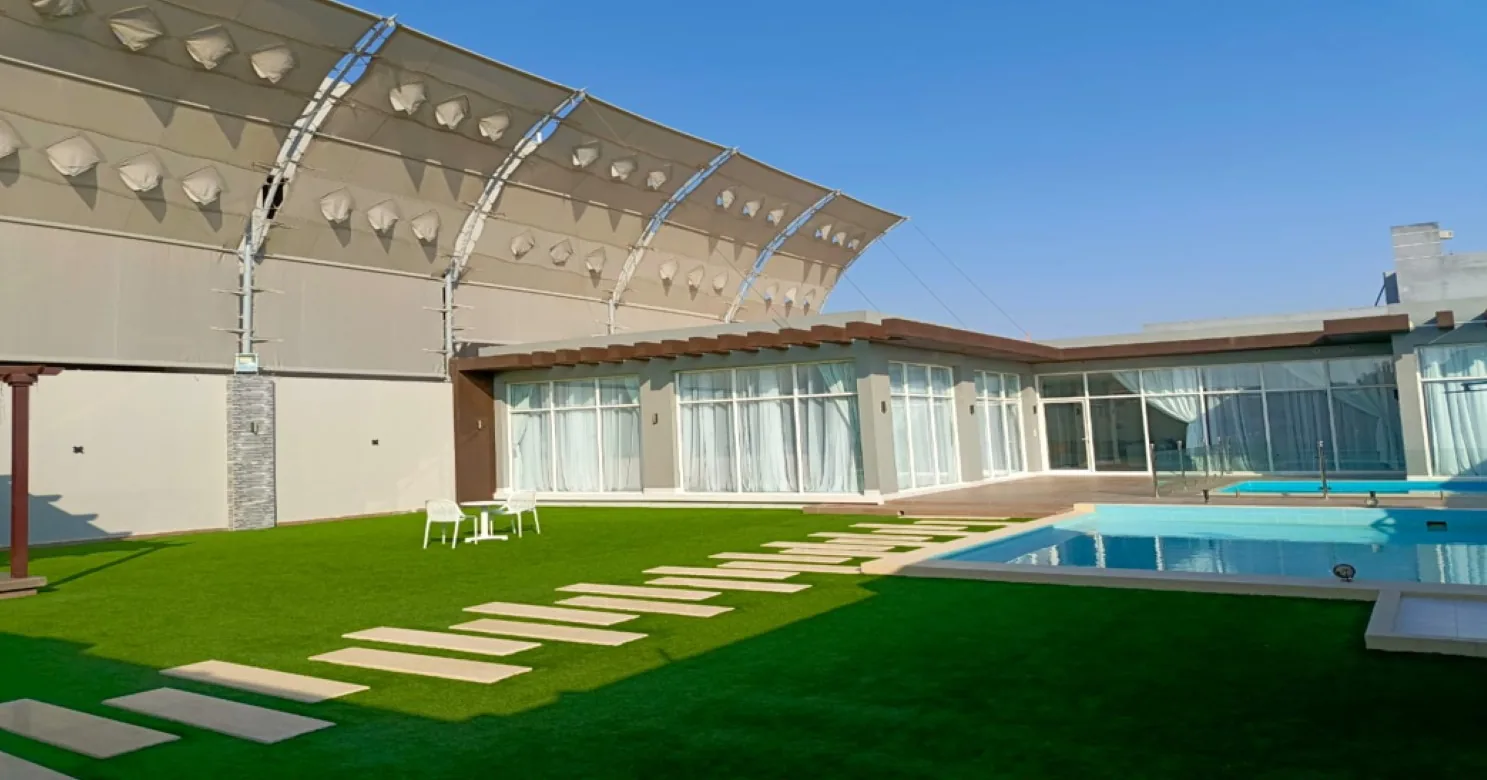
This is scope we've carried on a private rest house project in North Jeddah, where hardscaping and external works were delivered alongside the rest of the property's finishing — paved walkways and stone accents set into the landscaped grounds, not bolted on after the building itself was finished.
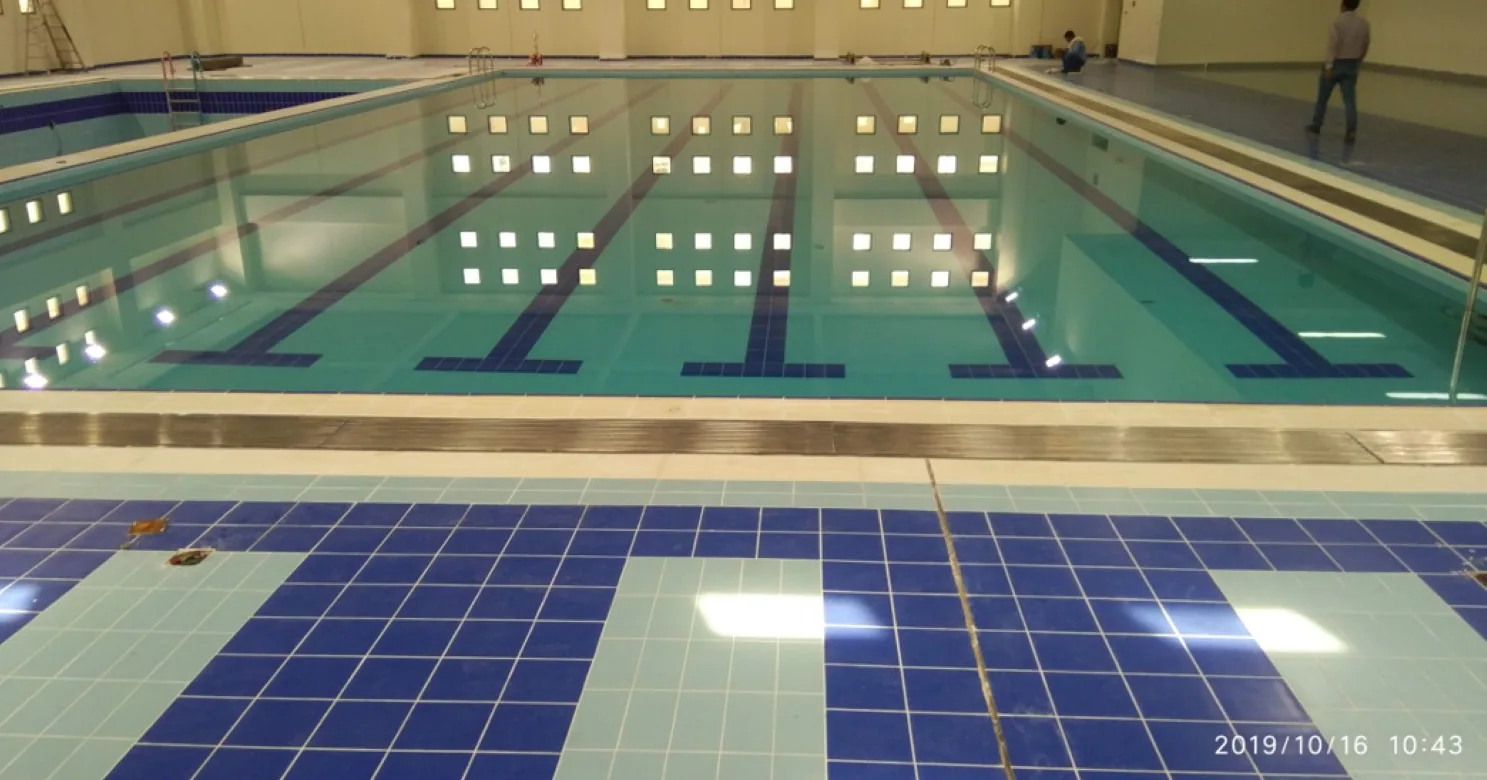
Hardscaping is coordinated with swimming pools and fountain works where a project includes them, and with the structural work on boundary walls and canopies, so the exterior grounds read as one designed environment rather than a set of separate trades that happened to finish on the same site.
What's in scope
- Paved walkways, courtyards and steps
- Boundary walls and planters
- Irrigation sleeving and drainage rough-in ahead of paving
How we deliver this
- 01
Sub-base preparation
The sub-base is prepared and properly compacted — the step that determines whether paving stays flat and crack-free.
- 02
Falls set for drainage
Falls are set and checked before any bedding goes down, so water is directed to drainage points by design.
- 03
Irrigation & drainage rough-in
Irrigation sleeving and drainage points go in before the hardscape is laid, not cut into it afterward.
- 04
Bedding & jointing
Paving or stone units are bedded and jointed to the specification, with edge restraints set to stop movement at the margins.
- 05
Boundary walls & steps
Boundary walls and steps are built to the same structural and finishing standard as the building they surround.
- 06
Planting coordination
Turf and planting areas are coordinated with the hard-surface layout from the start, not added on once paving is finished.
Choosing surfaces for Saudi heat, dust and rain
Outdoor paving here works in conditions a generic specification does not always anticipate. Dark, smooth surfaces get uncomfortably hot in direct sun and become slippery when wet from irrigation overspray or a rare downpour. In Riyadh, the gap between afternoon heat and night-time cool moves large areas of rigid paving; in Jeddah, humidity and salt in the air drive staining and efflorescence on absorbent stone. Rain is infrequent but can be heavy, so drainage has to cope with a sudden volume of water, not only irrigation runoff. Light colours, textured finishes and drainage designed for peak flows deal with most of these problems before any special product is needed.
Paving systems compared
| System | Where it suits | Watch for |
|---|---|---|
| Interlocking concrete blocks | Driveways, car parks and walkways; easy to lift and relay when buried services need access | Needs continuous edge restraints on a well-compacted base. Settlement shows quickly if the sub-base or a trench backfill was poorly compacted. |
| Natural stone on a mortar bed | Entrances, courtyards and steps where appearance matters | Needs movement joints in large areas. Porosity, staining and slip resistance vary a great deal between stones and finishes. |
| Porcelain outdoor paving | Terraces and raised decks needing a clean, uniform surface; bonded to a slab or set on pedestals | Choose a finish with adequate slip resistance for outdoor use. Needs correct falls in the slab or pedestal heights, and protected edges. |
| Cast-in-place concrete | Ramps, service areas and large plain surfaces | Joint layout and curing strongly influence cracking. A textured finish is needed for slip resistance. |
The layers you never see
Most paving failures trace back to what is under the surface. From the ground up, the build-up is:
- Formation: the natural ground or fill, checked and compacted, with soft spots removed or treated as the engineer directs.
- Sub-base: compacted granular material laid to the same falls as the finished surface, so the bedding above it is an even thickness.
- Bedding: the layer that receives the paving; its type depends on the system, whether sand, mortar or adhesive.
- Paving and jointing: units laid to line and level, with joints filled as specified.
- Edge restraint: continuous and fixed before traffic, so units cannot creep at the margins.
Services matter as much. Irrigation sleeves, lighting ducts and drainage pipes should be in and tested before paving starts. A trench cut later and poorly backfilled becomes a line of settlement across finished paving.
Checks before you cover, and at handover
- Falls measured on the sub-base before bedding, then on the finished surface, with water run over it to confirm nothing ponds.
- Drainage outlets, gullies and sleeves located, capped and marked on the as-built drawing before paving hides them.
- A sample panel approved for colour, joint width and finish before the main area is laid.
- Edge restraints continuous, and movement joints where the specification puts them.
- Steps with uniform riser heights and tread depths within a flight, since uneven steps cause trips; handrails and edge protection where the design requires them.
- Boundary walls: footing and reinforcement inspected before blockwork or backfill, and alignment checked before any finish goes on.
Working with the other trades
Hardscaping is where several trades meet the ground. Pool surrounds and fountain edges must match paving levels and joints. Footings for canopies and pergolas, and other concrete elements, should be cast before paving so it is not cut back afterwards. Irrigation and lighting sleeves are agreed with MEP works and the landscape designer, and planting soil is set below the paving edge so it does not wash onto the surface. The North Jeddah rest house combined paved terraces, a pool and a shade canopy in one exterior programme.
Programme and cost follow the groundwork more than the surface: ground conditions that need extra sub-base or treatment, the amount of drainage and services, access for plant and materials, and edge and step details usually move both more than the choice between two similar paving units.
In a BOQ, ask for sub-base, bedding, paving, jointing, edge restraints and drainage as separate items, with the paving unit, finish and approved sample named, so tenders compare like for like and substitutions are visible.
What's handled by another capability
- Swimming pool structures and fountain basins — see Swimming Pool Construction and Fountain Works
- Facade cladding and wash terrazzo — see Granite & Marble Cladding and Terrazzo Facade Cladding
- Structural canopy and car-shade fabrication — see Structural Works
Materials & systems
- Paving and stone unit systems
- Compacted sub-base aggregate
- Edge-restraint systems
- Irrigation sleeving & drainage systems
Where we deliver this
 Head office
Jeddah
Makkah Region
Ashlaar's head office, and the largest share of our project record.
7 projects delivered
Riyadh
Riyadh Region
Our largest project base outside Jeddah.
6 projects delivered
Dammam
Eastern Province
Interior finishing and flooring for a retail development.
1 project delivered
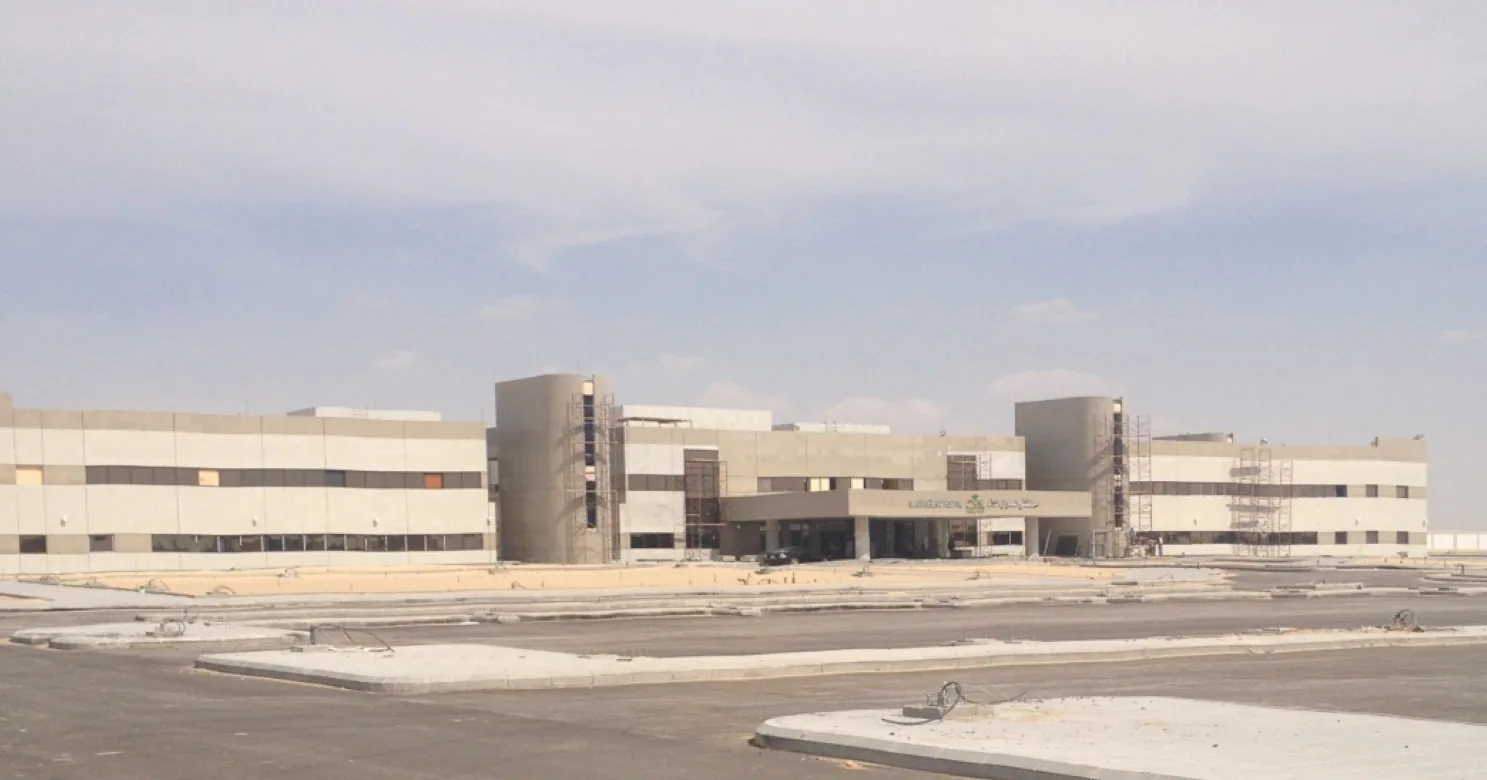
Al Ahsa
Eastern Province
Architectural finishing for a healthcare facility.
1 project delivered
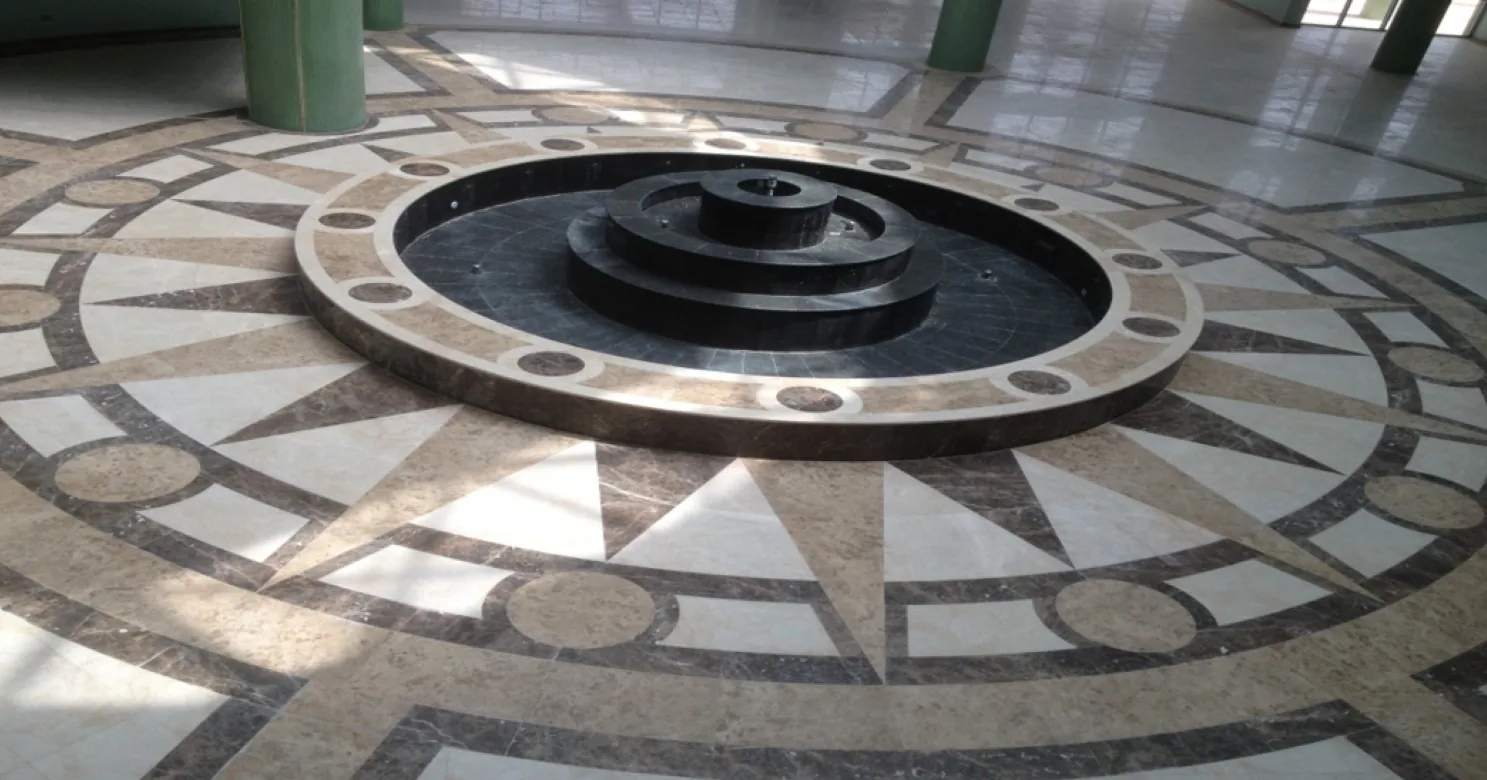
Al Kharj
Riyadh Region
The Kingdom's dairy capital — and our largest Riyadh Region project outside the capital itself.
1 project delivered
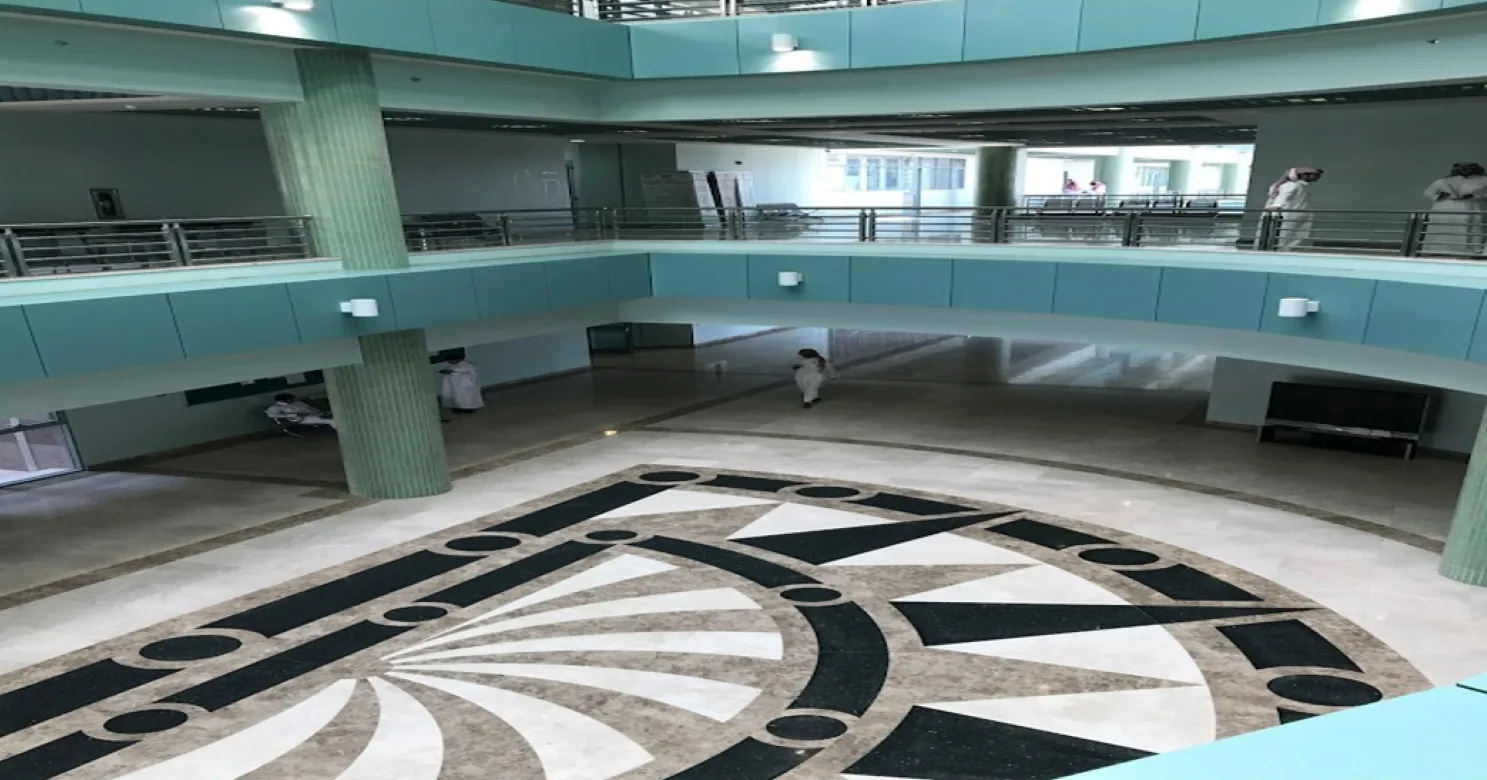
Huraymila
Riyadh Region
A college campus finishing scope, part of our wider Riyadh Region higher-education work.
1 project delivered
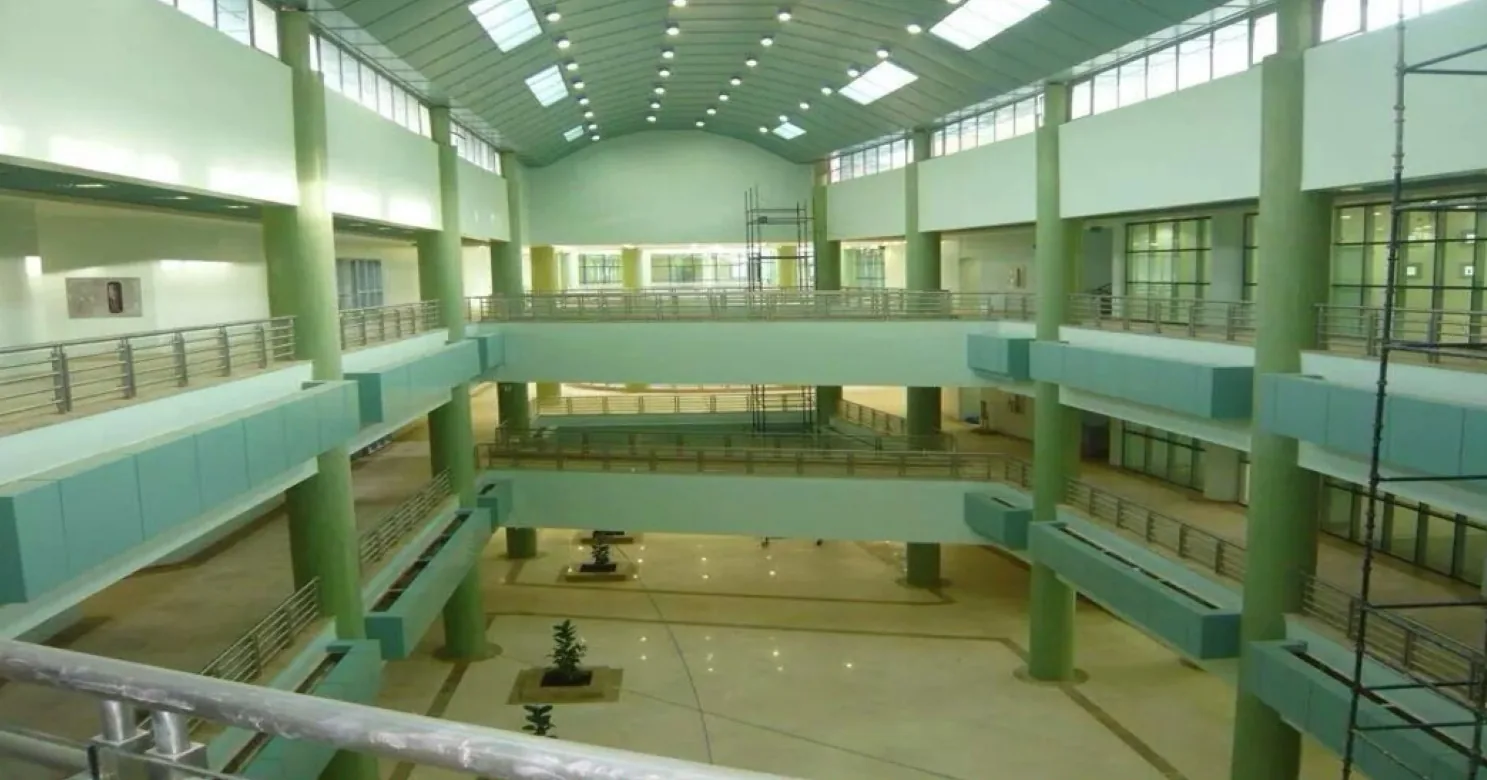
Muzahmia
Riyadh Region
A university campus finishing scope, on the Riyadh–Mecca Highway corridor west of the capital.
1 project delivered
Projects that evidence this trade
 Residential
 Residential
 Residential
Related reading
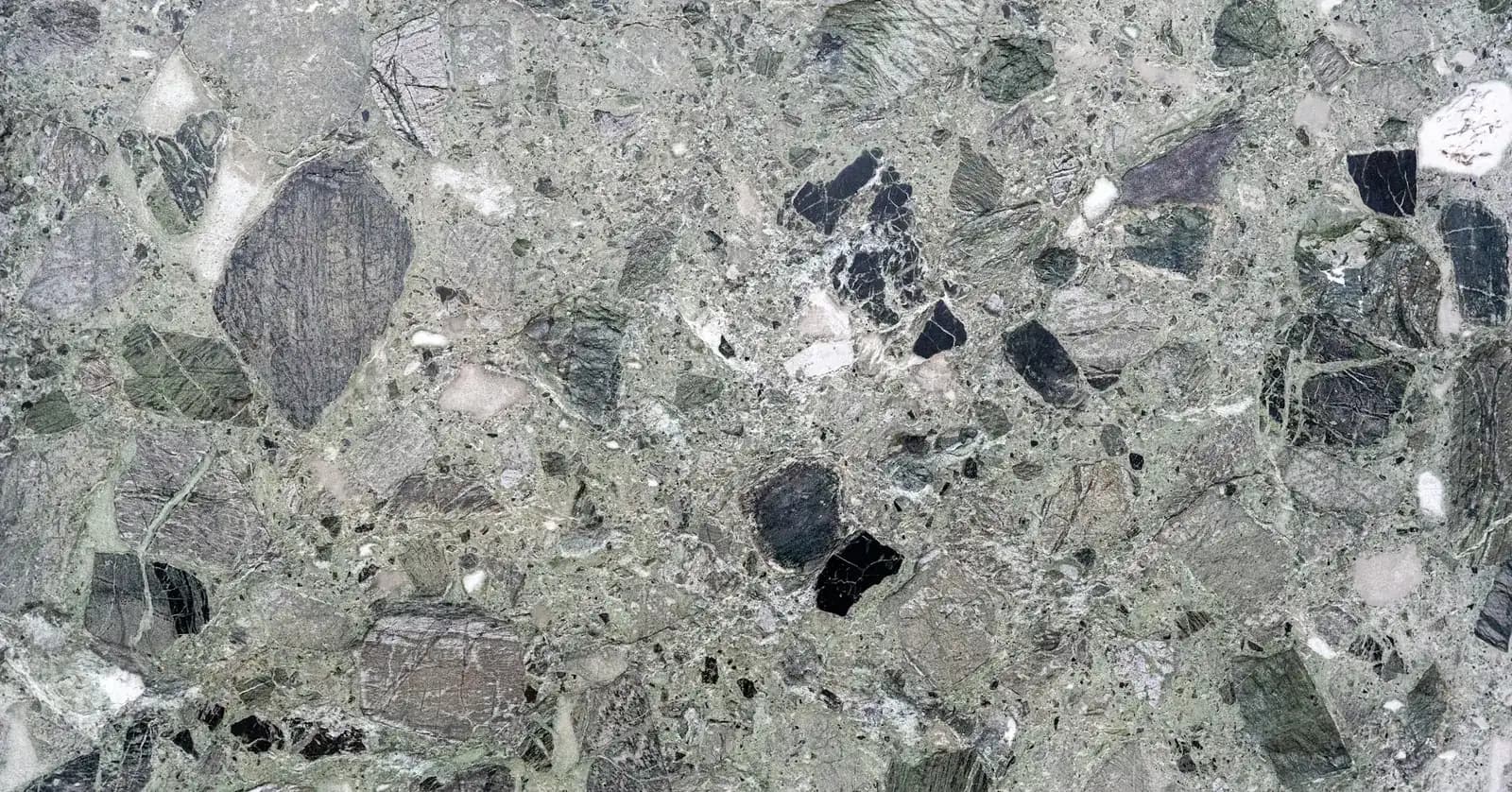
Terrazzo vs Granite Cladding: Which Is Right for Your Facade?
Granite cladding and wash terrazzo compared honestly — cost, durability, design flexibility and maintenance — so you can match the material to the facade.
Read more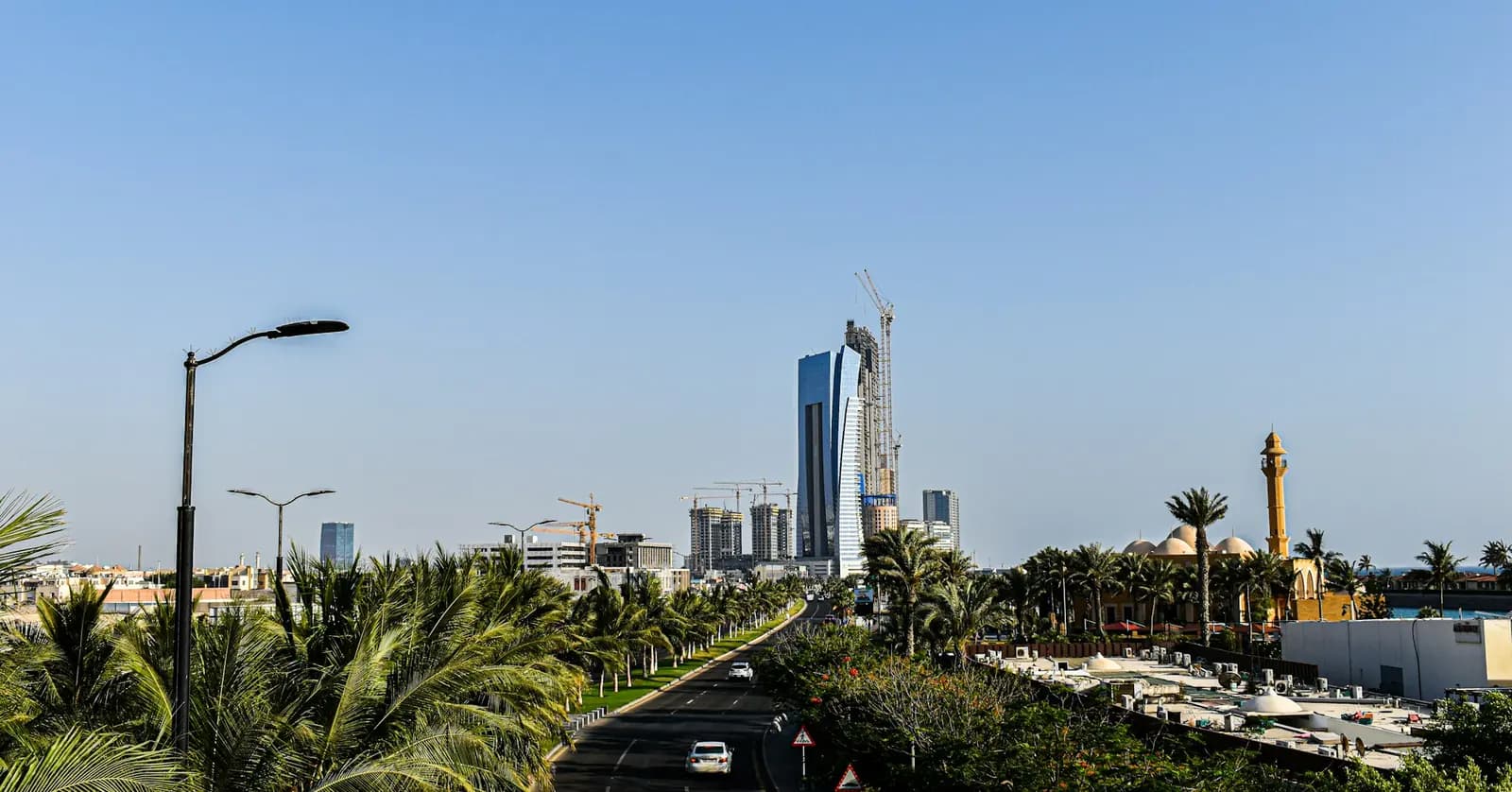
Construction Boom in Jeddah: Opportunities for Contractors and Clients
Why Jeddah's construction market is booming, what it means for contractors and clients, and how to manage execution risk in a fast-growing coastal city.
Read moreFrequently asked
What's included in hardscaping?
Paved walkways and courtyards, steps, boundary walls and planters — the hard-surface and structural groundwork of an exterior. Where a project includes lawn or planting, it's coordinated with the hardscape layout rather than treated as a separate scope with its own schedule.
Do you handle irrigation as part of hardscaping?
Irrigation sleeving and drainage points are coordinated into the hardscape sequencing so they're in place before paving goes down — the same coordination-first approach we use across every external scope.
Can hardscaping be done alongside a pool or fountain project?
Yes — it's usually more efficient that way. Hardscaping, pools and fountain works are sequenced together where a project includes more than one, rather than as separate trades working around each other.
What actually causes pavers to crack or heave after a year or two?
Almost always a sub-base that wasn't compacted properly before the paving went down — the groundwork is invisible once the paving is finished, which is exactly why it's the step most likely to be shortcut on a lower-quality job.
Do you build boundary walls as part of hardscaping?
Yes — boundary walls and steps are built to the same structural and finishing standard as the building they surround, not treated as a lower-tier finish because they sit outside.
How do you prevent water pooling on a paved courtyard?
Falls are set and checked before any bedding goes down, directing water to drainage points that are also planned in ahead of paving — not left for water to find its own low point after the surface is finished.
Which paving stays coolest and safest underfoot in Saudi sun?
Lighter colours and textured, matt finishes generally stay more comfortable to walk on and are less slippery than dark polished ones. The exact behaviour depends on the material and finish, so ask for a sample and test it outdoors in afternoon sun rather than choosing from a catalogue photo. Where people walk barefoot, such as around pools, it is worth being stricter.
Does paving need movement joints?
Rigid, bonded surfaces such as stone or porcelain on a slab, and cast concrete, usually do, because temperature changes make large areas expand and contract. The designer sets the joint layout, and joints are carried through to the slab beneath where the design requires. Interlocking blocks are flexible and move within their joints, but they still need firm edge restraints.
Can a paved area take vehicles?
Only if it was designed for them. A driveway or service yard needs a sub-base, bedding and paving unit chosen for vehicle loads, and turning wheels are harder on paving than straight traffic. Tell the designer and contractor at the start which areas will see cars, delivery vans or heavier vehicles, so each area is built for its use.
Planning a project? Let's talk finishing.
Tell us about your scope and timeline — our technical team will respond with a clear, considered proposal.