Construction Boom in Jeddah: Opportunities for Contractors and Clients
Ashlaar Technical Team · September 21, 2026
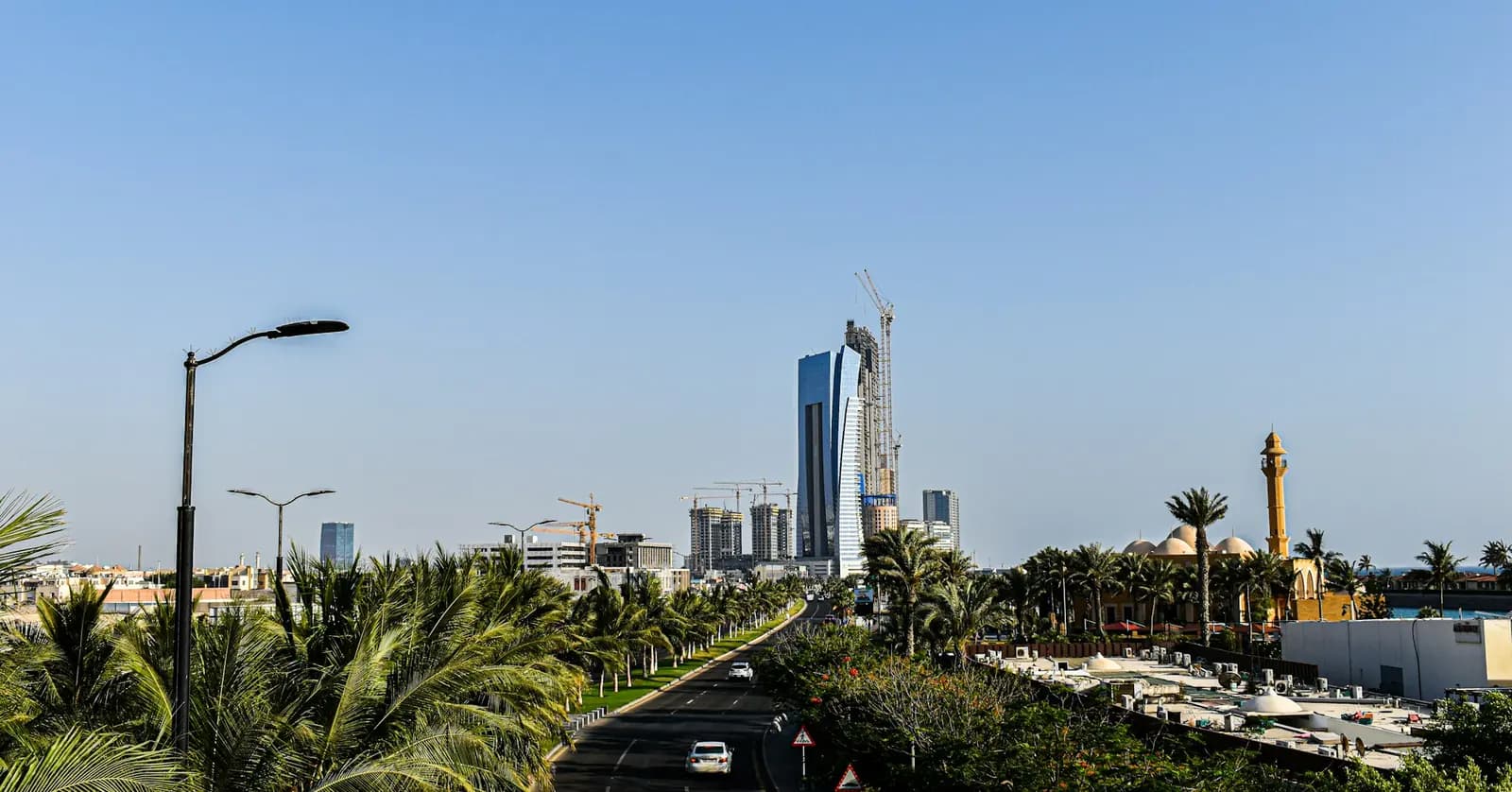
Jeddah's build-out has a character of its own. As the Kingdom's principal Red Sea port and the historic gateway for Hajj and Umrah pilgrims arriving by sea and air, the city has always combined heavy infrastructure investment with a commercial and residential base that keeps expanding independently of any single mega-project. That combination is visible today in the ongoing waterfront and urban-regeneration work along the Jeddah Corniche, in the wider Jeddah Central development, and in the steady pipeline of government, commercial and residential construction spread across the city, from North Jeddah's villa communities to institutional and retail developments closer to the centre. None of this depends on a single headline project succeeding or slipping on schedule — it is a genuinely broad-based construction market, spread across public infrastructure, private commercial development and residential building all moving at the same time, which is part of why it behaves differently from a single giga-project site with one client and one delivery date. That breadth is also why Jeddah rarely sees the sharp slowdown a market built around one or two headline projects can experience — when one segment of activity pauses, the others typically keep moving.
Three forces are converging on the same city. First, Jeddah's role as a logistics and trade gateway keeps generating demand for commercial, industrial and institutional construction tied to the port and the wider Red Sea economy. Second, the growth in Hajj and Umrah visitor numbers that Vision 2030's tourism goals are targeting puts sustained pressure on hospitality, retail and public infrastructure in and around the city — buildings that need to perform well and look the part, not just exist, because they are often a visitor's first and most memorable impression of the Kingdom. Third, ordinary urban growth — more residents, more households, more demand for schools, healthcare, retail and housing — is happening on its own timeline, largely independent of giga-project announcements elsewhere in the Kingdom. Taken together, these three forces are why Jeddah's construction activity has stayed consistently busy rather than moving in short, project-driven bursts, and why the demand spans almost every building type rather than concentrating in one sector.
That demand shows up differently across building types. Hospitality and short-stay accommodation continue to expand to serve Hajj and Umrah visitor flows and the wider tourism goals of Vision 2030, which means finishing standards in that sector increasingly have to match international guest expectations rather than a purely local benchmark. Healthcare and education facilities are expanding to keep pace with population growth, which tends to produce steady, less cyclical demand for institutional-grade finishing rather than the boom-and-bust pattern more typical of purely speculative commercial development. Logistics, warehousing and light-industrial space near the port is growing in step with Jeddah's trade role, which is a different finishing discipline again — durability and function usually matter more there than decorative detail. A contractor active across several of these sectors, rather than concentrated in just one, tends to have a steadier pipeline of its own, and a broader base of technical experience to draw on when a project's requirements cross sector lines, as a mixed-use development's often do. Understanding which of these demand drivers is behind a given project also shapes practical decisions on site — the sequencing, materials and finishing tolerances appropriate for a hotel corridor are not the same as those for a warehouse floor, even though both count toward the same citywide construction boom.
Jeddah's development also has a layer most purely new-build cities do not: a historic core worth preserving alongside everything being newly built. Al-Balad, Jeddah's UNESCO-listed historic district, sits at the centre of a city that is simultaneously expanding outward with new waterfront and commercial development and investing in conserving its older architecture and urban fabric. That combination shapes what construction actually means in Jeddah in a way it does not in a purely greenfield development — new work has to sit alongside conservation-sensitive projects, and contractors operating across the city need to be comfortable moving between modern commercial fit-out and the more specialised, more careful work that heritage-adjacent and older buildings require. It is one more reason the city rewards contractors with genuine local depth rather than a single-project presence.
For clients commissioning work in Jeddah, the practical questions come down to execution risk. A busy market is a competitive one, and finding a contractor with genuine capacity — rather than one already overcommitted across too many concurrent sites — takes real diligence. Coastal conditions add a technical layer that a contractor without local experience can underestimate: salt-laden air and humidity make waterproofing detail, material selection and facade specification genuinely different from an inland city like Riyadh, and getting that wrong shows up years later as staining, corrosion or finish failure rather than as an obvious problem at handover. Even material choices that work well inland — certain metal fixings, certain stone finishes, certain sealants — can perform differently a few kilometres from the coast, which is exactly the kind of detail that separates a contractor who has genuinely operated in Jeddah for years from one pricing the job from a generic specification. Clients are generally better served by contractors with a demonstrated, multi-year track record specifically in Jeddah, who understand these conditions as routine rather than as something to learn on the client's project. It is also worth a client asking, directly, how a prospective contractor's waterproofing and material specification differs between a Jeddah project and one inland — a contractor who has genuinely worked through the difference will have a specific answer, not a general reassurance.
For contractors, the boom is an opportunity with a catch. Demand for finishing and fit-out capacity is rising across government, retail and residential work, and firms that can take on multiple concurrent Jeddah projects without quality drifting between sites are well positioned. The catch is that this requires real infrastructure — a trained and available skilled-labour base, a supervision function large enough to cover several active sites properly, and quality-assurance systems robust enough to hold the same standard on a villa in North Jeddah and a government training institute at the same time. Contractors who try to scale by simply taking on more work without scaling that underlying capacity tend to be the ones whose reputations suffer first in a market this visible, because problems on one site travel fast through a contractor community and client network as concentrated as Jeddah's, where consultants, developers and government project managers often know each other and compare notes on who actually delivers. The contractors handling that transition well tend to run a genuinely shared quality system across every site rather than relying on one strong site manager whose standards do not travel with them to the next project.
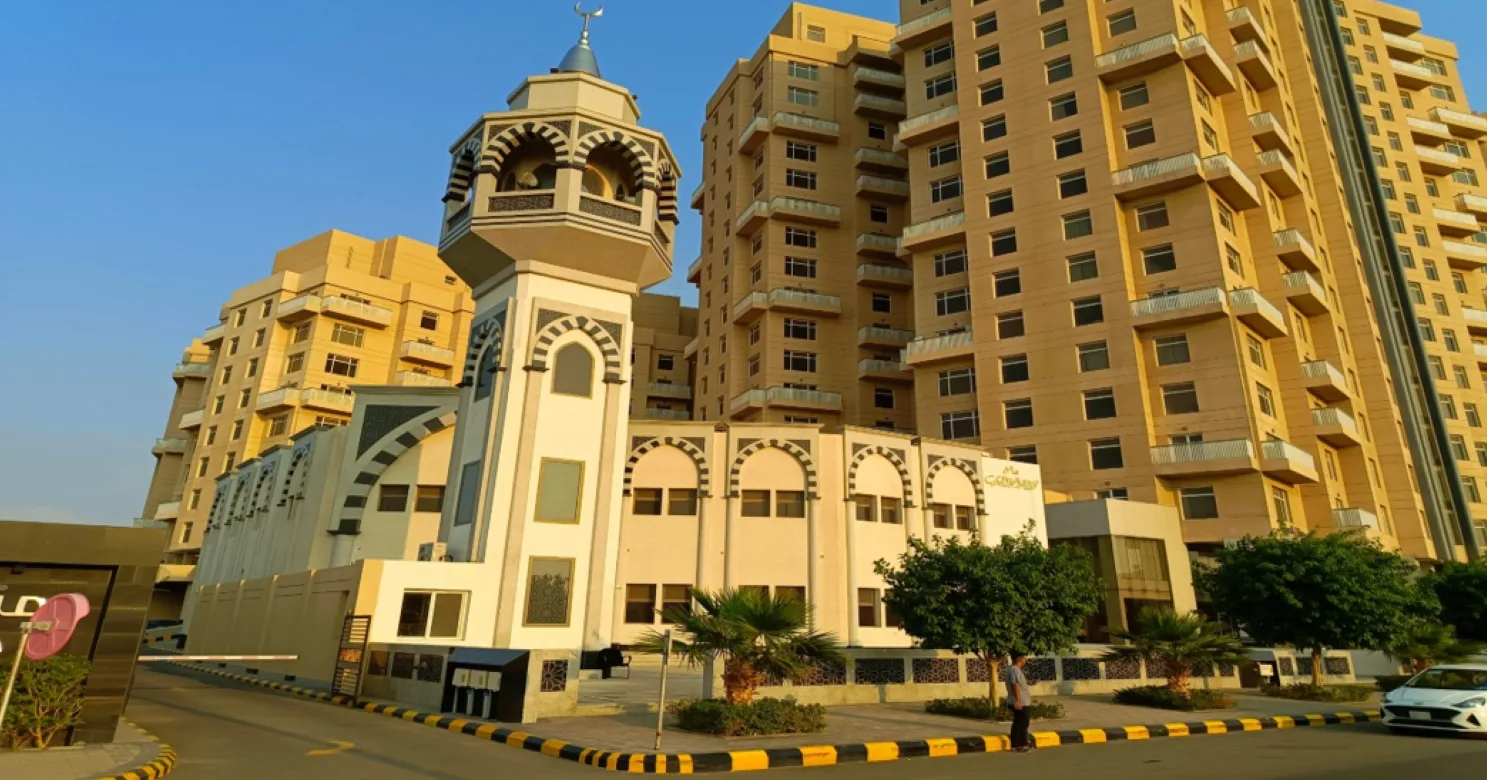
Ashlaar has been part of Jeddah's construction landscape since 2000, which is longer than most of the current wave of development has existed. Being headquartered in the city for 25 years means the coastal-specific technical judgment referenced above — on waterproofing, cladding and material choice — is built into how projects are planned from the outset, not applied as an afterthought after a problem shows up. Our project history in and around Jeddah spans the range the city itself demands: government and institutional finishing work, commercial fit-out, and private residential projects across North Jeddah, alongside the granite decoration and cladding work on developments like Safwa Tower. That range matters in a city where a single contractor's client base is rarely just one sector — the same firm is often asked to move between government, commercial and residential work within the same year, and needing a different specialist for each is exactly the coordination cost that an integrated finishing contractor removes. It also means Ashlaar's supervision and quality-assurance systems were built and tested under exactly the coastal, multi-sector conditions described above, rather than developed elsewhere and adapted to Jeddah after the fact.
Growth tests delivery discipline before it rewards it. A construction market as active as Jeddah's currently is will, over the next several years, separate contractors who scaled responsibly from those who simply took on volume, and clients will increasingly be able to tell the difference by asking straightforward questions: how many concurrent sites is this contractor actually running, what does their safety and quality record look like on projects of comparable scale, and how long have they actually operated in this specific city rather than arriving for one opportunity and leaving once it closes out. For contractors, the answer is to keep investing in the supervision, quality-assurance and trade-coordination structure that makes taking on more work sustainable rather than risky. For clients, it is to treat that structure — not just price or headline capacity — as the real signal of who is worth commissioning in a market this busy, and in a city whose growth shows no real sign of slowing. The contractors still operating comfortably in Jeddah a decade from now will, in most cases, be the ones investing in that structure today, rather than treating the current level of demand as a temporary peak to be maximised before it passes.
Related capabilities
Related projects
 Commercial
 Commercial
Planning a project? Let's talk finishing.
Tell us about your scope and timeline — our technical team will respond with a clear, considered proposal.