Plastering Contractor in Jeddah
Plastering contractor in Jeddah: internal and external plastering prepared and finished to a true, even surface before tile, paint or cladding goes on.
Request a QuotePlaster is the layer everything else depends on — flatness, corner lines, the surface tile adhesive or paint actually bonds to. A wall that looks fine as bare block or bare concrete can turn out badly out-of-plane once a straight edge is put on it, and every trade that follows — tiling, painting, cladding — inherits that error and makes it more visible, not less. We treat plastering as a precision trade with its own tolerance, not a quick fill-and-skim step to rush past.
Our plastering scope covers internal walls and ceilings ahead of paint or tiling, and external render on facades ahead of cladding, paint or texture coats. Work follows the same sequence on every project: substrate preparation (removing loose material and dust, and checking for cracks or movement), corner beading and screed rails to hold a true line, a base coat, and a finish coat brought to plumb and level within tolerance before it is signed off to the next trade. External plaster is timed and cured to suit temperature and exposure rather than rushed to a fixed calendar date.
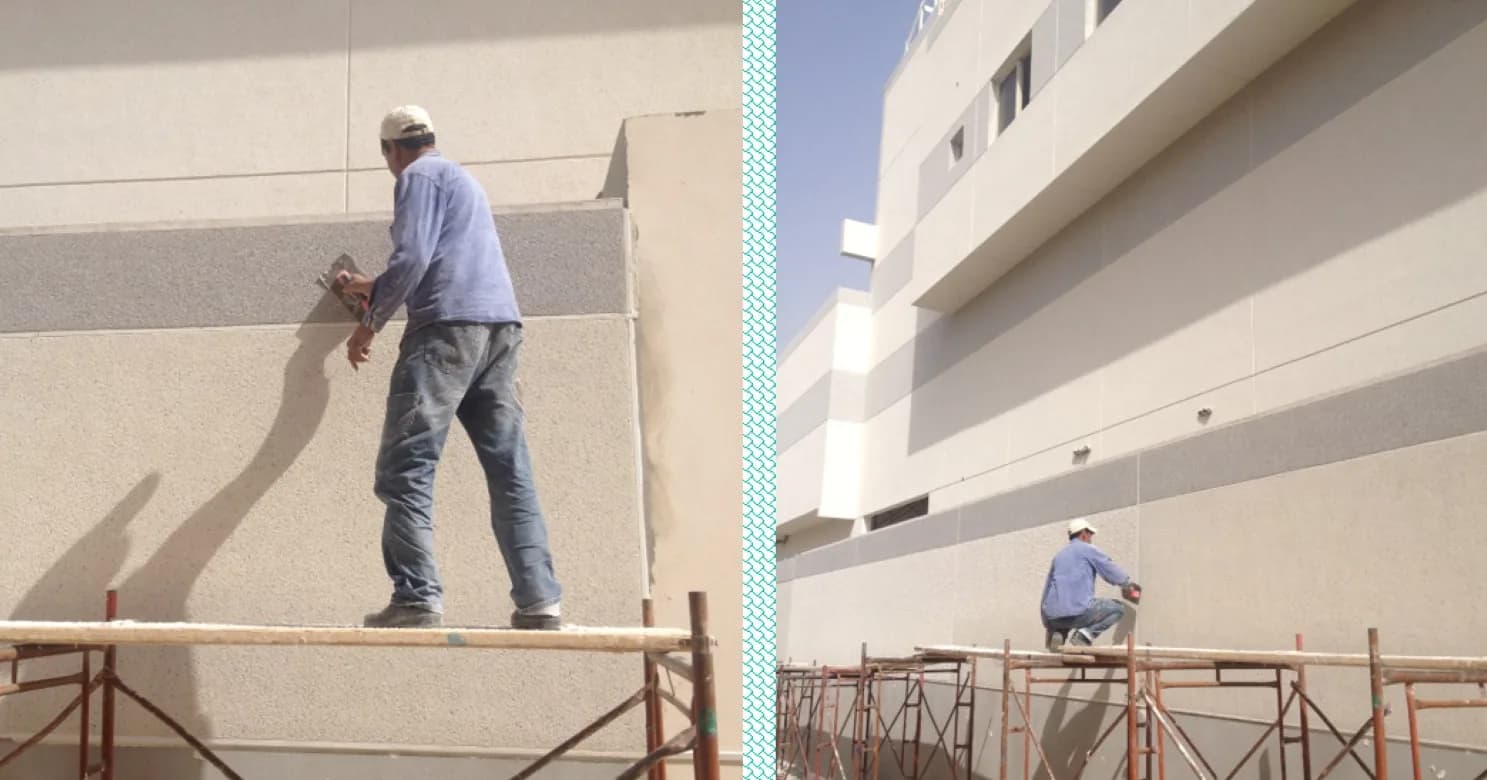
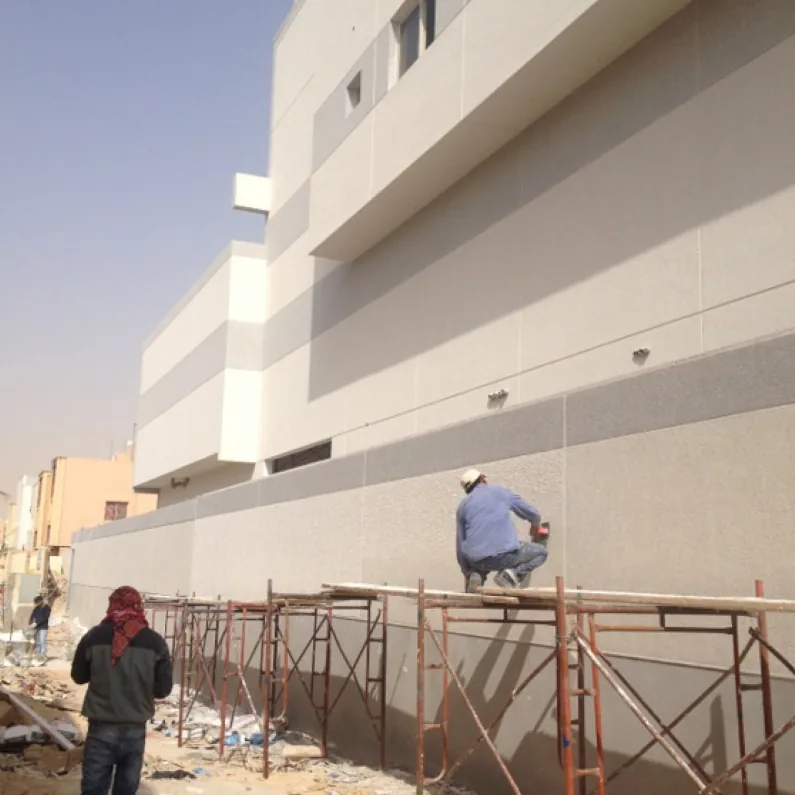
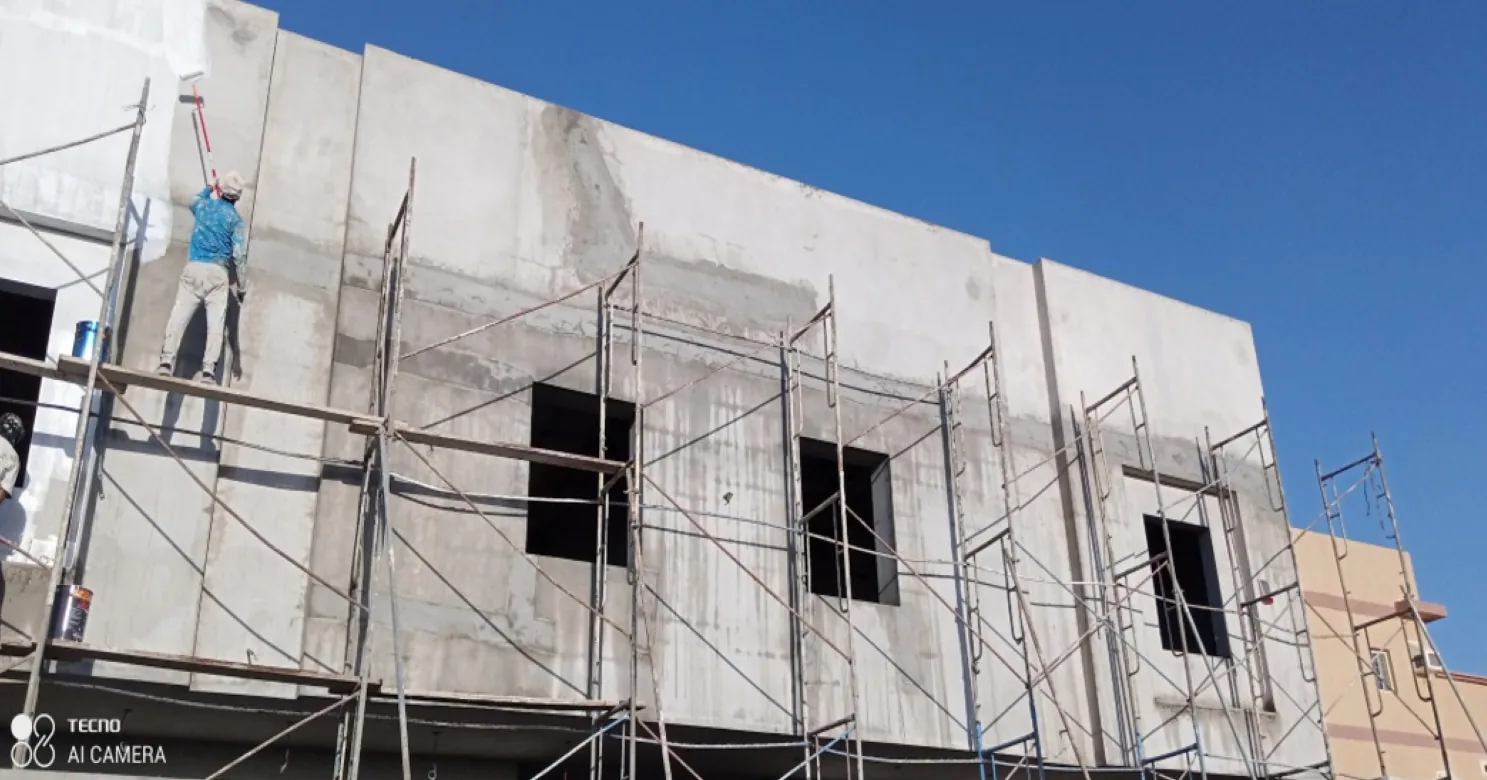
This is scope we've carried across government, commercial and residential work since 2000 — most recently on a commercial office building in Riyadh, where external render was applied and finished from scaffolding across the full facade ahead of the building's final coating. Getting plaster flat and true the first time is what makes every finish that follows — paint, tile, cladding — look and perform the way it's supposed to.
Plastering on an Ashlaar project is sequenced with the rest of the finishing programme — painting, flooring and ceiling work that follows it, and the screeding and waterproofing that may run alongside it in wet areas — rather than treated as an isolated trade with its own separate schedule.
What's in scope
- Internal wall and ceiling plaster ahead of paint or tiling
- External render on facades ahead of cladding, paint or texture coats
- Patch and repair plastering matched to the surrounding surface
How we deliver this
- 01
Substrate preparation
Loose material and dust are removed and the surface is checked for cracks or movement before any plaster goes on.
- 02
Corner beading & screed rails
Beading and rails are set out to hold a true line before the base coat goes on, not corrected after.
- 03
Base coat
The base coat is applied to build up the correct thickness and left to cure before the finish coat.
- 04
Finish coat to tolerance
The finish coat is brought to plumb and level within tolerance and checked with a straight edge before sign-off.
- 05
Weather-conditioned curing
External plaster is timed and cured to suit temperature and exposure rather than rushed to a fixed calendar date.
- 06
Handover to the next trade
The surface is inspected and signed off before tiling, painting or cladding starts on top of it.
Choosing the plaster for the wall and its exposure
Plaster is not one product. The right system depends on the substrate behind it, whether the wall is inside or outside, and what will be applied on top. Specify it surface by surface, and follow the manufacturer's data sheet and the consultant's specification for mix, thickness and curing.
| System | Where it fits | Watch points |
|---|---|---|
| Cement-based plaster, site-mixed or factory-blended | External render, wet areas, walls that will take tile | Shrinks and cracks if it dries too fast or is built up too thick in one pass |
| Gypsum plaster | Dry internal walls and ceilings ahead of paint | Softens if it stays damp, so not for external use or persistently wet areas; beads and metalwork must suit it |
| Textured or decorative external coat | Facades finished with a texture rather than plain paint | Must be compatible with the base coat and the paint system that follows |
What Jeddah and Riyadh do to fresh plaster
In hot, dry conditions the surface can lose water faster than the cement can use it, leaving weak, dusty plaster and fine map cracking. That is why curing matters as much as application. Riyadh adds wind-blown dust and wide day-to-night swings, which put thermal movement into the wall. In Jeddah, humid, salt-laden air brings a different risk: salts in sand or mixing water surface later as white staining, and they corrode ordinary steel beads and mesh.
- Dampen absorbent block or concrete first, so the wall does not draw water out of the coat.
- Shade external work from direct sun and drying wind, and cure it the way the data sheet directs.
- Use clean, low-salt sand and mixing water, especially near the coast, and galvanized or otherwise protected beads and mesh.
- Lay mesh across junctions between different substrates and over chases, and carry building movement joints through the plaster with a proper profile instead of bridging them.
Defects and what actually causes them
- Map cracking: a mix that is too rich or too wet, rapid drying, or no curing.
- Hollow patches that sound drummy when tapped: dust or laitance left on the surface, smooth concrete that was not keyed, or dry block that was not dampened.
- Cracks along block and concrete junctions or above chases: movement between materials, with no mesh to hold the join.
- White staining (efflorescence): salts in the materials, or water moving through the wall from a leak or missing waterproofing.
- Walls out of plane and corners out of square: no screed rails or beads set out first, so every later trade inherits the error.
- Paint blistering or peeling later: plaster painted while still damp, alkaline or dusty.
Checks before the next trade starts
- Approve a sample panel of the agreed system and finish before the full run starts.
- Tap-test every wall for hollow areas; a hollow patch under tile or paint will fail later.
- Check flatness with a straight edge, and plumb and level at corners and openings, against the tolerance in the specification rather than by eye.
- Confirm that chases and embedded services were tested and closed before plastering.
- Rub the surface by hand; it should not dust or powder.
- Keep a record of curing, and hold the next trade until the surface suits its system.
What to write into the scope and BOQ
- Internal and external plaster as separate items, each naming the system.
- Beads, mesh, control joints and stop ends included, not left as later extras.
- The flatness tolerance, and how and when it will be checked.
- Curing method, and who is responsible for it.
- Scaffolding or access for external work, and who makes good after later chasing by the electrical and plumbing trades.
A full elevation, such as the render applied from scaffolding at the commercial and office building in Riyadh, is where these controls matter more, because a facade shows every change in mix, joint and drying. For wider questions to put to any contractor, see Questions to Ask Before Hiring a Finishing Contractor in KSA.
What's handled by another capability
- Floor screeding — see Screeding & Expansion-Joint Treatment
- Painting — see Painting
- Structural concrete repair — see Structural Works
Materials & systems
- Cementitious plaster systems
- Gypsum plaster systems
- Corner beading & screed rail systems
- Weather-graded external render systems
Where we deliver this
 Head office
Jeddah
Makkah Region
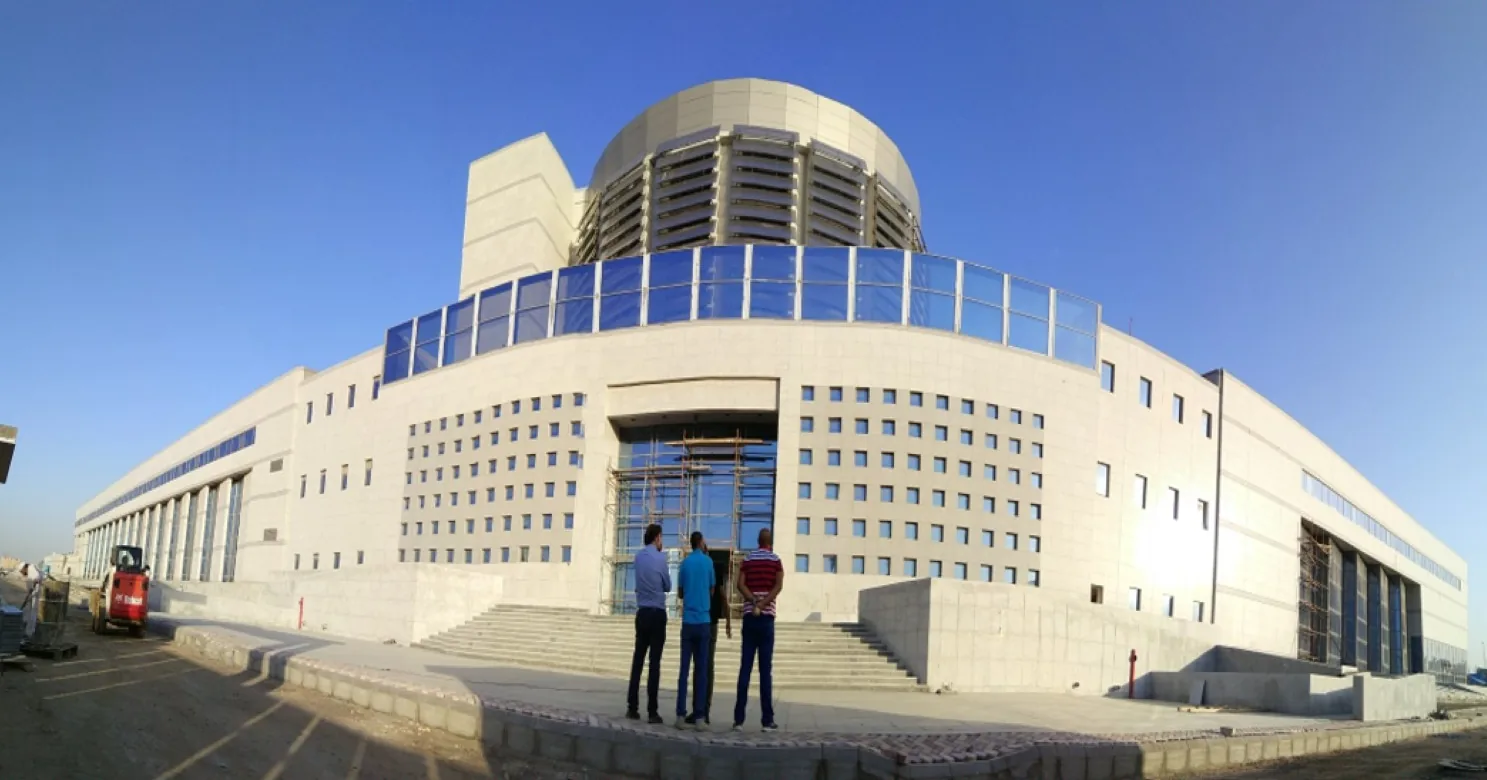
Ashlaar's head office, and the largest share of our project record.
7 projects delivered
Riyadh
Riyadh Region
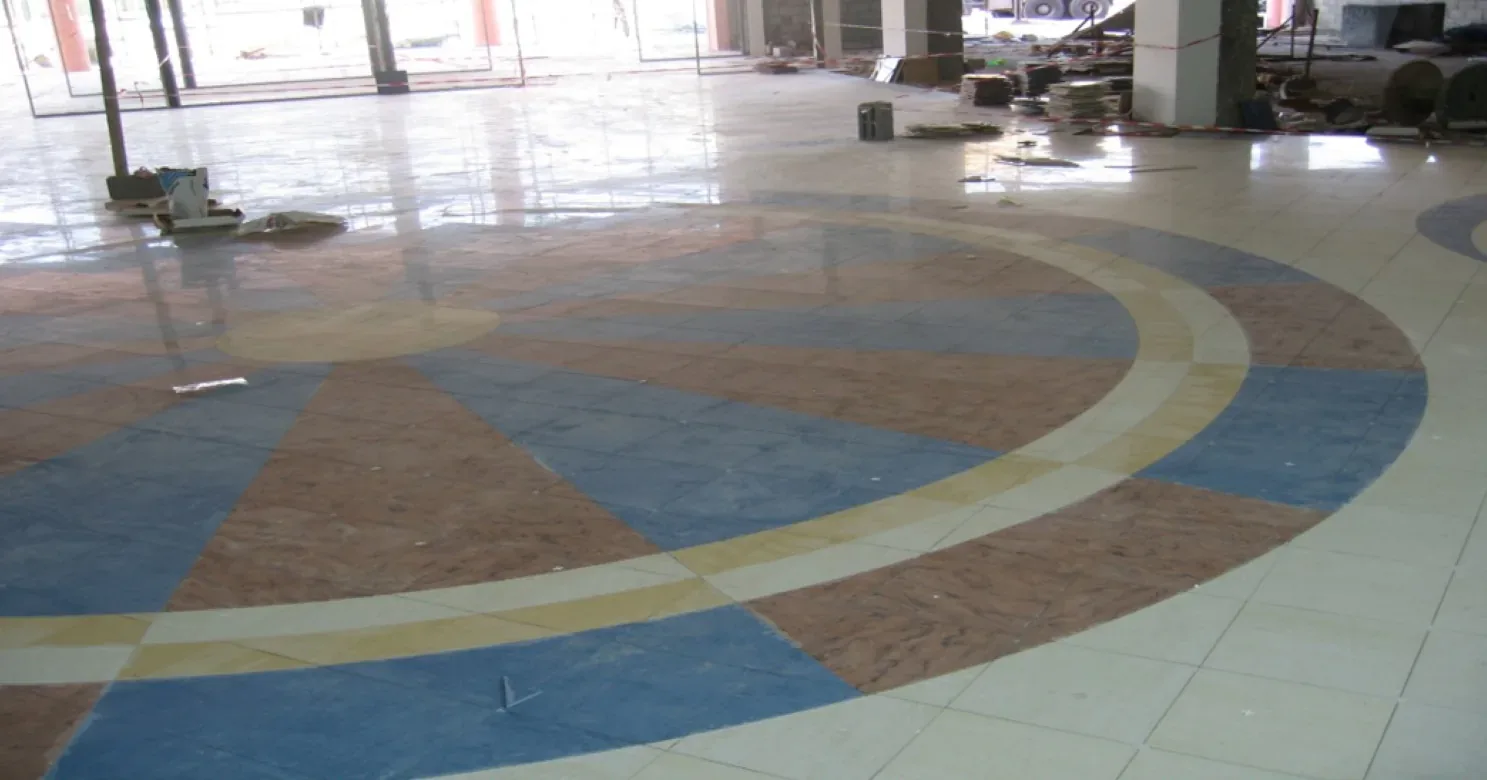
Our largest project base outside Jeddah.
6 projects delivered
Dammam
Eastern Province
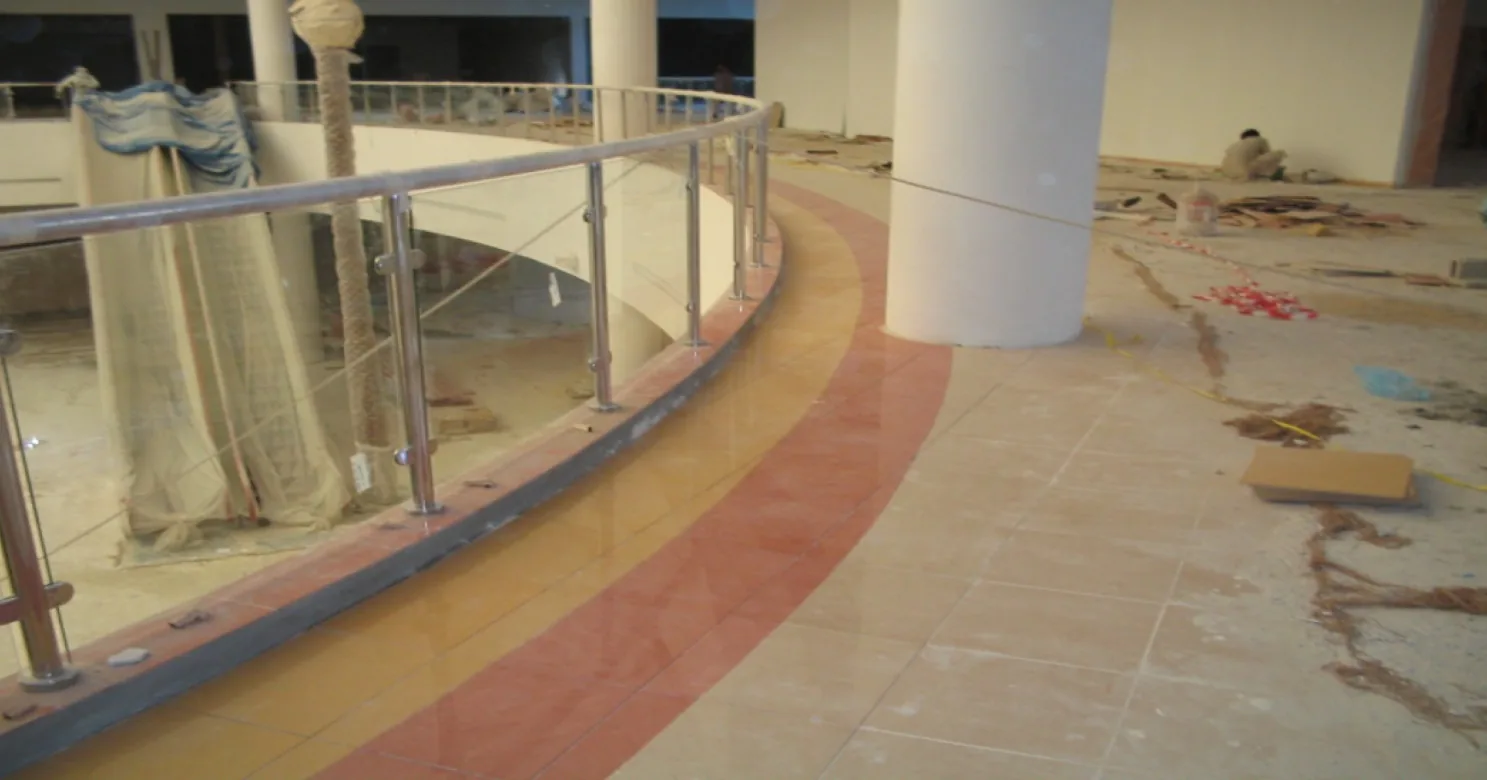
Interior finishing and flooring for a retail development.
1 project delivered
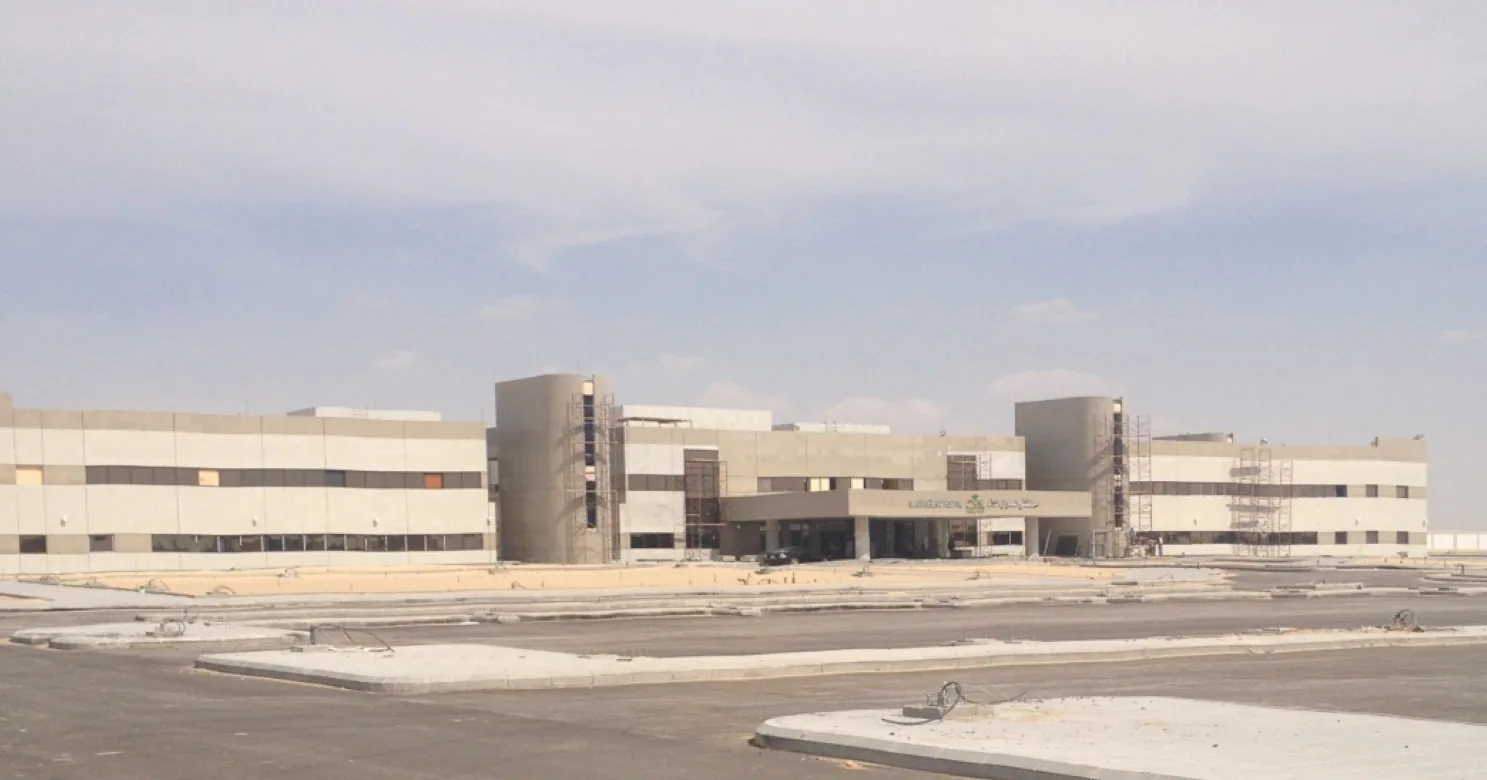
Al Ahsa
Eastern Province
Architectural finishing for a healthcare facility.
1 project delivered
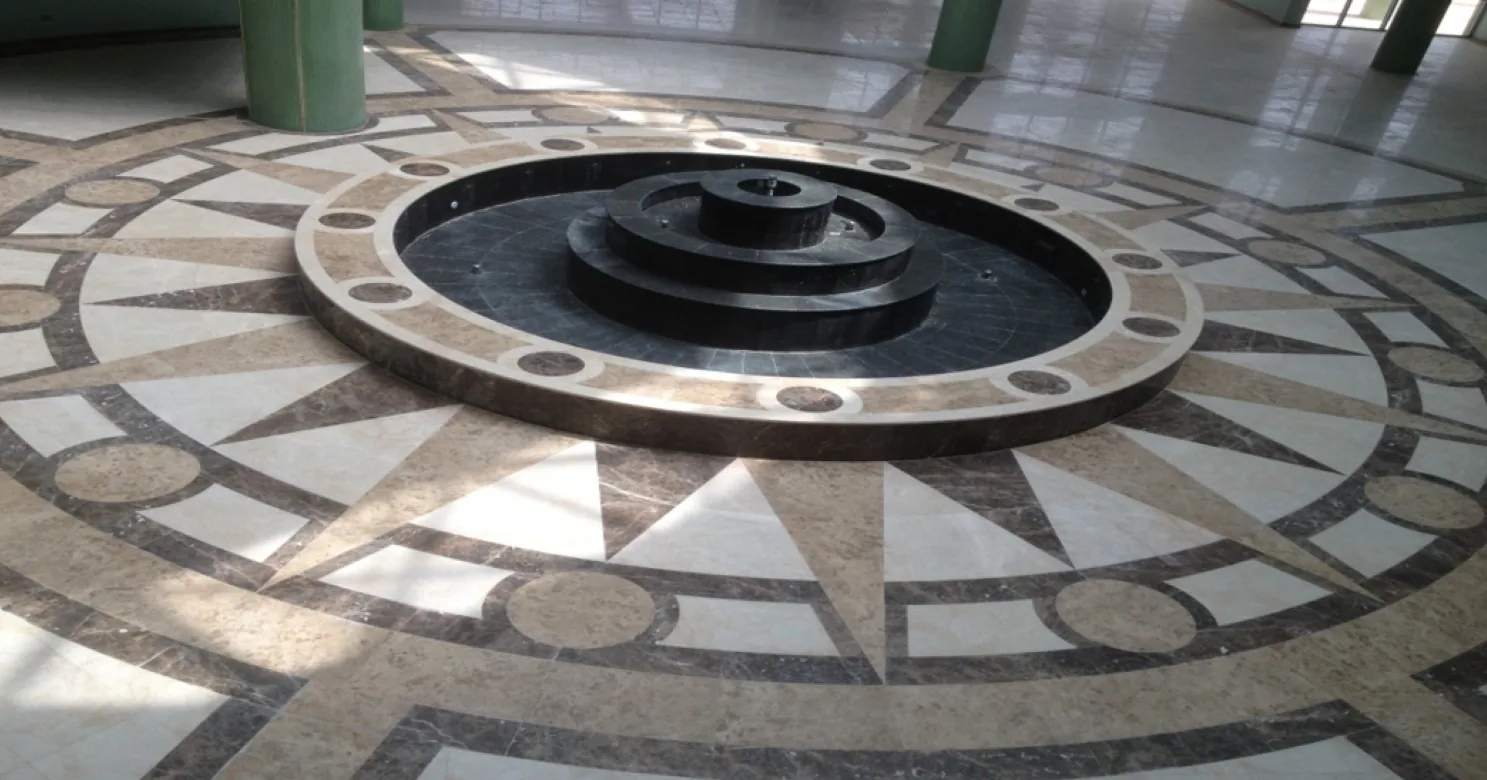
Al Kharj
Riyadh Region
The Kingdom's dairy capital — and our largest Riyadh Region project outside the capital itself.
1 project delivered
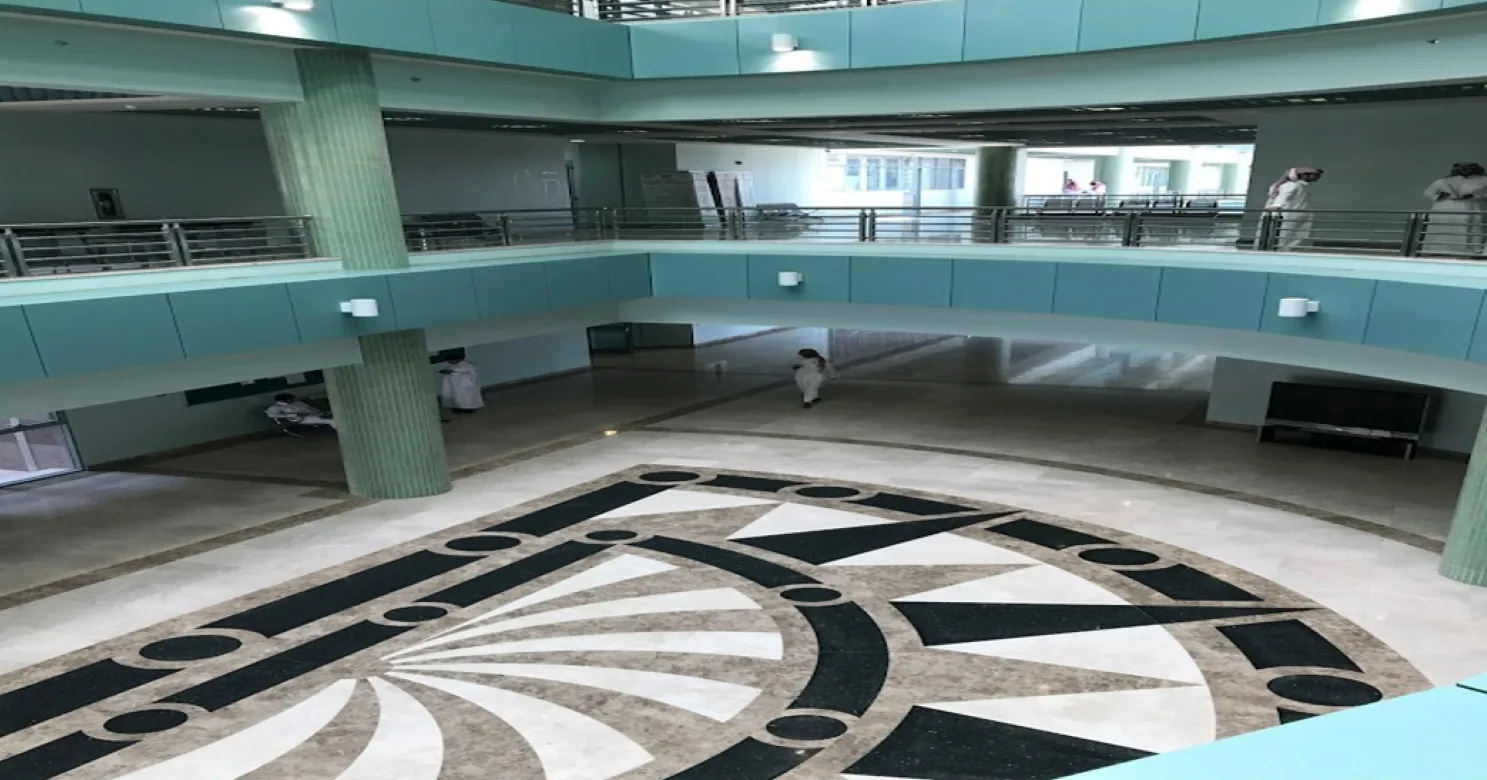
Huraymila
Riyadh Region
A college campus finishing scope, part of our wider Riyadh Region higher-education work.
1 project delivered
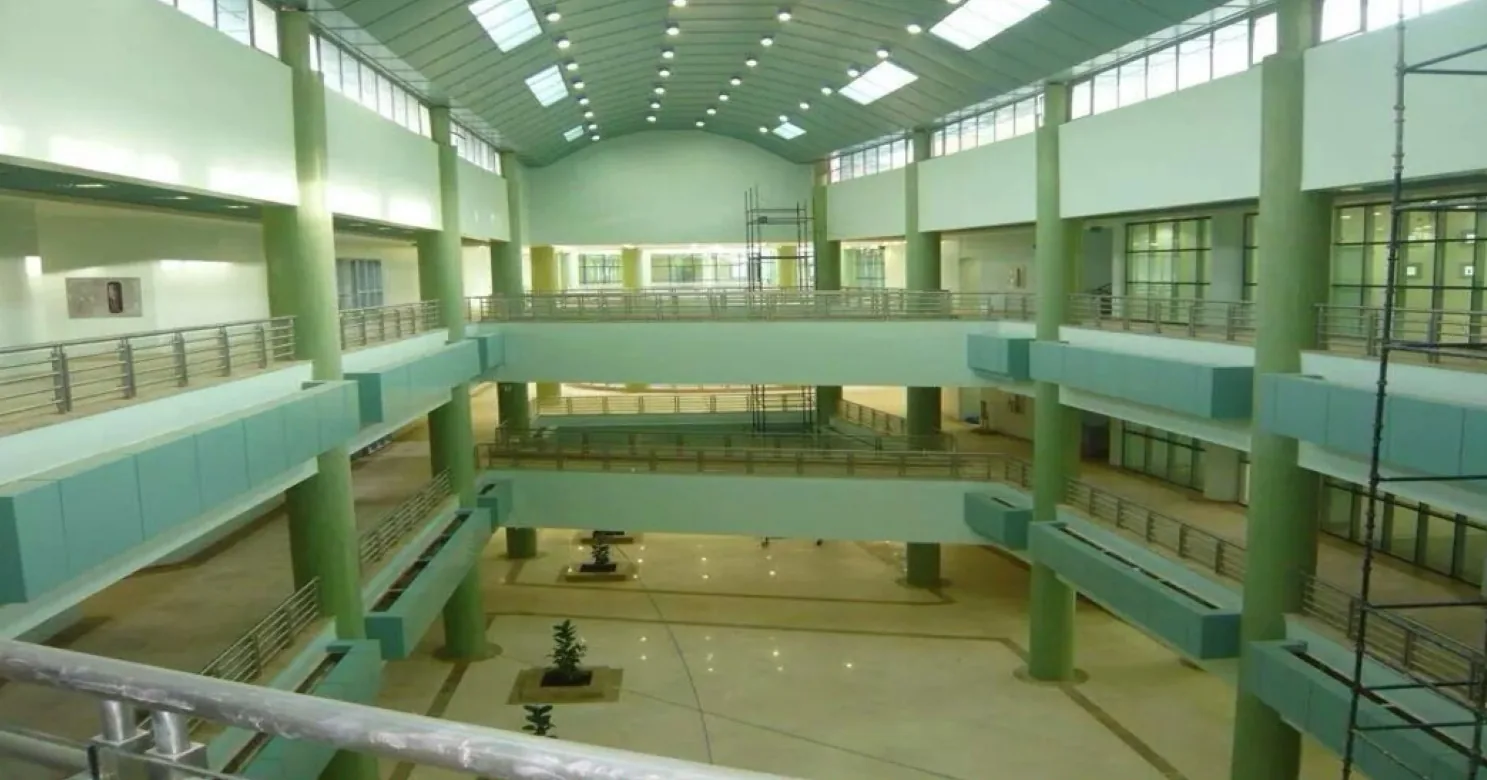
Muzahmia
Riyadh Region
A university campus finishing scope, on the Riyadh–Mecca Highway corridor west of the capital.
1 project delivered
Projects that evidence this trade
 Commercial
Related reading
Saudi Building Code Requirements for Finishing Works
Where the Saudi Building Code touches finishing works — railings, fire-rated partitions, waterproofing and accessibility — and why it matters on site.
Read more
Questions to Ask Before Hiring a Finishing Contractor in KSA
A working checklist of the questions to ask any finishing contractor in Saudi Arabia before signing — on scope, programme, quality and payment.
Read moreFrequently asked
How long does plastering take to dry before painting?
It depends on coat thickness, ambient temperature and humidity — our technical team will build the correct curing time into your schedule rather than rushing paint over a wall that isn't ready.
Do you do both internal and external plastering?
Yes — internal walls and ceilings ahead of paint or tiling, and external render on facades ahead of cladding, paint or texture finishes.
Can you match plastering to an existing wall or repair area?
Yes, patch and repair plastering is scoped and finished to match the surrounding surface before it's handed to the next trade.
Can plastering be applied over an old painted wall?
The existing surface is checked first — loose or flaking paint has to come off and the substrate keyed before new plaster is applied, otherwise the new coat won't bond properly to what's underneath.
Is external render a different material from internal plaster?
Usually yes — external render is specified for weather exposure while internal plaster is specified for the substrate and finish going over it; our technical team confirms the right system for each surface.
How is plaster checked for flatness before it's signed off?
With a straight edge and level across the surface and at corners, checked against tolerance before the wall is handed to the next trade — not judged by eye alone.
Why does new plaster crack, and can it be prevented?
Most cracking is either shrinkage or movement. Fine, map-like shrinkage cracks come from a mix that is too rich or wet, coats built up too thick, or drying too fast, and they are controlled through the mix, the coat build-up and curing. Movement cracks follow junctions between materials or the line of a chase, and are controlled with mesh and movement joints. Some hairline cracking cannot be ruled out entirely, so the specification should say what is acceptable.
Is gypsum plaster or cement plaster better for internal walls?
Neither is better in every case. Gypsum plaster suits dry internal walls and ceilings that will be painted, and gives a smooth finish. Cement-based plaster is the choice for wet areas, walls that will take tile, and all external work. The consultant's specification decides, and where the two systems meet on the same wall the junction needs care.
What affects the cost and programme of a plastering package?
The main drivers are the area and how many separate surfaces it splits into, how far the substrate is out of true and needs building up, internal or external work, access and scaffolding, the beads, mesh and joints required, the finish grade, and curing needs. Correcting a badly built wall with extra plaster adds material, time and cracking risk, so checking the wall early gives the fewest surprises.
More from Architectural Finishing
Planning a project? Let's talk finishing.
Tell us about your scope and timeline — our technical team will respond with a clear, considered proposal.