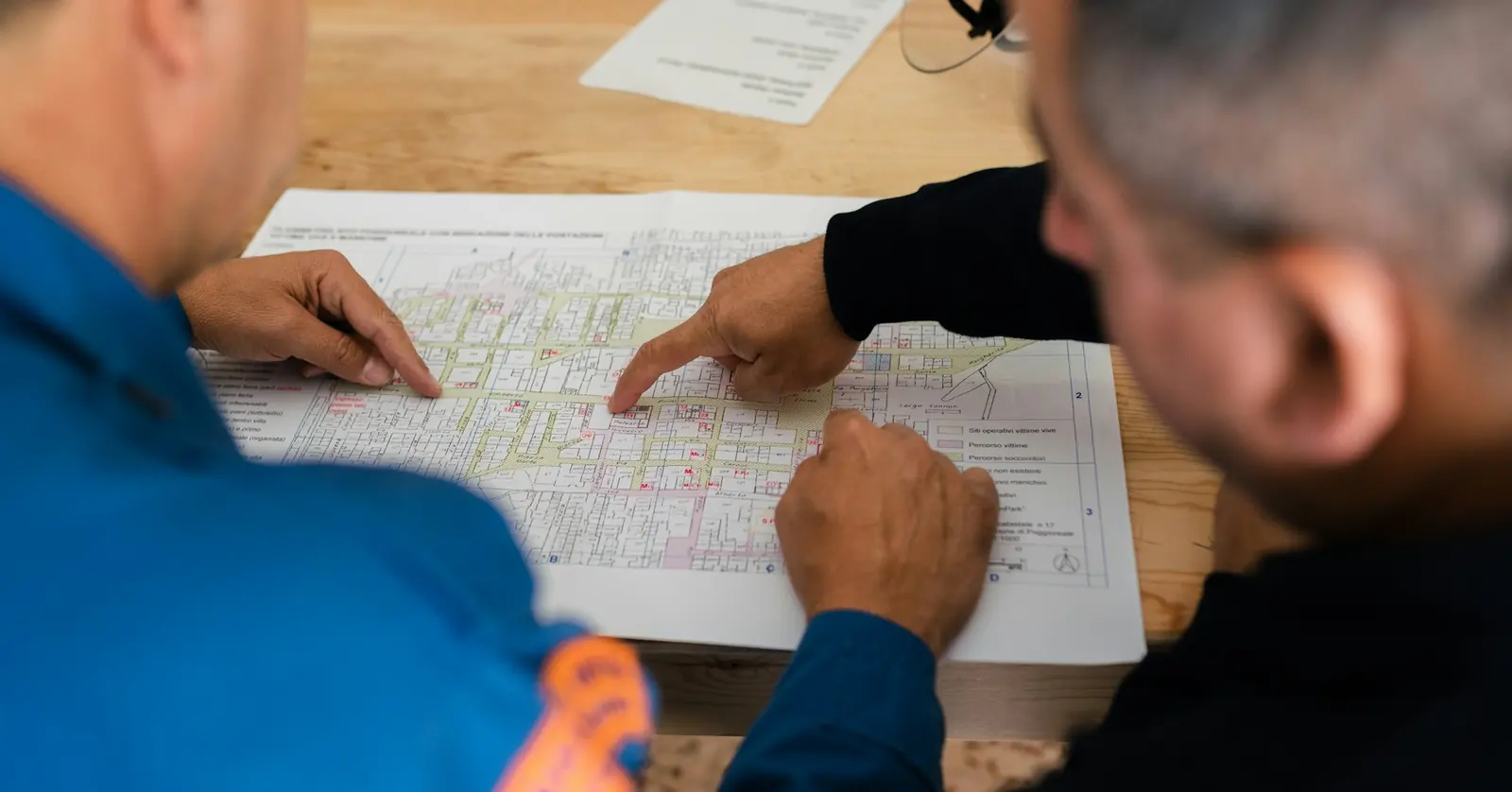
Questions to Ask Before Hiring a Finishing Contractor in KSA
Ashlaar Technical Team · September 21, 2026
Most contractor disputes in Saudi Arabia don't start on site. They start earlier, in the first meeting, with a question nobody asked. A scope that sounded complete turns out to have an obvious gap once the tiling is already down. A verbal assurance about programme turns out to have no basis in an actual schedule anyone can point to. A price that looked competitive turns out to have excluded something everyone assumed was included, discovered only when the first variation invoice arrives. None of that is unusual, and none of it requires bad faith on either side — it's simply what happens when a first meeting stays general and reassuring instead of getting specific and a little uncomfortable. Clients often hesitate to press for detail this early, worried it will read as distrust before a relationship has even started, but a contractor who's done this before will recognize a well-prepared client rather than a difficult one, and will generally treat a client who arrives with specific questions as a lower-risk, more straightforward project to run than one who signs on trust alone and starts asking questions only once something has already gone wrong. This is a working list of the questions worth asking directly, in person, before you sign anything, organized the way they'd actually come up in a real conversation: scope, programme, quality and safety, then money — with the red flags to watch for woven through each section rather than saved for the end.
Questions about scope and trades
Which of these trades does your own team self-perform, and which get subcontracted further, and to whom? Can you break the quote down by trade — plaster, flooring, ceilings, partitions, painting, waterproofing, doors and windows, vanity and epoxy works — instead of one lump sum for "finishing"? What's explicitly excluded from this price, in writing, rather than left to be discovered later? Who will actually be my day-to-day site contact, and are they an engineer with authority to make technical decisions on the spot, or a salesperson who'll hand me off to someone I've never met once the contract is signed? These sound like basic questions, and they are — which is exactly why a contractor's willingness to answer them specifically, with numbers and names rather than reassurances, tells you most of what you need to know before going further. A contractor who answers the trade breakdown question fluently, without needing to check with someone else first, is usually a contractor who actually built the quote from real scope rather than from a rough estimate.
Questions about programme and coordination
How do you sequence finishing works around MEP first-fix and structural handover, and who owns that sequencing decision when trades conflict on the same floor at the same time? What happens when a design query comes up on site — is there an actual technical services function that can respond within a day or two, or does it go back and forth informally between site staff until someone senior happens to notice? How far in advance will I know about a schedule slip, and from whom — the site engineer, or only when I ask? And plainly: how do you report progress, and is there a real schedule I can see and report upward from myself, with actual dates and milestones, or just a verbal "we're on track" that turns out to mean whatever it needs to mean that week? A contractor who can describe a documented process here — the kind of answer behind a phrase like "a schedule you can report upward" — is describing an actual system they use on every project, not making you a one-off promise to get the contract signed.
Questions about quality and safety
Who supervises quality and safety on site day to day, and are they dedicated to your project specifically, or spread across five sites at once and passing through occasionally? What's the actual process when work doesn't meet specification — who redoes it, at whose cost, and on what timeline, and is that written down anywhere or just assumed to be obvious? Is there a documented inspection point before critical work like waterproofing gets covered up, or does covering-up happen on the trade's own schedule regardless of sign-off? And can you show me finished work from a comparable project — real photographs of a completed space, not a rendering of what's planned or a stock photo pulled from somewhere else entirely? A contractor with a genuine quality and safety supervision function, distinct from general site management and staffed by someone whose actual job title reflects it, will usually welcome this question, because it's an easy one for them to answer well and in detail.
Questions about money and paperwork
What's the payment structure, and what specifically triggers each payment — a calendar date, or a verified, inspected milestone? How are variations and change orders priced and approved before the work actually proceeds, so there's no argument afterward about what was agreed and by whom? What happens if a payment is delayed on my end — does work simply stop, and how much notice would I get? And, plainly: are you Zakat and tax compliant, and if this is a government-adjacent project, can you confirm your current contractor classification grade and field rather than a historical one that may no longer be accurate? None of these questions are aggressive to ask, however they might feel to ask out loud the first time. A contractor used to serious clients will have answered them many times before, will have the numbers ready without hunting for them, and won't treat a direct question about money as an insult.
Red flags to watch for in the answers themselves, not just in the questions asked
A vague answer to the trade-by-trade breakdown question, or one that needs a follow-up call to confirm. Reluctance to name a site engineer before signing, or naming one who then never actually appears on site. No real answer on how quality issues actually get remedied, beyond a general "we stand behind our work" that never gets more specific no matter how the question is rephrased. Any pressure to sign before every question above has been answered properly, especially pressure framed as "this price is only good today." On their own, none of these is necessarily fatal, and a single hesitant answer might just mean you caught someone on a bad day — but together, and repeated across multiple questions, they're the pattern that shows up again and again in disputes that could have been avoided entirely at the first meeting.
A contractor confident in its own answers won't mind this list, and may even seem relieved to be asked something specific for once rather than having to guess what a hesitant client actually wants to know. Ashlaar's own answers, for what it's worth, run along these exact lines: five integrated capabilities — architectural finishing, external and facade works, MEP works, structural works, and supervision and consultancy — under one accountable team, with a dedicated support-engineering presence that stays on site through the programme rather than dropping in occasionally, and a technical services function built specifically to answer the kind of design query that otherwise stalls a schedule for a week. That's offered here as a reference point for the kind of answer worth expecting from any serious contractor, not as a substitute for actually asking. Whoever you're evaluating, ask these questions directly, in this order or your own, expect specific answers rather than reassurances, and treat hesitation as information in itself — it usually is, and it costs you nothing to find out before a contract is signed rather than after.
Related capabilities
Related projects
 Government
Planning a project? Let's talk finishing.
Tell us about your scope and timeline — our technical team will respond with a clear, considered proposal.