How to Choose a General Contracting & Finishing Company in Saudi Arabia
Ashlaar Technical Team · September 21, 2026
Choosing a general contracting and finishing company in Saudi Arabia is usually treated as a procurement exercise: collect three quotes, pick the lowest or the middle one, move on. That approach works well enough for a single, simple trade, where price is close to the only variable that matters. It works badly for finishing works, because finishing is the point at which every other trade on a project becomes visible. Plaster hides the electrician's chases. Flooring sits directly on top of the waterproofing. A suspended ceiling closes over the ductwork and cabling for good, often within days of the cabling being pulled. A contractor who genuinely knows how to coordinate that handover produces a building that looks and performs the way it was designed to, on the date it was supposed to. One who doesn't produces a defects list that follows the client for months after handover, and a set of arguments about whose trade actually caused the leak, the crack or the uneven floor — arguments that are hard to settle precisely because the evidence is now sealed behind a finished wall. Vision 2030's construction pipeline has pulled a large number of new firms into the market across government, commercial and residential work, which means the number of contractors with real capability and the number of contractors with a polished sales deck have both grown quickly, and the two lists don't always overlap. This guide sets out what's actually worth checking before signing, rather than what merely looks reassuring in a proposal document, because the cost of finding this out the hard way, after handover, is almost always higher than the cost of asking a handful of specific questions before a contract is signed.
Start with scope-fit, not company size
"General contracting" in Saudi Arabia covers a wide range of business models, from firms that self-perform most trades with their own crews, engineers and equipment, to firms that are effectively brokers, passing every package down to another layer of subcontractors and adding a management fee on top. Neither model is automatically wrong, but the two carry very different risk profiles, and a glossy company profile rarely makes the difference obvious from the outside — the org chart on a proposal document tends to look reassuring either way. Ask directly: of the trades inside your scope — plaster, flooring, ceilings, partitions, painting, waterproofing, facade cladding, electrical, plumbing — which does the company's own team actually execute, and which get passed on to someone else, and to whom? A firm built around integrated capabilities spanning architectural finishing, external and facade works, MEP works, structural work and supervision under one accountable team can coordinate its own handover points directly, without three separate layers of subcontractors each protecting their own margin and their own excuses when something goes wrong. A firm that is purely a management layer can still deliver good work, and plenty genuinely do, but you need to know that's what you're actually buying, because your real point of accountability sits one level further away than the org chart on the proposal suggests, and every additional layer between you and the crew physically doing the work is one more place a problem can get diluted, delayed or quietly reassigned before it ever reaches you.
Ask for verifiable project history, not brochure claims
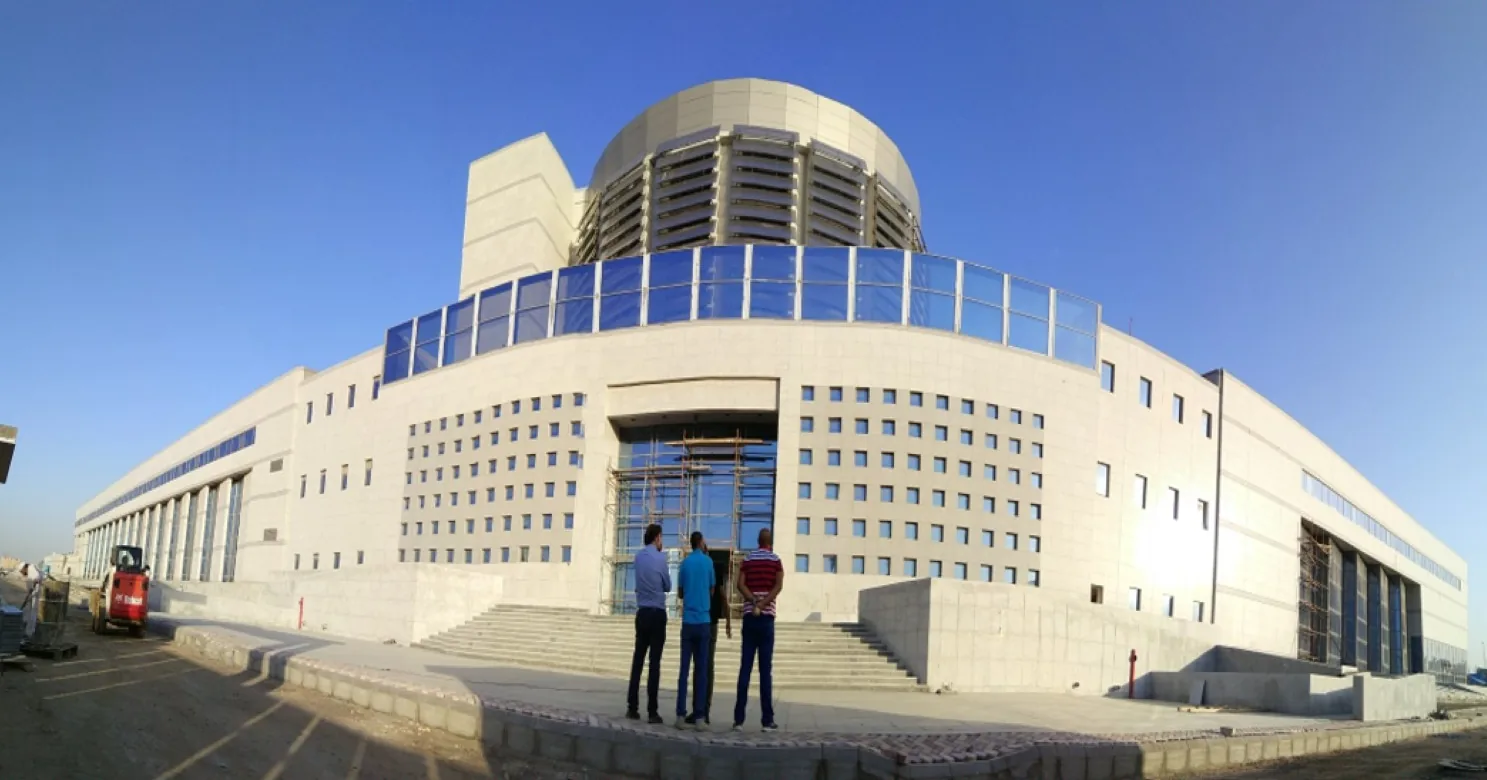
"We've completed over a hundred projects" is a marketing line. "We delivered the external granite cladding and mechanical cladding system for the Institute of Public Administration in Jeddah, as finishing contractor under main contractor Hadeem Contracting Co." is a fact you can actually check. The difference matters. Ask for named projects, their location, the client or main contractor involved, the specific scope delivered trade by trade, and real site photography rather than renders or stock imagery — a contractor with a genuine track record will usually be glad to show it, because it's the easiest sales tool they have. Ask, too, how long the company has genuinely been operating under continuous ownership, not how long the current brand name has existed — a market with as much new entry as Saudi construction currently has rewards firms with a real multi-decade track record, because longevity under one continuous operation is itself a signal, not just a number on a company profile. It means the company has survived slow years, disputed payments and difficult clients without quietly folding and re-forming under a new trade name, which happens more often in this industry than buyers tend to assume. A contractor with 25 or more years in the same market, working across government, commercial and residential clients, has been tested by circumstances a two-year-old firm simply hasn't faced yet — a payment dispute during a downturn, a design change mid-programme, a client who pushed back hard on a defect — and that history is verifiable in a way a proposal document, however polished, never is.
Check classification and paperwork before you get to the sales pitch
Any contractor working at meaningful scale in Saudi Arabia should be able to speak plainly about its contractor classification grade with the Saudi Contractors Authority, its commercial registration, and its Zakat and tax compliance. These aren't optional extras — they're baseline evidence that a company operates formally and can actually be held to a contract if something goes wrong, rather than existing as a name on a business card and little else. For government-adjacent or larger private work, ask whether the firm's classification grade and field genuinely match the scale of your project; a grade suited to small works being stretched onto a landmark building is a real risk signal, not a technicality to skim past. Ask, too, how quality and safety supervision is actually staffed on site — is there a dedicated technical services or QA function with its own engineers, or is supervision something the site foreman handles between other tasks when there's time? A contractor with a genuine quality and safety supervision structure will describe it in specific terms — who holds the role, what they inspect, how often — rather than a general assurance that "our team handles it." These paperwork questions feel unglamorous next to a design conversation about finishes and materials, but they're the fastest way to separate a company built for the long term from one optimized purely for winning the next tender, and they usually take less than five minutes to ask.
The red flags that actually matter
Some warning signs are far more reliable than others. Be cautious of a contractor who won't name a specific site engineer or technical point of contact before you sign — if nobody is willing to be named and made accountable before the contract exists, that reluctance rarely improves once it does, and it's a strong early indicator of how disputes will be handled later. Be cautious of a quote that lumps "finishing works" into a single line item instead of breaking it down by trade; a contractor genuinely pricing real scope can tell you what portion covers plaster, what covers flooring, what covers ceilings, what covers paint, usually without needing to go back and check. Be cautious of pricing that sits dramatically below every other bid with no clear explanation — it usually means a corner will be cut somewhere, often in the trades that are hardest to inspect after handover, like waterproofing behind a finished wall or under a tiled floor, precisely because those are the corners that don't show up until years later. And be cautious of any contractor who can't give you a straight answer on how design changes or site variations get priced and approved before work proceeds, because that exact ambiguity is where real disputes are born on real projects, not in some hypothetical worst case dreamed up for a guide like this one.
How this plays out on an actual site
On any live building, finishing works don't happen in isolation. Flooring installation has to wait for screed to cure and for MEP first-fix to clear the slab; ceiling grids close up ductwork, cabling and fire-stopping that has to be inspected before it disappears from view; facade cladding sequencing depends on structural tolerances that were set months earlier by a completely different trade working to its own schedule. A contractor with its own supervision and consultancy function — project management and scheduling, a technical services desk that can actually answer a design query without a week's delay, dedicated quality and safety oversight — catches the clash or the missed inspection before it's buried behind a finished surface, because someone whose job is specifically to look for that problem is actually looking for it. A contractor without that layer relies entirely on the client's own consultant to catch everything, which is a slower and less reliable safety net stretched across a dozen other responsibilities, and it's usually the client who ends up absorbing the cost and the delay of anything that slips through unnoticed until a defects inspection months later. This is the practical, unglamorous reason a phrase like "engineers on site, not on paper" matters more in practice than it sounds like it should on a proposal page — it's the difference between a problem caught in an afternoon and one discovered after the wall is already painted.
Where a firm like Ashlaar fits this checklist — briefly
Ashlaar has operated out of Jeddah since 2000, with more than 25 years and 19 landmark projects across government, commercial and residential work in Jeddah, Riyadh, Dammam, Al Ahsa, Al Kharj, Huraymila and Muzahmia — including the Institute of Public Administration in Jeddah, where it delivered external granite cladding, a mechanical cladding system and architectural finishing as finishing contractor under main contractor Hadeem Contracting Co. It organizes its work as five integrated capabilities — architectural finishing, external and facade works, MEP works, structural works, and supervision and consultancy — under one accountable team, rather than scattering trades across unrelated subcontractors, and its supervision and consultancy function keeps a dedicated support-engineering presence on site through the programme rather than checking in occasionally, covering project management and scheduling, a technical services desk, and quality and safety supervision as distinct, staffed roles rather than one person's part-time responsibility. None of this is a substitute for asking the questions above about any contractor you're evaluating, Ashlaar included. It's offered here as a concrete example of what a passing answer to those questions actually looks like in practice, not as a pitch.
Run every shortlisted contractor through the same questions. The right choice of finishing contractor rarely announces itself through the size of an office or the polish of a proposal document — it shows up in specific, checkable answers about scope, history, paperwork and site supervision, and in how comfortable a contractor is being pressed for specifics rather than generalities. Before signing anything, it's worth having a direct conversation with the people who will actually be on site running your project, not only the salesperson who won the pitch, because that conversation tends to reveal, within a few minutes, whether the rest of this guide's questions have honest answers behind them. If a contractor hesitates, deflects, or answers a specific question with a general reassurance, treat that as information rather than an oversight — the firms that pass this kind of scrutiny easily are usually the ones worth signing with.
Related capabilities
Related projects
 Government
Planning a project? Let's talk finishing.
Tell us about your scope and timeline — our technical team will respond with a clear, considered proposal.