Swimming Pool Construction Company in Jeddah
Swimming pool construction — structural shell, waterproofing, pool-rated tiling and deck finishing. Government project experience in Jeddah since 2000.
Request a QuoteA swimming pool is one of the least forgiving structures on any site — it has to hold water under constant pressure, resist the chemical treatment that keeps that water safe, and do both for decades without a structural or waterproofing failure showing up as a crack, a leak into the surrounding ground, or tiles lifting off the shell. A pool that looks finished on handover day is only as good as the shell and waterproofing nobody sees once the water goes in. We treat pool construction as an integrated structural, waterproofing and finishing scope — not a tiling job that happens to be shaped like a pool.
Our pool scope covers the reinforced concrete shell built to the project's structural design, a waterproofing membrane tanking the shell before any tiling goes on, correct falls to the drains and overflow channels, and pool-rated ceramic, porcelain or mosaic tiling on the shell and surrounding deck, finished with a slip-resistant coping at the edge. Every wet-critical junction — steps, skimmers, drain penetrations — gets the same reinforcement and inspection as the rest of the shell before it's covered. Filtration and circulation plant is coordinated with our MEP capability rather than treated as someone else's problem to connect to at the end.
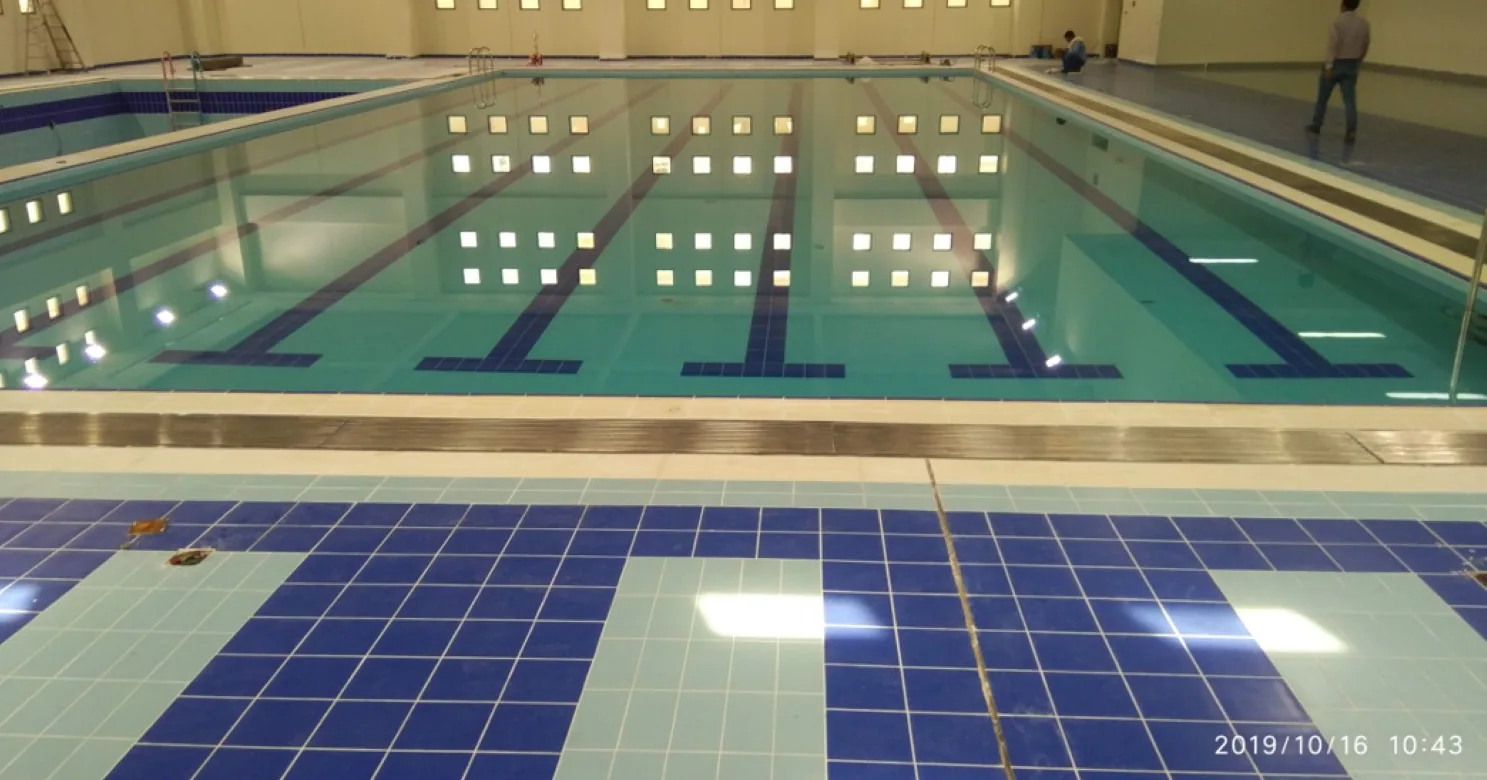
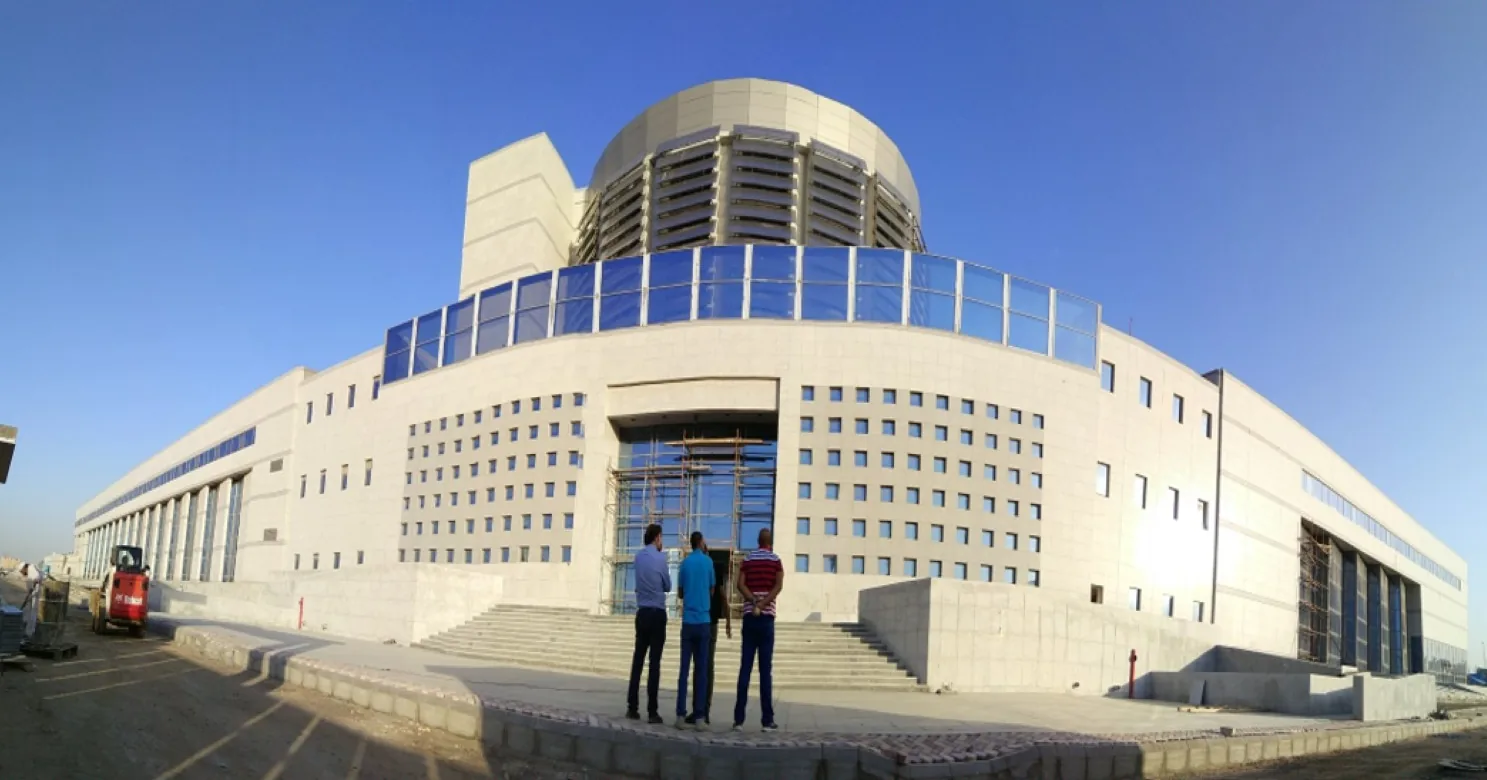
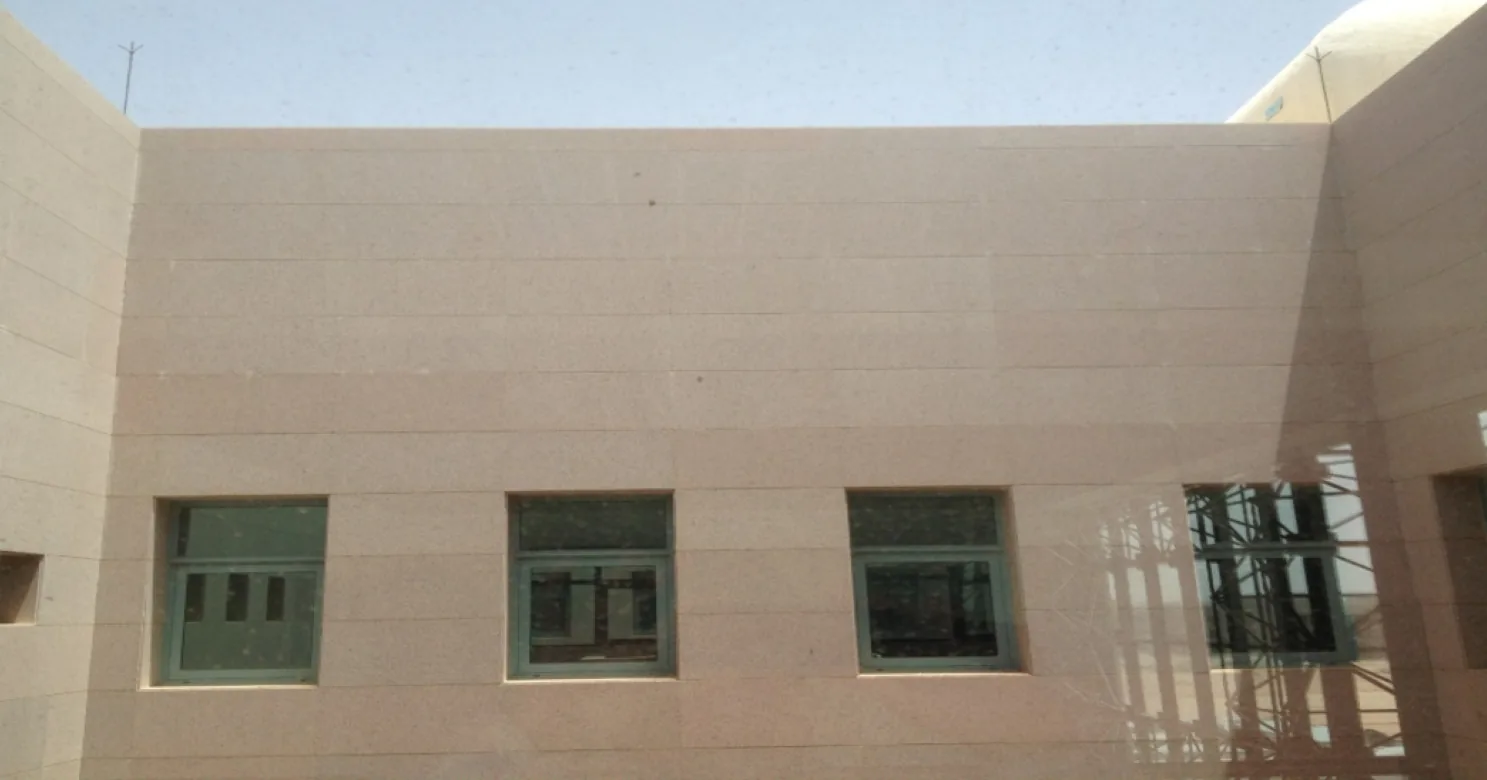
The indoor pool at a government public-administration institute in Jeddah — complete with its tiled deck and lane markers — was finished to the same standard as the rest of that building's architectural finishing and external granite cladding, inspected by our support-engineering team before it was filled. Government finishing work leaves very little room for defects to slide through, which is the standard we hold every pool to regardless of client.
Pool construction is coordinated with MEP for filtration and circulation and with hardscaping for the surrounding deck and landscaping, so the pool is delivered as part of one designed exterior rather than a fenced-off trade with its own schedule.
What's in scope
- Reinforced concrete pool shell, built to structural design
- Waterproofing, tanking and falls to drains and overflow channels
- Pool-rated tiling and slip-resistant coping
How we deliver this
- 01
Structural shell construction
A reinforced concrete shell is built to the project's structural design — the foundation everything else in the pool depends on being right.
- 02
Waterproofing & tanking
A waterproofing membrane tanks the shell before any tiling goes on, with the same reinforcement and inspection at wet-critical junctions as the rest of the structure.
- 03
Falls & drainage
Correct falls are set toward the drains and overflow channels before the shell is covered, so water moves the way the design intends from day one.
- 04
Pool-rated tiling & coping
Pool-rated ceramic, porcelain or mosaic tiling is installed on the shell and surrounding deck, finished with a slip-resistant coping at the edge.
- 05
MEP coordination
Filtration and circulation plant is coordinated through our MEP capability as part of the same project, not connected up by someone else at the end.
- 06
Inspection & fill
Our support-engineering team inspects every wet-critical junction before the pool is filled — the same standard applied whether the client is a government institute or a private villa.
How Saudi conditions shape a pool build
A pool is a water-retaining structure that also has to work as a finished surface, and each climate stresses it differently. In Jeddah, heat, humidity and salt-laden air wear the deck, the coping and any exposed metal fittings. In Riyadh the air is drier, dust settles into the water, and the swing between hot afternoons and cool nights makes tiles, coping and deck slabs expand and contract far more than the shell beneath them. Chlorine or salt chlorination puts a chemical load on every surface that stays wet, and on sites with a high groundwater level, water can press against the shell from outside; the site's geotechnical report shows whether that applies. None of this changes the order of work, but it does change which products are specified and where the movement joints go.
Finishes compared
Each finish suits a different part of the pool. These are general comparisons; a real pool's tile, adhesive and grout should follow the consultant's design and the manufacturer's data sheets for immersion.
| Finish | Where it suits | Watch for |
|---|---|---|
| Porcelain or ceramic tile | Shell walls and floors, steps and deck areas | Needs a flat, correctly falled substrate. Adhesive and grout must be rated for permanent immersion, and slip resistance must be checked on steps and deck. |
| Glass or ceramic mosaic | Curved walls, steps, benches and waterline bands | Many joints, so grout quality and full adhesive bedding decide durability. Movement joints are still needed. |
| Stone coping and deck paving | Pool edge and surround | Choose a slip-resistant finish that stays comfortable underfoot in strong sun; light colours reflect heat. Follow the supplier's advice on protecting stone from chemical and salt staining. |
What good looks like, and what goes wrong
- Leaks at penetrations. Skimmers, return fittings, drains and light niches are the usual weak points, because a pipe passes through the waterproofed shell there. Each needs a proper sleeve, a sealed flange or equivalent detail, and a check before it is covered.
- Lifting tiles. Usual causes are incomplete adhesive coverage, an adhesive not rated for immersion, missing movement joints, or filling the pool before the bedding has cured as the manufacturer requires.
- White staining on joints. Efflorescence is a sign that water is passing through the shell or the tile bed; it is not only a cleaning problem.
- An uneven waterline. Coping or overflow channels set out of level show immediately and are hard to correct once the pool is finished.
- Water ponding on the deck. A deck that falls toward the pool carries dirt into the water; it should fall away from the pool or to the channels the design shows.
Checks before covering up and before filling
- Shell, before waterproofing: surfaces sound and clean, cracks and honeycombing assessed by the engineer and repaired as directed, and every sleeve in its correct position.
- Waterproofing, before tile: continuous over floor, walls, steps and every junction, with penetrations sealed, inspected while still visible and protected from damage until tiled.
- Falls and levels: the floor falls toward the main drain, and coping and overflow lines are level all round, measured rather than judged by eye.
- Fittings and safety: skimmers, returns, drains and lights fixed and sealed; drain covers and suction arrangements as the designer requires.
- Tiling: full adhesive coverage, grout and movement joints as specified, and the cure time the manufacturer states before the pool is filled.
- Fill and observe: fill in a controlled way, record the level and watch for loss, then run the circulation plant and confirm flow, levels and lighting before handover.
Coordination and what to specify
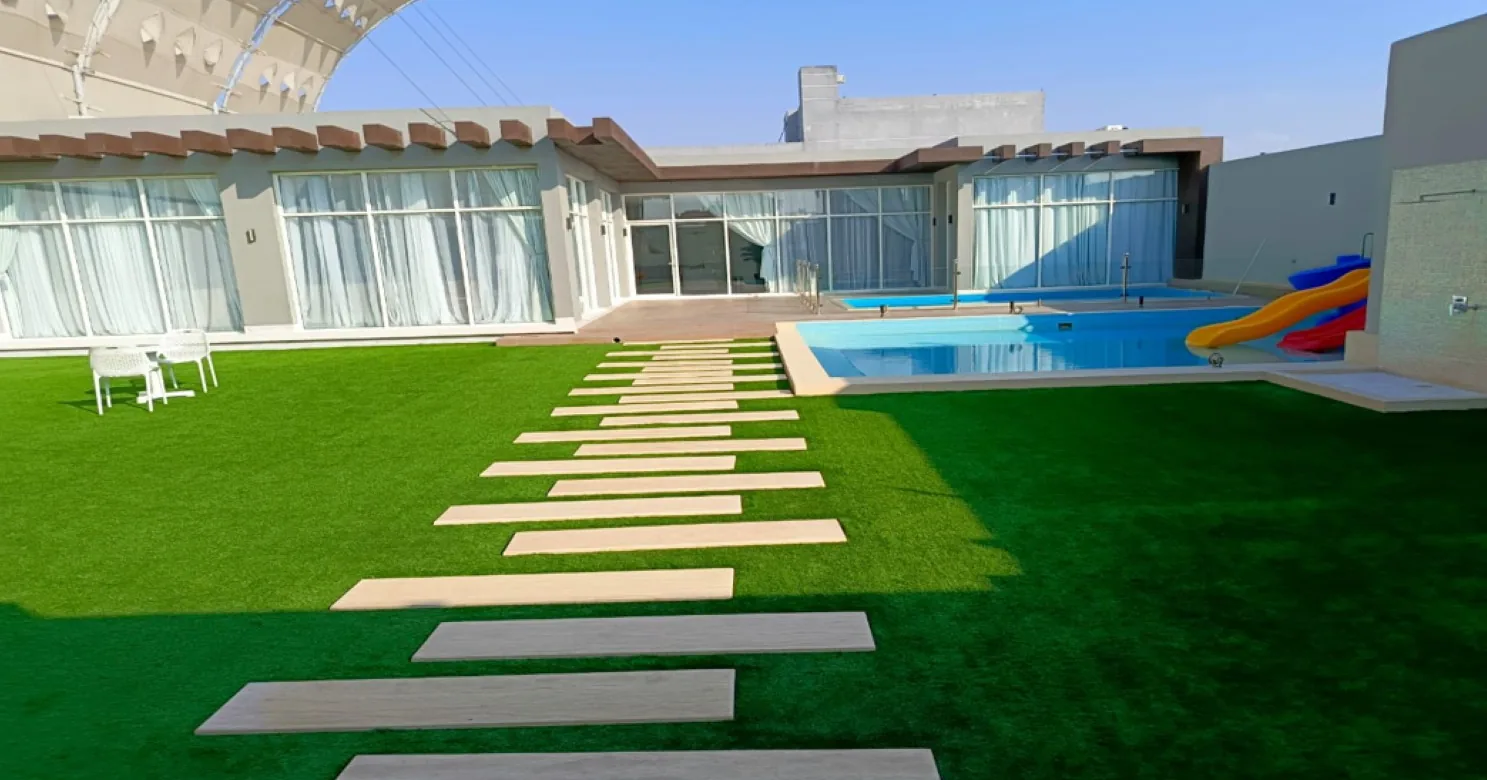
A pool sits between several trades. The plant room, pipework sleeves, earthing and bonding belong to the plumbing and electrical scopes and must be agreed before the shell is cast, because a sleeve is far easier to cast in than to drill later. The shell follows concrete practice and its membrane follows waterproofing. The surrounding deck belongs to hardscaping, and its falls, joints and drainage must line up with the coping. The North Jeddah rest house is an example of a pool, paved terraces and a tensioned canopy delivered as one exterior programme.
- In the BOQ, separate lines for the shell, waterproofing, tile and coping, fittings and circulation plant, so that no scope hides inside another line.
- The waterproofing system named, with its data sheet, rather than waterproofing as required.
- Who carries out the fill test, who signs it off, and at what stage.
- Handover documents: plant manuals, drawings of buried pipework and care guidance for the finishes.
From our projects
What's handled by another capability
- Deck paving, landscaping and hardscaping beyond the immediate pool surround — see Hardscaping & Landscape Works
- Structural work on the surrounding building, beyond the pool shell itself — see Structural Works
Materials & systems
- Reinforced concrete for the structural shell
- Waterproofing & tanking membrane systems
- Pool-rated ceramic, porcelain & mosaic tiling
- Slip-resistant coping stone
- Drain, skimmer & overflow-channel fittings
- Filtration & circulation plant
- Deck paving for the surrounding area
Where we deliver this
 Head office
Jeddah
Makkah Region
Ashlaar's head office, and the largest share of our project record.
7 projects delivered
Riyadh
Riyadh Region
Our largest project base outside Jeddah.
6 projects delivered
Dammam
Eastern Province
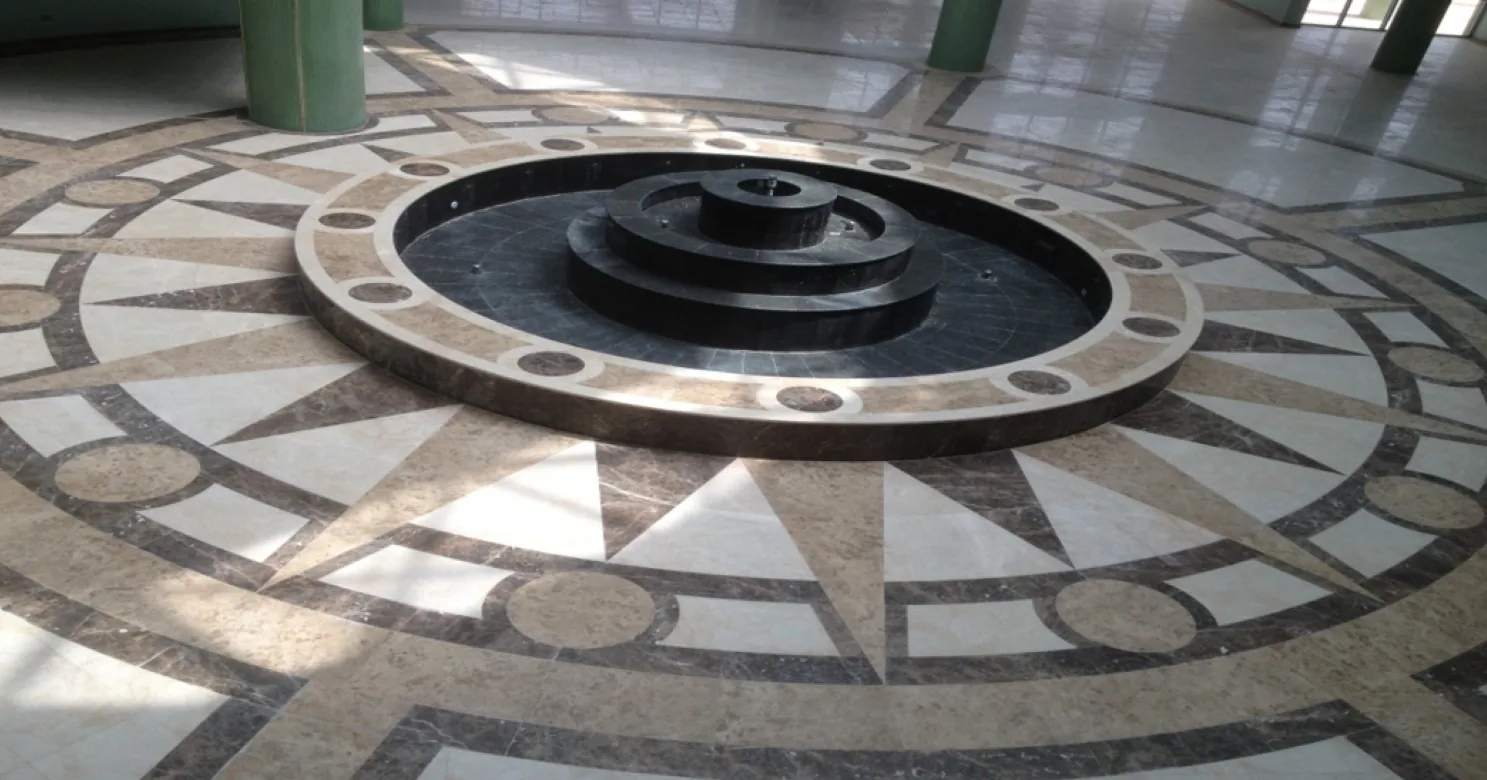
Interior finishing and flooring for a retail development.
1 project delivered
Al Ahsa
Eastern Province
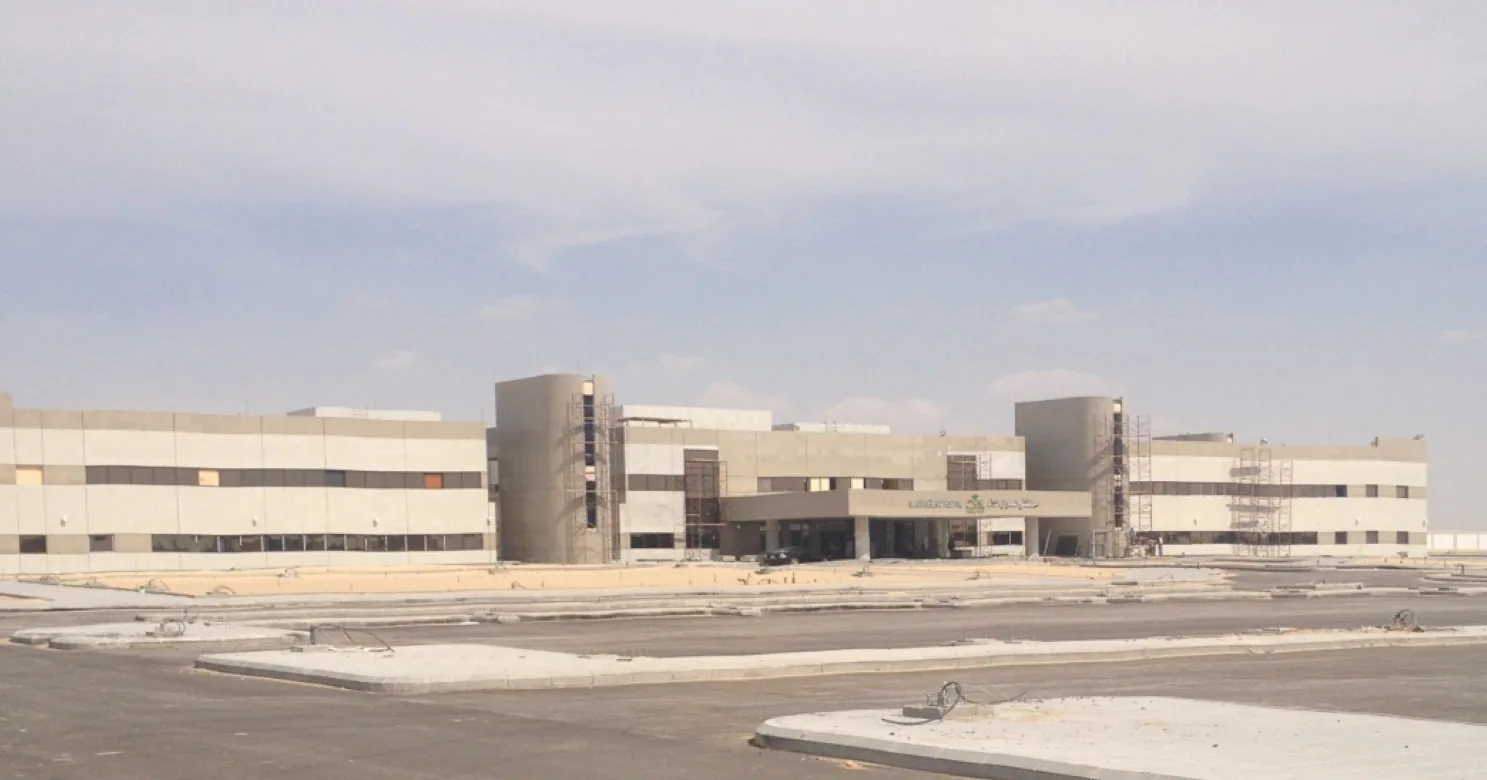
Architectural finishing for a healthcare facility.
1 project delivered
Al Kharj
Riyadh Region
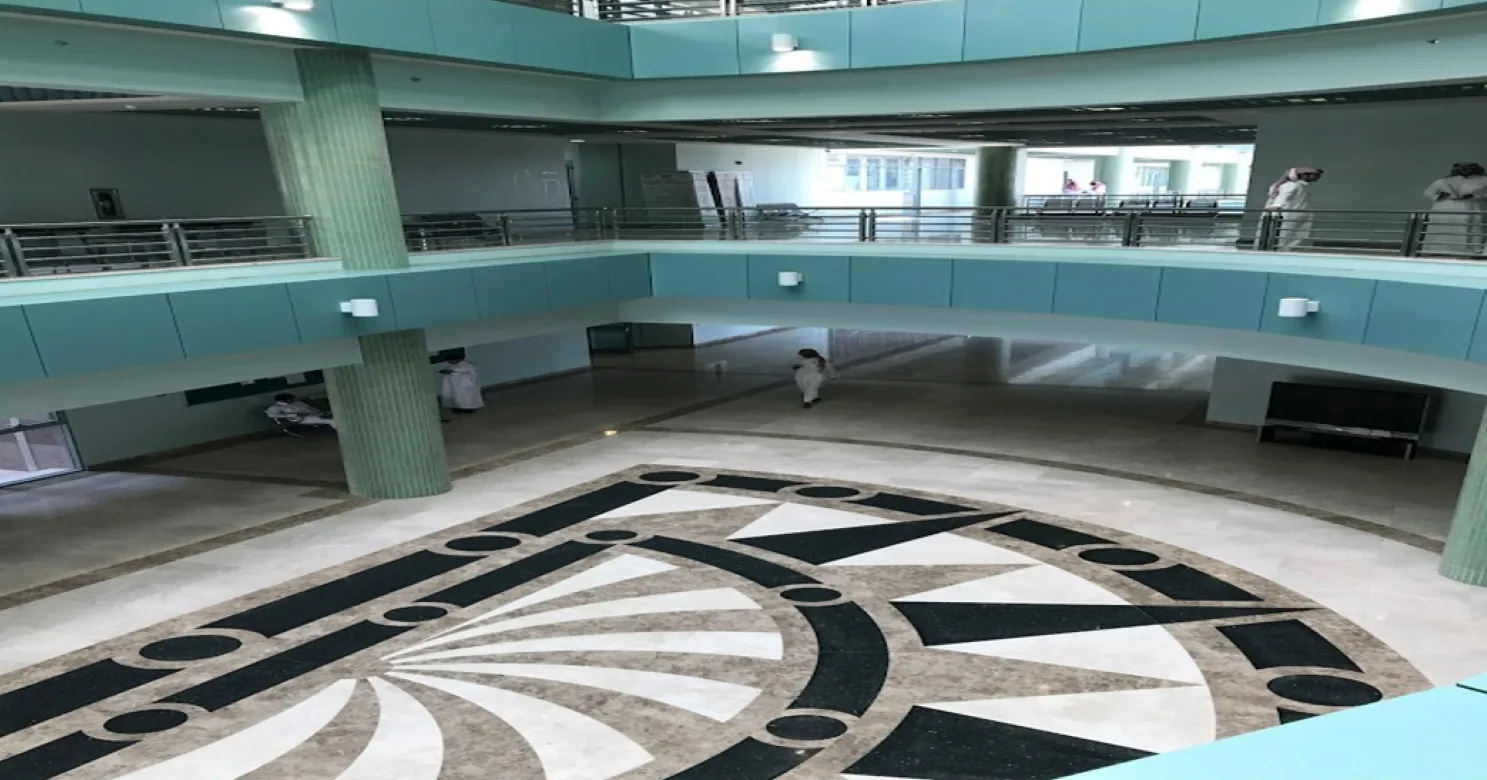
The Kingdom's dairy capital — and our largest Riyadh Region project outside the capital itself.
1 project delivered
Huraymila
Riyadh Region
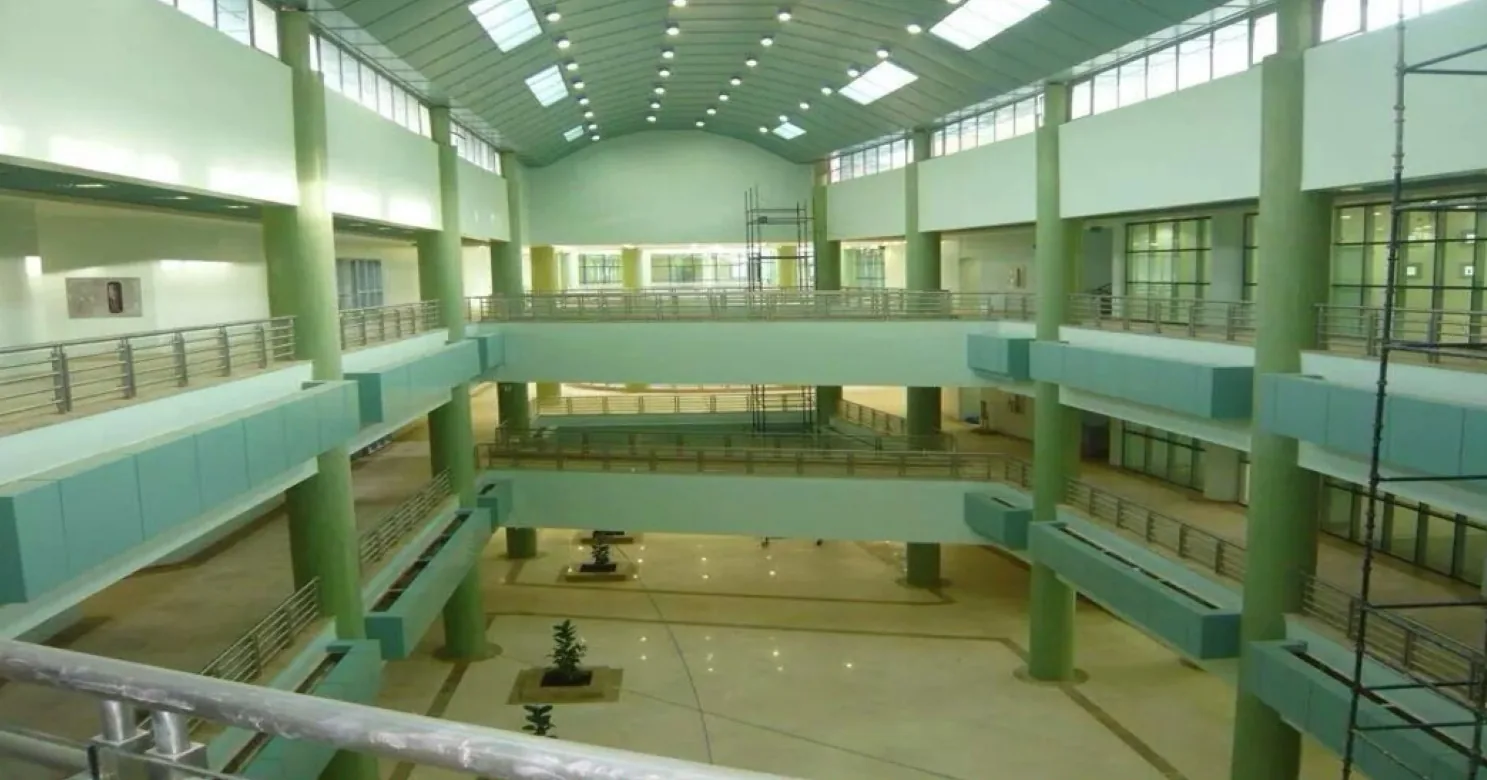
A college campus finishing scope, part of our wider Riyadh Region higher-education work.
1 project delivered
Muzahmia
Riyadh Region
A university campus finishing scope, on the Riyadh–Mecca Highway corridor west of the capital.
1 project delivered
Related projects in External & Facade Works
Government CommercialGovernment
Related reading
Types of Waterproofing Systems for Wet Areas
A practical comparison of cementitious, liquid-membrane, sheet and crystalline waterproofing systems, and where each genuinely belongs on a project.
Read more
Saudi Building Code Requirements for Finishing Works
Where the Saudi Building Code touches finishing works — railings, fire-rated partitions, waterproofing and accessibility — and why it matters on site.
Read moreFrequently asked
Do you build the pool structure or just the tiling?
Both — the reinforced concrete shell, the waterproofing, and the tiling and deck finishing are one sequenced scope, not separate jobs handed to different contractors.
What tiling do you use for pools?
Pool-rated ceramic, porcelain or mosaic tiling, specified per project, with a slip-resistant finish on the surrounding deck and coping — the tiling and the substrate beneath it are treated as one system, not chosen independently.
Do you install the pool's filtration and pump system?
Filtration and circulation is coordinated through our MEP capability as part of the same project, so the pool and its plant are delivered together rather than handed off between separate contractors.
How long does it take to build a swimming pool?
It depends on the pool's size, depth and site access — our technical team gives a programmed schedule as part of the quote, not a generic industry estimate that doesn't reflect your actual site.
Can pool construction run alongside a villa's other finishing works, or does it need its own separate programme?
Alongside — pool construction is sequenced with the rest of the villa's external works rather than run as a separate contract with its own schedule, the same coordination we apply to every wet-critical scope on a project.
Is the pool shell inspected before it's filled with water?
Yes — every wet-critical junction, including steps, skimmers and drain penetrations, is inspected by our support-engineering team before the pool is filled, the same discipline applied regardless of whether the client is a government institute or a private villa.
How can I tell whether a pool is leaking or just losing water to evaporation?
In hot, dry or windy weather a pool loses water to evaporation every day, so a falling level alone does not prove a leak. A common site check is to compare the pool's level drop with that of a bucket of pool water left on a step, over the same period, with the circulation pump running and then switched off. If the pool falls clearly more than the bucket, a leak is likely, and it should be located by proper leak detection before anything is repaired or covered.
Why do tiles come off the walls of some pools?
The usual causes are incomplete adhesive coverage behind the tile, an adhesive or grout not rated for permanent immersion, no movement joints where the shell and deck move with temperature, and filling the pool before the bedding has cured. Water passing through a poorly waterproofed shell can also push tiles off from behind. The repair should find which of these applies, not simply re-fix the loose tiles.
Does an indoor pool need anything different from an outdoor one?
Yes. Humid air above the water condenses on cooler surfaces, so ventilation and dehumidification have to be designed with the building's mechanical system, and fixings, ceilings and steelwork in the pool hall need a corrosion-resistant specification. Finishes must stay slip-resistant when wet, and acoustics often need thought. These points are agreed with the design team before the shell is built.
Planning a project? Let's talk finishing.
Tell us about your scope and timeline — our technical team will respond with a clear, considered proposal.