Marble vs Porcelain Flooring: Cost, Durability & Maintenance
Ashlaar Technical Team · September 21, 2026
Marble versus porcelain is probably the single most common flooring question Ashlaar's finishing teams hear on commercial and high-end residential projects, and the honest answer is genuinely "it depends" — on budget, on how much ongoing maintenance the owner is realistically prepared to do, and on which part of the building is actually being floored. That's not a dodge; it's the fair starting point for a comparison that gets oversimplified far too often into "marble is premium, porcelain is the budget option," which misses real, practical differences that matter more than the price tag alone, and that a client will live with for as long as they own or lease the space, not just for the walkthrough on handover day. Both materials have genuinely improved and genuinely diversified over the past decade, which makes the old shorthand less useful than it used to be — today's decision is less about settling for one or the other and more about matching a specific material grade to a specific room's real demands.
What marble actually is, and where it shines
Marble is natural quarried stone, and every slab is genuinely unique — the veining, tone and pattern variation is real stone geology, not a design choice, and it produces a look that porcelain can imitate closely but not literally replicate, because no two square metres of it are ever quite the same. It stays cool underfoot, which is genuinely valued in Saudi Arabia's climate for ground-floor and at-grade spaces, and it takes a true high polish that reads as unmistakably premium under both daylight and evening lighting in a way few manufactured materials manage as convincingly. The honest trade-offs: marble is porous and reactive to acids, meaning it can etch or stain if it isn't sealed and maintained with the right products, and it carries a real premium both to buy and to install, given skilled setting requirements, the need to book-match or plan veining across a floor deliberately, and the material wastage that comes with natural variation between slabs.
What porcelain actually is, and where it shines
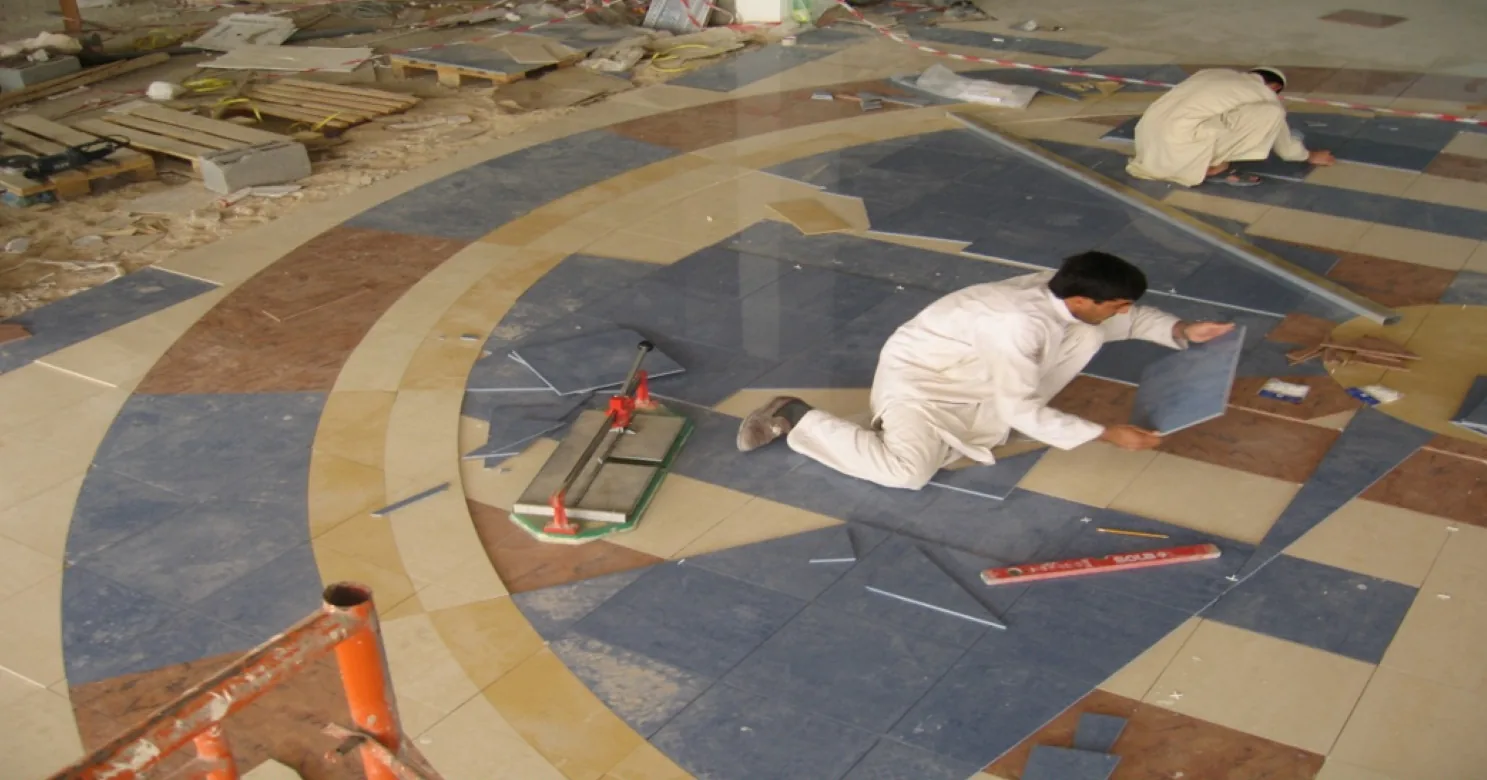
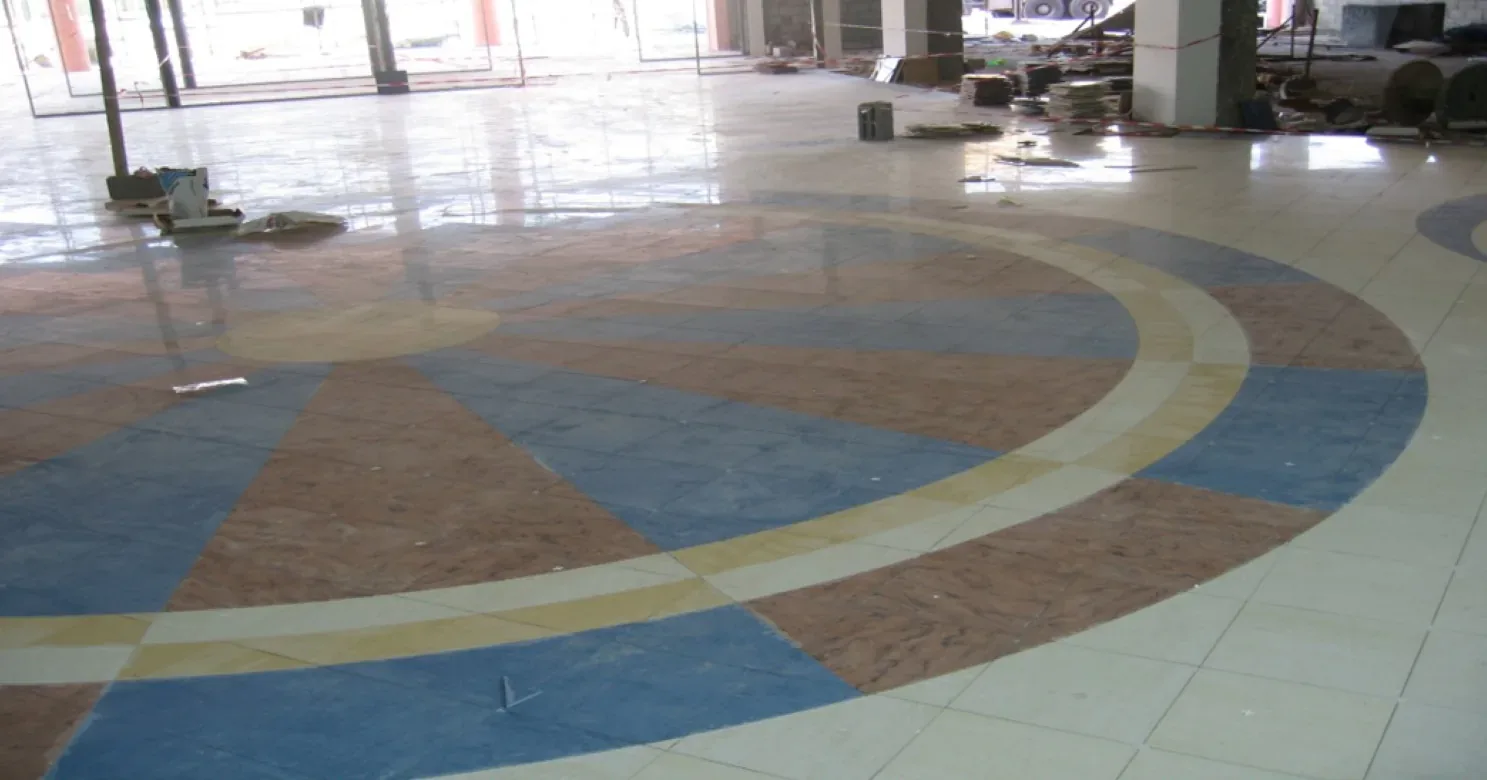
Porcelain is a manufactured, fired ceramic body, and its defining practical advantage is consistency: every tile from the same batch looks and performs the same way, with none of the natural variation that makes marble both beautiful and harder to plan around when a designer needs a large area to read as perfectly uniform. It's dense and low-porosity, meaning it resists stains and moisture far better than marble straight out of the box, with far less dependence on sealing and careful product choice to stay looking good years down the line. Large-format, marble-look porcelain — digitally printed to imitate real stone veining, sometimes convincingly enough to fool a casual glance — has genuinely closed the visual gap in recent years, getting close to real marble's appearance at a noticeably lower material and maintenance cost, and it's generally more resistant to impact and scratching under heavy commercial footfall, which matters in a mall corridor or a hotel lobby that sees thousands of footsteps a day. Marina Mall in Riyadh is a real example of porcelain doing exactly this kind of work — its cut, radiating medallion floor pattern is part of what makes the entrance read as a flagship retail environment from the moment a visitor walks in, at a fraction of what the same visual impact would have cost in natural stone.
The genuine tradeoffs
On cost, porcelain is generally more economical, while marble carries a real material and installation premium that scales with the size of the floor. On durability and maintenance, porcelain needs little beyond routine cleaning, while marble needs sealing, pH-neutral cleaning products, and real care around acidic spills — coffee, citrus, certain cleaning chemicals — that most buyers genuinely underestimate as an ongoing cost until they've lived with a marble floor for a year and seen the first dull patch appear. On authenticity and perception, marble reads as genuinely premium in a way buyers, tenants and visitors notice and respond to, often without being able to say exactly why, which matters commercially for flagship retail, hotel lobbies and high-end residential spaces where the material itself is part of the statement being made. On consistency, porcelain's manufactured uniformity is a real advantage for large, uniform floor areas where a seamless look matters, while marble's natural variation is either the entire aesthetic point or a genuine coordination challenge for the design team, depending on how the space is meant to read and how tightly the veining needs to be planned across joints. On installation, porcelain's uniform dimensions and predictable behaviour make for a faster, more straightforward setting process, while marble often demands a more experienced setting crew who can plan slab layout, book-match veining across joints, and work around the natural variation between pieces without it reading as a mistake.
Where each is actually used well
Marble suits flagship lobbies, feature areas and high-end residential majlis or reception spaces, where the material itself is genuinely part of the brand or design statement and where the budget has been set with that statement in mind from the start. Porcelain suits large-format retail floors, hospitality corridors, and any public-facing area where the budget or the realistic maintenance regime favours consistency and resilience over natural-stone prestige, without giving up a genuinely attractive, stone-look finish that most visitors will never think twice about — Marina Mall's cut medallion floor in Riyadh is a real, standing example of porcelain specified for exactly that reason, doing feature-flooring work at entrance scale for a fraction of a natural-stone budget. Many well-planned commercial fit-outs actually use both deliberately in the same building — marble at entrance and feature points where a visitor's first impression is formed, porcelain through the longer corridors and back-of-house-adjacent areas where consistency and lower maintenance matter more than a first-impression statement.
Decide by asking what the space actually needs to survive — foot traffic, spill exposure, the realistic cleaning regime it will actually receive once the cleaning contract is the lowest bidder rather than the launch-day crew — and what the brand or design genuinely needs to say, then match the material to that rather than deciding on first impression alone in a showroom under perfect lighting. Both are legitimate, beautiful flooring materials when specified for the right space; the mistake isn't choosing either one, it's choosing without asking the question honestly first, and living with the mismatch for the next decade. And it's worth remembering that the two aren't mutually exclusive across a single building — a design that puts marble where it will genuinely be noticed and porcelain where it will genuinely be walked on is usually a more honest use of budget than an all-or-nothing choice made once at the start and never revisited room by room.
Related capabilities
Related projects
 Commercial
Planning a project? Let's talk finishing.
Tell us about your scope and timeline — our technical team will respond with a clear, considered proposal.