How Saudi Vision 2030 Is Shaping the KSA Construction Industry
Ashlaar Technical Team · September 21, 2026
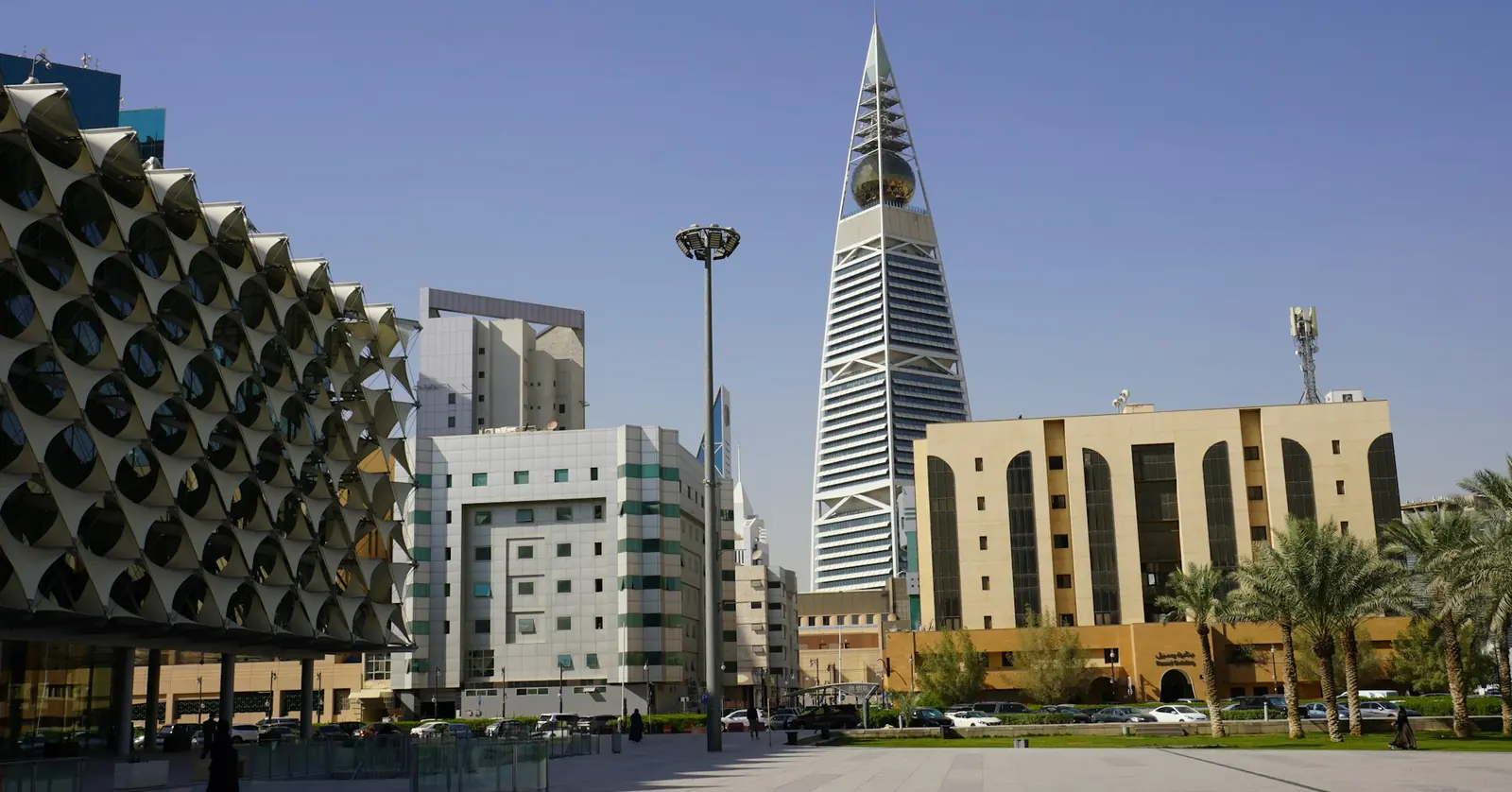
Saudi Vision 2030 is often described as an economic reform agenda, and it is one — a plan to diversify the Kingdom's economy away from oil dependency, grow the private sector, and build the tourism, entertainment, logistics and industrial capacity to support that goal. But at ground level, it is also the largest construction programme the Kingdom has ever undertaken, because almost every one of those economic ambitions requires something to be physically built first. A reform agenda built out of concrete and steel: giga-projects like NEOM, Qiddiya and the Red Sea Project, the continued expansion of Riyadh, the build-out under way for Expo 2030, and national housing programmes aimed at raising home ownership, together represent hundreds of billions of dollars in publicly announced investment across infrastructure, tourism, entertainment and urban development. For anyone in or around the construction industry in Saudi Arabia, that is not an abstract policy statement. It is a pipeline of work that touches everything from structural steel and MEP systems to the architectural finishing that determines how a finished building actually looks, performs and feels to the people using it — and a pipeline expected to keep running for years rather than complete in a single budget cycle. Riyadh's own expansion alone includes new districts, transport infrastructure and entertainment destinations that each carry their own finishing and fit-out requirements, and that pattern repeats, at different scales, in city after city across the Kingdom.
For project owners, the bar has moved. Vision 2030 has pushed government and quasi-government clients toward higher expectations on quality, documentation and delivery discipline, and that standard has a way of spreading into commercial and residential work as well, because the same contractor pool, the same supply chains and often the same skilled labour move between sectors. Owners commissioning a project today are more likely to ask for a contractor's track record on comparable government or institutional work, more likely to check formal classification and registration status before a contractor even reaches the shortlist, more likely to expect formal QA processes and HSE files rather than informal site management, and more likely to want a single accountable team rather than a loose collection of trade subcontractors reporting to no one in particular. Saudization and local-content expectations add another layer to the same shift — owners increasingly want to see genuine Saudi workforce development and local sourcing behind a project, not just a name on a contract. That shift benefits serious clients — it just means the shortlist of contractors who can actually meet it is narrower than the overall size of the market might suggest. In practice, that often means owners running a genuine pre-qualification process rather than simply collecting quotes, checking a contractor's references on site rather than taking a portfolio at face value, and building enough lead time into the programme to select on capability rather than on whoever can start soonest.
For contractors, scale now has to come with structure. A construction sector growing this quickly needs firms that can take on multiple concurrent sites without the quality on each one drifting, and that is a harder problem than it sounds. It means having a genuine quality-assurance system rather than an ad hoc one, a supervision function resourced enough to be on site daily rather than only at milestone inspections, and enough integrated capability — finishing, facade, MEP, structural, supervision — to avoid the coordination failures that happen when five separate subcontractors are trying to hit the same handover date without a single party responsible for how their work fits together. It also means having the working capital and established subcontractor and supplier relationships to keep several sites moving through a full programme without cash flow or material delays forcing shortcuts on any one of them, and a safety and quality record solid enough to survive the scrutiny that comes with working on visible, ministry-level sites. Contractors who built that structure before the current wave of demand are in a materially different position than those trying to assemble it under pressure, mid-project, because a client is already asking for records they do not have. That gap tends to widen under pressure rather than close: a contractor improvising a QA system mid-project is also, usually, the one least able to absorb the cost of redoing work that did not meet specification the first time.
Vision 2030 is not only NEOM-sized. The headline giga-projects get the international coverage, but the same programme is driving a steadier, less glamorous expansion of ordinary government, commercial and residential construction in cities across the Kingdom — Riyadh, Jeddah, Dammam, and increasingly secondary centres like Al Ahsa, Al Kharj, Huraymila and Muzahmia, where new university campuses, hospitals, training institutes, government offices and commercial developments are going up alongside the population and urbanisation growth the plan is designed to support. Residential demand is rising alongside all of this too, as national home-ownership goals and urban population growth translate into new housing developments and the villa and compound projects that come with them, in cities well beyond the giga-project map. This is, in practical terms, where most of the actual construction activity and most of the actual contractor opportunity sits — not in the small number of trophy projects, but in the much larger volume of government and private-sector buildings that need to be delivered to a rising standard, on realistic schedules, by contractors who are already established in those cities rather than flying in for one job and leaving once it closes out. That local presence also tends to produce better outcomes for the cities themselves, since a contractor with an ongoing stake in a city's reputation has a stronger incentive to protect its own track record there than one passing through on a single contract.
Finishing is where the ambition becomes tangible. A structural frame and a well-engineered facade get a building to watertight and standing; it is the architectural finishing — the flooring, ceilings, cladding, wet areas, paint and joinery — that determines whether a ministry building, university, hospital or mall actually reads as the standard of development Vision 2030 is promising, or falls short of it in the details a visitor notices on day one. It also has a lifecycle dimension that is easy to underweight at design stage: finishing specified and installed properly is the difference between a public building that still looks presentable after years of heavy daily use and one that needs an expensive early refurbishment, which matters a great deal on facilities a ministry or university has to operate and maintain for decades, not just hand over and forget. As the tourism, entertainment and hospitality goals within Vision 2030 put more public and quasi-public buildings in front of more people — Saudi citizens and international visitors alike — the tolerance for finishing that looks rushed or inconsistent keeps shrinking. That raises the value of finishing contractors who treat the work as a technical discipline with its own quality standards, not as the last item squeezed into a shrinking budget and an already-slipped schedule. It is also worth saying plainly that finishing failures are rarely dramatic; they show up as small, cumulative signs — an uneven floor line, a ceiling joint that was never quite closed, a facade panel a shade off from its neighbours — that individually seem minor but collectively tell a visitor everything about how carefully a building was actually finished.
None of this happens without people. Vision 2030's human-capability goals point at the same underlying issue the construction sector feels most directly: a project pipeline this size only gets built if there are enough trained supervisors, tradespeople and site engineers to run it properly, not just enough steel and concrete on order. Contractors who invest in training their own workforce — bringing tradespeople up to a consistent standard rather than relying entirely on whoever is available in a tight labour market — tend to hold quality steadier across multiple sites than those who staff up purely on demand. That investment shows up in ways a client notices indirectly: fewer callbacks after handover, more consistent finish quality from one project to the next, and a supervision team that already knows how the company's own quality standards are meant to be applied, rather than learning them on the client's site for the first time. It is a slower way to grow than simply hiring on demand, but it is the difference between a contractor whose quality is a function of which crew happened to be available that month, and one whose quality is a fixed property of the company itself.
This is the environment Ashlaar was built for. Twenty-five years of finishing and fit-out work on ministry, university and hospital projects across Jeddah, Riyadh, Dammam, Al Ahsa, Al Kharj, Huraymila and Muzahmia means our quality records, submittals and HSE files arrive in the form the consultant already expects, rather than needing to be reverse-engineered to fit a government process partway through a project. Bringing architectural finishing, external and facade works, MEP works, structural works, and supervision and consultancy under one accountable team is a direct response to the coordination problem described above — it means a client working with Ashlaar is not managing the gaps between five different specialists, because we are managing them internally, with a dedicated support-engineering team on site daily and progress reported against the main contractor's critical path every week rather than only when something has already gone wrong. That combination — broad geographic experience, integrated trade coverage and a documentation discipline built for government-grade scrutiny — is precisely what a construction market moving at Vision 2030's pace rewards. It is also, in practice, what makes it possible to say yes to a new project with confidence rather than hope — because the systems, the people and the track record needed to deliver it are already in place, not something to be assembled once the contract is signed.
The opportunity is real, and so is the execution bar that comes with it. Vision 2030 has created a genuinely large and growing construction market in Saudi Arabia, but growth of this scale rewards contractors who can actually deliver — reliably, to specification, on a schedule a main contractor or client can report upward with confidence — more than it rewards firms simply chasing volume. For contractors, that means the investment in QA systems, supervision capacity and integrated trade coverage is not overhead; it is the qualifying condition for being trusted with the next generation of Saudi projects. For clients, it means the due diligence on a contractor's actual delivery history — sites visited, references checked, documentation reviewed before contract award rather than after something goes wrong — is worth doing carefully, even when a busy market makes it tempting to select on price and availability alone. The projects being built over the next decade will shape how the Kingdom's cities look and function for much longer than that, and the standard they are finished to will be part of how Vision 2030 itself is judged by the people who live with the results. The contractors involved in them are worth choosing accordingly. That is as true for a small government training institute in a secondary city as it is for a giga-project master plan — the standard of finishing either delivers, or it does not, and the market is increasingly set up to notice the difference.
Related capabilities
Related projects
 Government
 Government
Planning a project? Let's talk finishing.
Tell us about your scope and timeline — our technical team will respond with a clear, considered proposal.